The how and why of five-axis machining
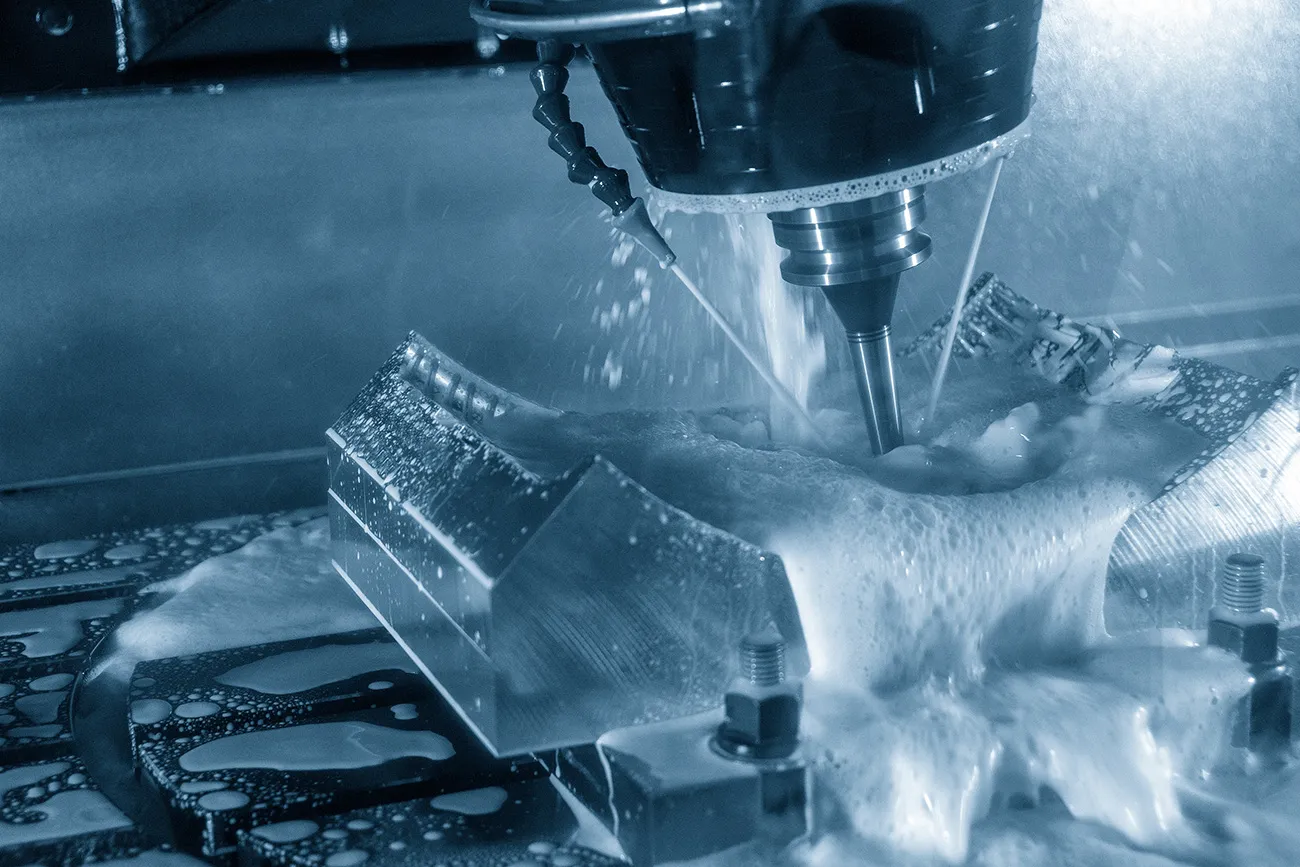
A work of art lies hidden in every block of stone; it is up to the sculptor to reveal it. These are the words of Michelangelo, an artist of the Italian Renaissance. Imagine what he could have created if he had swapped his hammer and chisel for CNC machine tools. Thousands of statues of David, in just as many materials. Whether you want to sculpt a marble masterpiece or titanium turbine blades, the basic principle remains the same: remove material until you achieve the desired shape. Five-axis machining gives you more options for doing so, and doing it more efficiently.
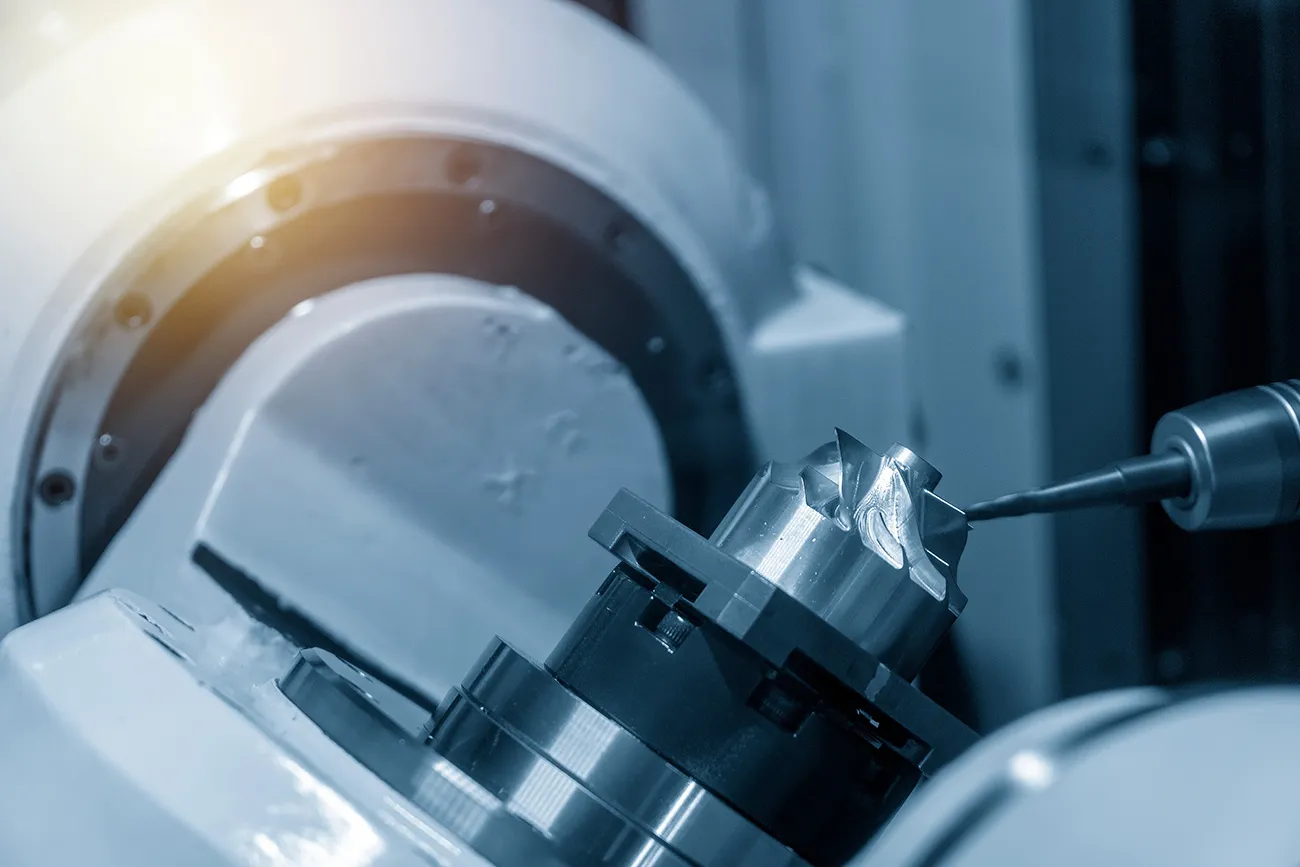
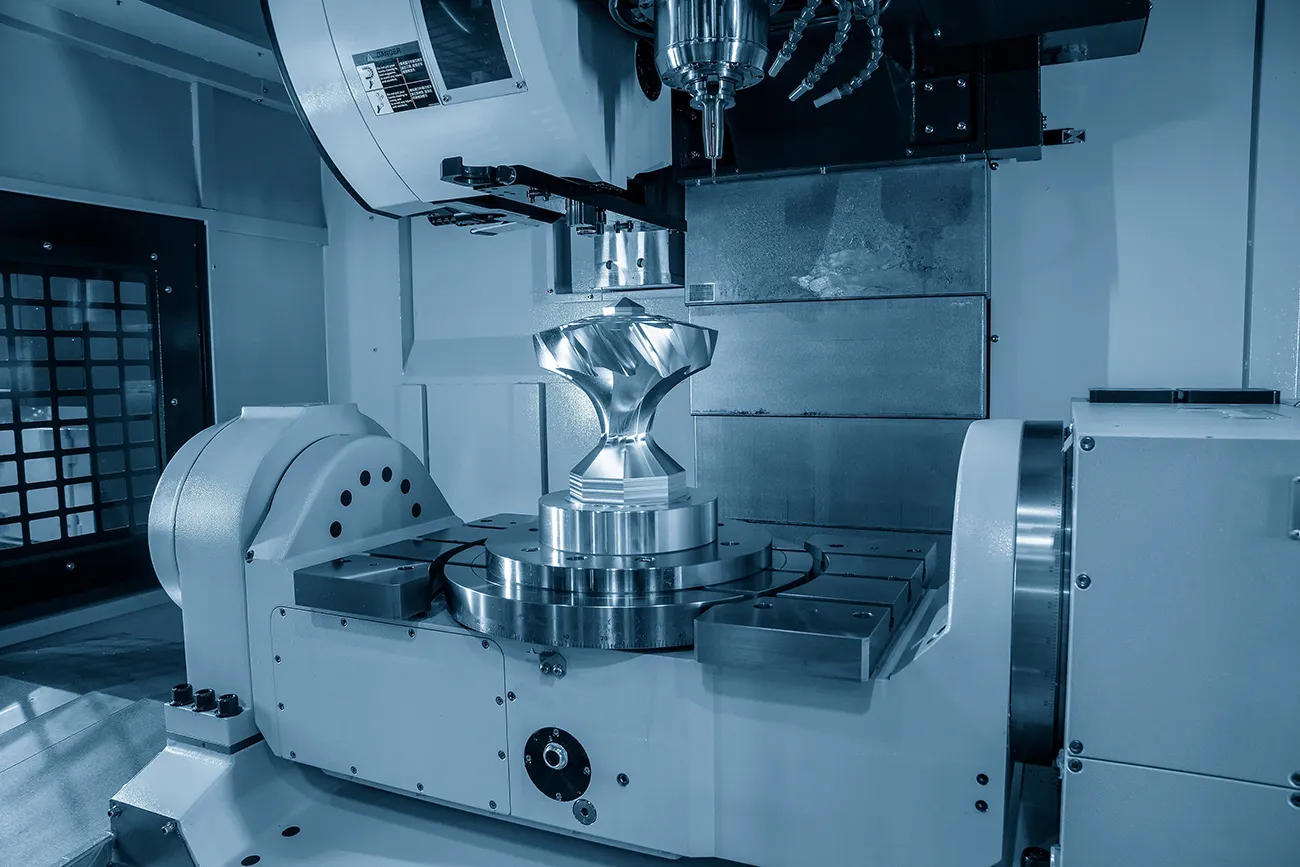
Put simply, five-axis machining involves your workpiece or cutting tool moving simultaneously along five axes. This enables a machine tool to produce highly complex parts, which goes some way towards explaining why five-axis machining was first adopted by companies working in or supplying the aerospace industry.
The widespread adoption of five-axis machining is due to a number of developments, beginning with the desire to finish a part perfectly in a single set-up. This is essential for high-mix, low-volume production, helping to shorten lead times and improve efficiency.
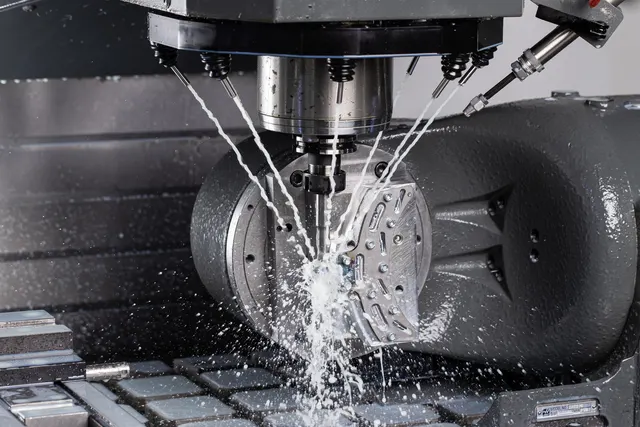
Five-axis machining also reduces the risk of collisions with the toolholder. The table or cutting tool can now tilt, providing better access to the part geometry. Another direct result of this tilting function is longer tool life. The tools can be positioned optimally for cutting and chip evacuation.
What is five-axis machining?
But what are these five axes? Let’s look back at another great figure from the past. When René Descartes saw a fly cross the room from his bed, he realised that he needed only three values to describe the fly’s exact position in a three-dimensional space: the X, Y and Z variables. This laid the foundations for the Cartesian coordinate system and for three of the five axes used in five-axis machining.
And the other two? If we zoom in on Descartes’ fly, we can determine not only its position in space, but also its orientation: the A axis, which rotates around the X axis. Finally, there is also the tilt angle, as the fly lands or takes off. This is described by the B axis, which rotates around the Y axis. There could, of course, be another axis rotating around Z, but in machining, this additional cost brings little added value. That is why five-axis configurations are preferred. The precise relationship between the axes in the machine itself depends on its design and whether it is a vertical or horizontal machining centre. And, of course, the more spindles there are, the more axes there are …
3+2 or 5
However you look at it, the parts you make with all these axes are five-axis parts. There are, though, different configurations. The need for a 3-, 4- or 5-axis set-up depends largely on the geometry of the workpiece and, of course, on the machines and controls available to the customer. In machining, 3+2 (positional five-axis machining) is not the same as 5 (simultaneous five-axis machining). In the first case, a three-axis programme is run with the cutting tool in a fixed position between the two rotary axes. In the second, the cutting tool is continuously adjusted along all five axes so that the cutting tip is perfectly perpendicular to the workpiece.
The major advantage of the latter method is speed. Everything can be completed in one go, without stopping. However, it requires greater care during programming to avoid collisions. CAD and five-axis machining therefore go hand in hand.
Five-axis machining and 3D printing
To add a few more figures, here is a brief comparison with additive manufacturing techniques, better known as 3D printing.
According to the die-hards, it is a disruptive technology that will turn the entire machining world upside down. In most cases, however, the two techniques prove highly complementary. There are indeed opportunities to build parts layer by layer and produce designs that would not be possible with traditional machining. But many parts still require machining, for example where very tight tolerances are involved.
So should we expect hybrid machine tools in the future? No. For efficient operation, it is better for them to work separately. Just think of powder recovery in 3D printing, or chip removal in machining. These processes need to run as smoothly as possible. The answer is more likely to be a place for both technologies, side by side on the shop floor, but connected through automation.
How can you get the most out of it?
Many workshops have already invested in five-axis machining. But these capabilities are not always being used to their full potential. This may be due to a lack of understanding or a lack of suitable software to unlock that potential. Moving from 3-axis to simultaneous 5-axis machining takes practice, both in designing and programming parts. In many cases, it all comes down to the control system and software needed to achieve a smooth toolpath.
An important feature of this software is collision detection. Many solutions are already available that can quickly simulate the programme and eliminate errors in advance. Most problems users encounter are not related to making chips, but to staffing, communication between work preparation and the machine, and having the right tools in the tool store to complete a part.
Question about this story? Ask your question
Keep following this
Get an email when a new story is published. No account needed.
- ThemePrecision and productive machining
- SubjectMachining