Fume extraction, a must for TIG welding
Texte : Valérie Couplez Photos : iStock

TIG welding is considered a clean process because it produces few, if any, welding fumes. But appearances can be deceptive. Even when welding fumes are limited, the risks associated with TIG welding should not be underestimated. Other factors also make an extraction system essential.
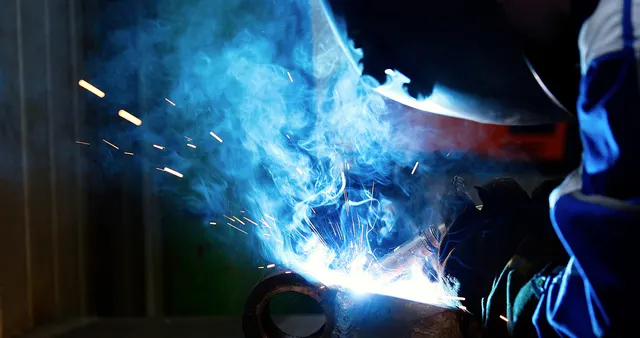
TIG welding is often used where the weld will be visible or needs to be of high quality, for example when welding stainless steel or aluminium. Compared with MIG-MAG, it is a relatively slow process that produces a stable weld bead with minimal spatter. As a result, it generates relatively few welding fumes. This can lead to the assumption that it is a clean process requiring few preventive protective measures. Nothing could be further from the truth. To gain a full picture of the risks, it is important to consider not only the amount of welding fumes, but also the filler metal used, the workpiece base material and the tungsten electrode selected.
Risks associated with the base material and filler metal
As already mentioned, TIG welding is often the best choice for joining stainless steel. This material contains chromium and nickel. During welding, these elements form nickel oxide and chromium compounds, which can cause cancer, respiratory problems and damage to the nervous system. A W3-certified fume extraction system is therefore essential to protect the welder from serious health problems. Filler metal may also be used, for example, to improve the corrosion resistance of weld beads. It, too, contains chromium and nickel.
The tungsten electrode
Today, thoriated tungsten electrodes are rarely used in TIG welding, which is a good thing. Grinding can release radioactive dust, while welding releases fumes containing thorium oxide. Inhaling these emissions carries a risk of internal radiation exposure. Particular care is needed when TIG welding with alternating current, which is often used for aluminium. If tungsten electrodes are preferred for technical reasons, an appropriate extraction system should be provided to remove grinding dust and welding fumes effectively.
Ozone and reflections, additional hazards
Exposure to ozone is higher during TIG welding than with other welding processes. This is again linked to the materials used. Aluminium and stainless steel surfaces strongly reflect UV radiation. UV radiation from the arc forms ozone from oxygen in the air. This occurs in the immediate vicinity of the weld, but sometimes further away as well. Since this substance is classified as carcinogenic under the TRGS 905 directive, welders must not inhale it. The fewer the welding fumes, the greater the risk of ozone formation. Source extraction is the safest option.
Conclusion
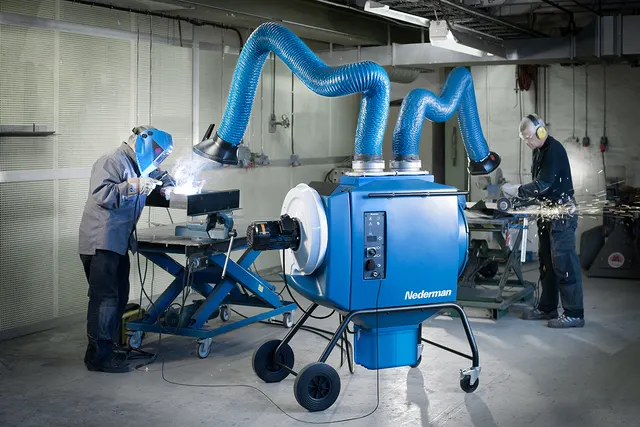
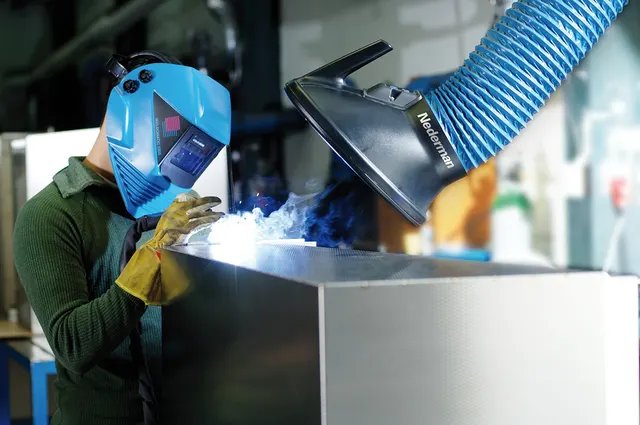
The risks associated with TIG welding may seem limited because it produces little welding fume, but they should not be underestimated. An extraction system is crucial to effectively protect the welder. Various systems can remove welding fumes and other emissions, including extraction hoods and central extraction systems. A safer alternative is source extraction using an extraction torch for localised fume capture. A range of welding torches is available for TIG welding.
Question about this story? Ask your question
Keep following this
Get an email when a new story is published. No account needed.
- ThemeMetal forming and joining
- SubjectWelding fumes