Torch extraction is gaining popularity
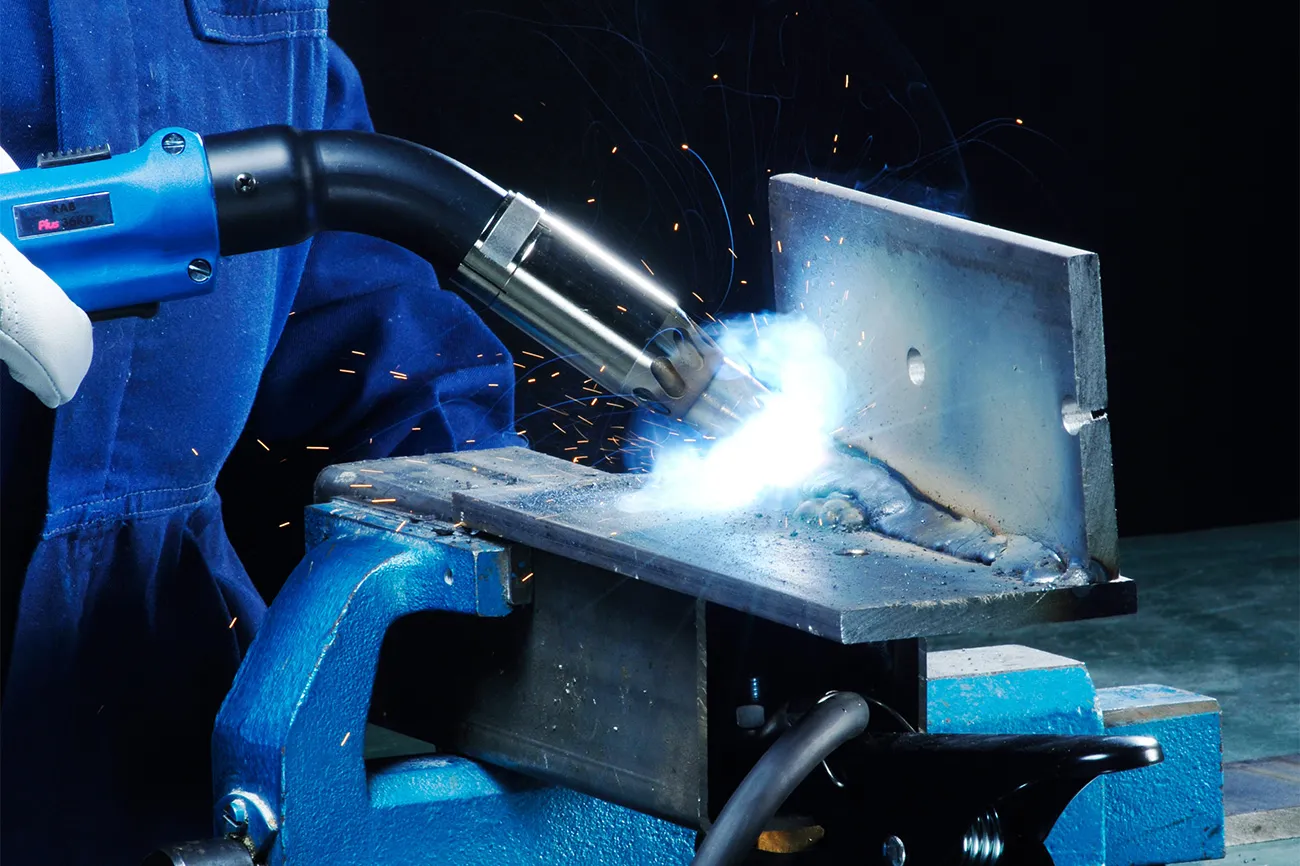
Metalworking companies with welding operations in their portfolio want to be able to weld with confidence in an environment where clean air is guaranteed. There are several methods for capturing welding fumes. “Torch extraction, or on-torch extraction, has been gaining popularity in recent years,” says Rik Amand, welding specialist at Nederman, which specialises in environmental technology.
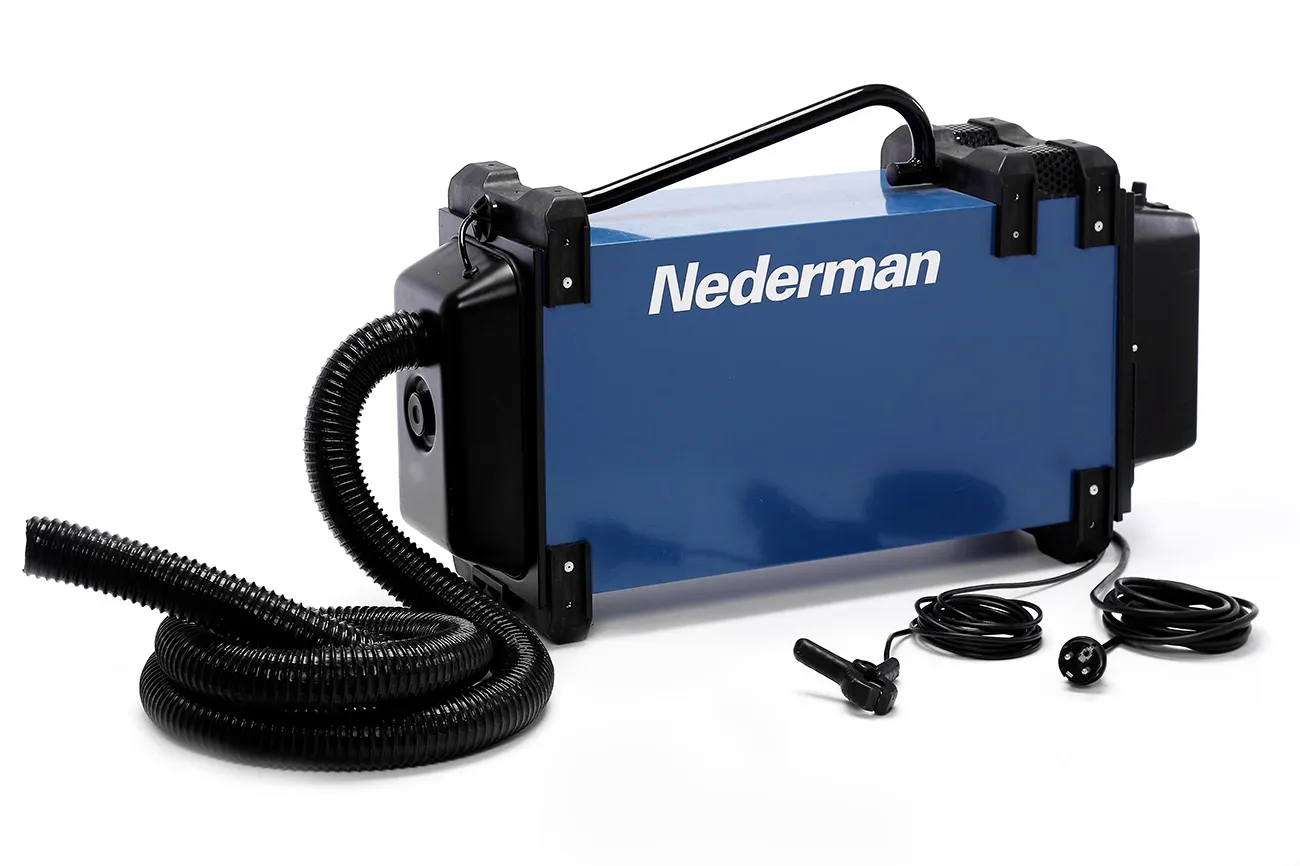
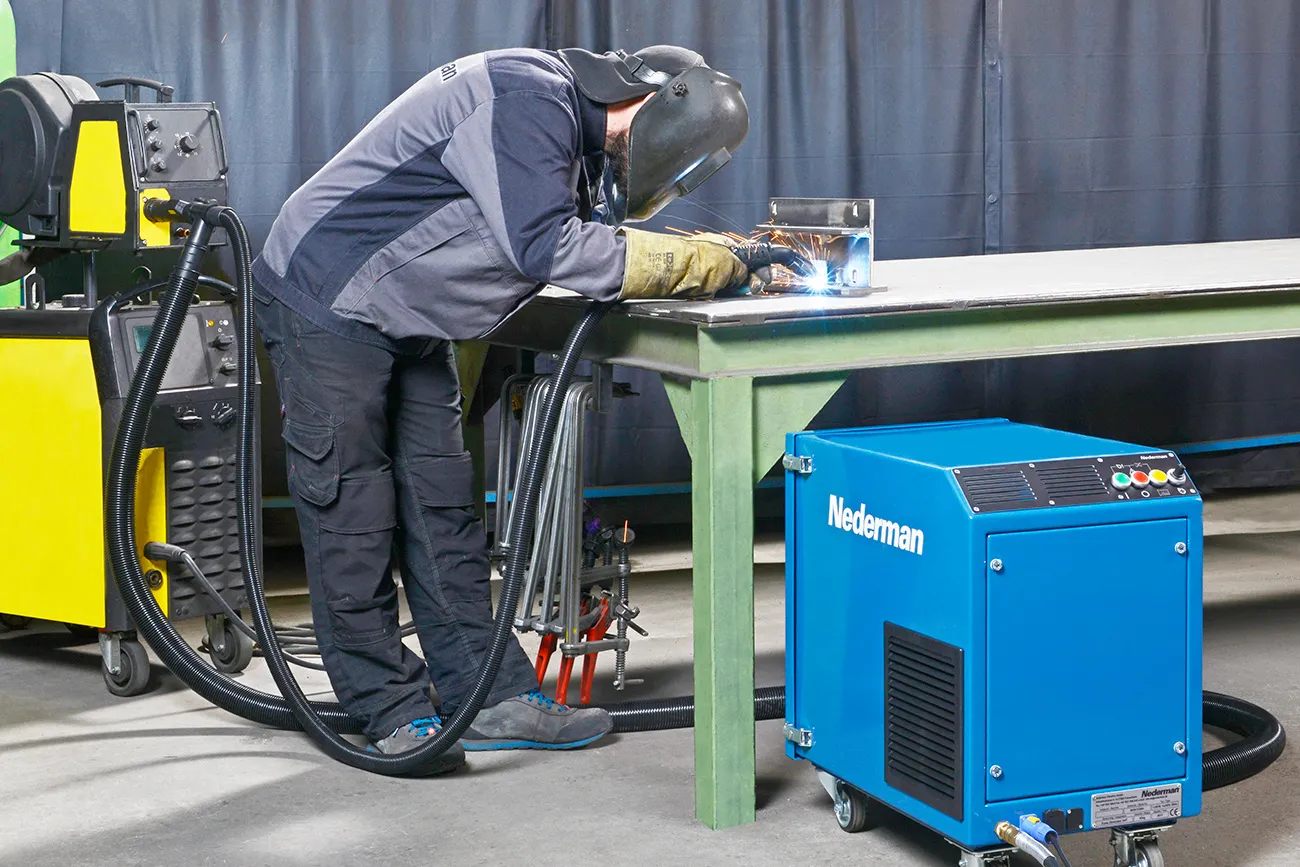
“Welding torches with integrated fume extraction capture welding fumes directly at source, above the material being welded. The fumes are extracted through openings in the nozzles at the end of the torch. They are then carried through hoses to a filter. To extract and treat welding fumes effectively, the torch must be connected to a high-vacuum system. The unit, whether mobile or central, provides the vacuum to the torch, collects and filters the fumes, then returns clean air to the workshop,” explains Rik Amand. Solutions of this kind were first introduced as far back as the 1980s. “At the time, however, welders often found this method impractical or uncomfortable because the welding torches were quite heavy. Over the years, though, the product has evolved considerably. This has led to lighter, more ergonomic torches that make work considerably easier than before, while also improving extraction efficiency.”
Other methods
Demand for torch extraction is rising beyond Belgium, too. “We are also seeing growing interest in the English, Dutch and German markets. Compared with an extraction arm, it also offers additional advantages. Extraction arms are not practical in every situation. For example, when working with large objects, it is very difficult to position the extraction arm perfectly to capture 100% of the air. That is why, over the past 10 to 15 years, there has been a shift towards ambient air cleaning, which involves cleaning the entire workshop. With this method, air is constantly recirculated through the workshop, with contaminated air repeatedly drawn through the filtration unit, which captures welding fumes and dust particles. After filtration, clean air is returned to the workshop.”
Advantages
Nevertheless, interest in torch extraction is growing, particularly for MIG welding (Metal Inert Gas welding, ed.). “The fumes are removed immediately at source. The welder always has the extraction with them while welding, which provides greater flexibility. Extraction can be carried out at relatively low flow rates, between 80 and 120 m3/hour at a vacuum of 18 to 20 kPA, depending on the system. In addition, research reports show that torch extraction achieves an efficiency of 70 to 90%, depending on the welding position. So fitting a torch with extraction requires little energy compared with ambient air extraction.”
In practice
But not everyone is immediately convinced. “Welders themselves need to be willing to work with this type of torch,” says Rik Amand. “With MIG welding, a slightly higher volume of gas may be needed to maintain weld shielding and avoid welding defects such as porosity, because the gas supply and extraction are close together. These systems are designed, however, to remove welding fumes effectively without affecting the shielding gas or weld quality. Welders who produce high-quality welds are more likely to want to test the system in practice. That way, they can see for themselves whether the method is suited to their specific application.”
Nederman has been developing high-vacuum technology solutions for torch extraction for 30 years. “In addition to our many years of expertise, we offer a comprehensive range of solutions, with extraction for anywhere from one to an unlimited number of points.”
A business enquiry for Nederman? Get in touch
Companies in this story
Keep following this
Get an email when a new story is published. No account needed.
- ThemeMetal forming and joining
- SubjectNews
- CompanyNederman