Open where possible, firm where necessary

Europe is at a turning point in its economic relations with China. For years, these relations were primarily associated with growing trade and mutual benefits. Today, however, they have evolved into a strategic dependency, with access to essential raw materials at its heart. The latest findings from a recent study show just how deep this dependency runs. Voka is calling for a realistic, balanced approach: stay open where possible and act firmly where necessary.
Critical raw materials are the backbone of the modern economy. They are essential for digital applications, renewable energy and industrial production, including batteries, wind turbines, semiconductors and defence applications. At the same time, Europe relies heavily on imports for these materials, particularly from China. This dependency is not only a matter of the volume of European imports, but also of how crucial these raw materials are to industry.
China’s central role lies mainly in the processing and refining of raw materials. In many cases, the issue is not extraction itself, but the next step: processing raw materials into usable industrial inputs. China now controls a large part of this intermediate stage of the value chain. This has created a structural dependency in what is known as the value chain’s “midstream”. Alternatives are difficult to develop at precisely this stage, and the costs of transition are high. At the same time, through its industrial strategy, subsidies and export controls, China is deliberately strengthening its geopolitical influence through raw materials. Access to critical raw materials has become a geopolitical tool for China.
Dependence on China affects several key sectors that will shape Europe’s future. Battery production and electric vehicles depend on materials such as lithium and cobalt. The semiconductor industry relies on raw materials such as gallium and germanium. Renewable energy and defence applications, in turn, require rare and specialty metals. This dependency is all the more problematic because substitutes are often scarce. Even minor disruptions to supply can therefore have a significant economic impact.
Against this backdrop, Voka is calling for a clear change of direction in European policy towards China. It believes the relationship has fundamentally changed: what was once a relatively balanced economic relationship has evolved into one marked by clear asymmetry and growing dependency. Voka is not advocating a break with China. On the contrary, China remains a partner and a competitor, and in some areas a systemic rival. The challenge is to recognise this complexity and manage it strategically. Voka stresses that inaction is not a neutral option. Without action, Europe’s vulnerability will automatically increase. Europe must therefore move away from a rather naïve approach towards a policy grounded in economic realism and strategic interests.
Open markets remain essential to growth and prosperity, but they can function only when there is reciprocity and fair competition. In practical terms, this means Europe must balance three priorities. First, it must work towards fair trading conditions. Second, it must reduce strategic dependencies, particularly in critical sectors such as raw materials, by focusing on recycling and European extraction, and technology, by focusing on innovation and a flexible regulatory framework. Third, Europe must strengthen its own economic foundations through innovation, industrial capacity and a well-functioning single market.
The ultimate goal is a form of “smart globalisation”: an open economy that is also resilient enough to withstand geopolitical shocks. This is not about retreating into isolation, but about pursuing a carefully considered strategy in which economic security and international cooperation go hand in hand.
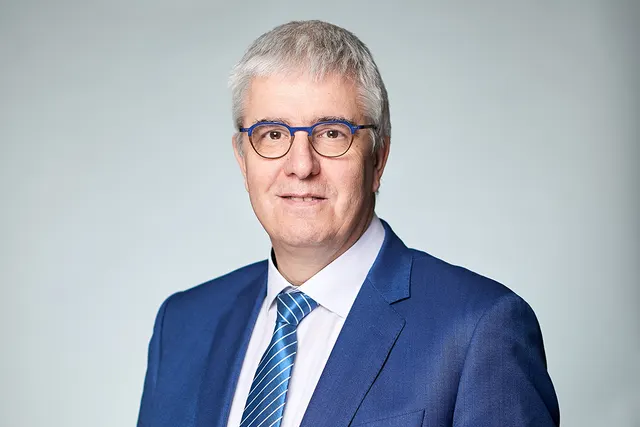
Frank Beckx, CEO of Voka
Question about this story? Ask your question
Keep following this
Get an email when a new story is published. No account needed.
- SubjectCarte blanche