Forget the trade war, Europe must take matters into its own hands

With the National Guard deployed in Washington, D.C., the resignation of the director of the Bureau of Labor Statistics (effectively the main source of economic statistics in the United States), the attack on the central bank, talks with Russia and the next steps in the trade war, the summer holidays have been anything but restful for President Trump. In the short term, it is the trade war that matters most to our economy. The main development on this front was the conclusion of an “agreement” between the United States and the European Union at the end of July, providing for a 15% import tariff on all European exports to the United States, while Europe would impose no additional tariffs on US exports to Europe. This “agreement” once again shows that Europe is far more dependent on itself.
The “agreement” was met with some relief in certain quarters. A 15% tariff is indeed lower than the 20% (or even 30% at one point) that had initially been envisaged. But it should not be forgotten that this 15% rate is around ten times higher than the import tariff that applied to European exports to the United States until the start of this year. In any case, this is still a huge change for global trade, with mainly negative consequences. Trade wars create more losers than winners. An earlier IMF analysis of import tariffs in 151 countries between 1963 and 2014 shows that higher import tariffs lead to lower economic growth. They also result in lower productivity, higher unemployment, greater inequality, higher inflation and lower household spending.
The United States will be the biggest loser in this trade war. Analyses of previous import tariffs clearly show that they cause the greatest economic harm to the country imposing them. This is because local consumers and businesses are the ones who ultimately bear the cost of these import tariffs. Goldman Sachs analyses indicate that so far, 80% of the duties have been passed on locally. And the biggest impact, in the form of higher inflation and weaker economic growth in the United States, is still to come. Growth forecasts for industrialised countries also illustrate the expected damage to the US economy. This is clear, in particular, from the OECD’s recent revision of its forecasts. According to an update published in July, economic activity in the United States will be almost 1% lower at the end of 2026 than forecast in January. This is the sharpest decline among the major industrialised countries. In the euro area, the decline is limited to 0.2%. In this respect, Europe is right to keep countermeasures to a minimum.
Europe can certainly emerge from this debacle as a winner, but first it must stop focusing on Trump. The good news is that Europe has much greater potential to do better than to suffer the damage Trump can inflict on us. There are still numerous trade barriers within the European market that are holding back trade within the region. According to the Draghi report, economic activity in the European Union could be 10% higher if these barriers were removed. For Belgium, that would mean around €65 billion in additional annual economic activity. For the EU as a whole, the figure is close to €1,900 billion. This potential far outweighs the damage Trump could inflict on us with his trade war.
If the trade war finally serves as the long-overdue wake-up call Europe needs to structurally strengthen its own economy, notably through a genuine single market with far fewer barriers, a unified capital market, greater cooperation on innovation, less regulation and a lighter administrative burden, Europe has everything it needs to emerge from this crisis stronger. The fact that too little effort has been made in this regard so far should provoke far more concern than the question of whether or not we are losing the trade war.
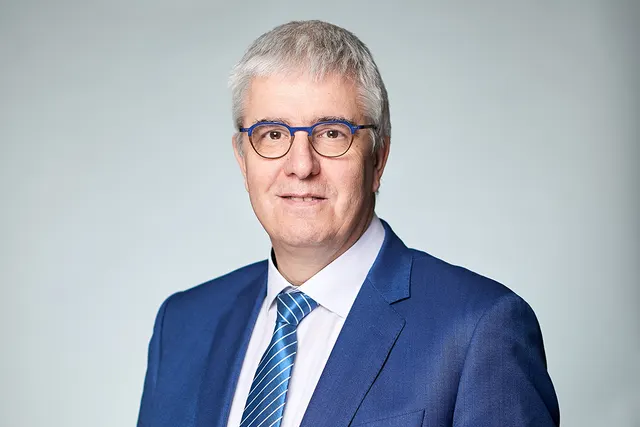
Bart Van Craeynest
Chief Economist, VOKA
Question about this story? Ask your question
Keep following this
Get an email when a new story is published. No account needed.
- SubjectCarte blanche