10% reduction in unplanned downtime at Thyssenkrupp Materials
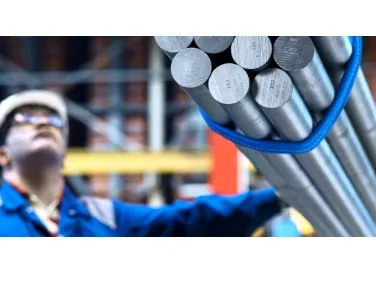
Thyssenkrupp Materials wanted to increase the productivity and availability of a metal saw, while reducing blade replacement costs, in order to improve the overall equipment effectiveness of its metal saws. The project proved extremely straightforward and inexpensive to implement.
Thyssenkrupp Materials supplies its customers with a wide variety of materials and machining services every day. The company offers a broad range of stainless steel, steel and aluminium, from its own stock as well as through central warehouses and international partners. Customers can turn to this materials specialist for all kinds of machining services, from standard machining operations to the supply of semi-finished metal products.
The company wanted to increase the productivity and availability of its metal saws, while also reducing blade replacement costs in order to improve their overall equipment effectiveness.
Overall equipment effectiveness in practice
Each production machine is connected to a box with three buttons and a status indicator featuring four different-coloured lights. The box is connected to an electrical signal from the module, which determines whether the machine is running or stopped. When the machine is running, the green light comes on. When it is stopped, the operator can select one of three configurable buttons corresponding to the cause of the stoppage, for example: fault (red), set-up or intermediate status (orange), or material depleted (blue). The box is linked to a dashboard that provides an overview of the status of the machine in the facility.
At a glance, the production manager can see whether the machine is running. If it is not, they can quickly and easily check why it has stopped and for how long. This saves a great deal of time that would otherwise be spent walking around the premises to check the status of the machines.
This tool provides statistics on average performance by shift, an analysis of the capacity used by different machines, and an overview of the main causes of production stoppages and cycle times. An increase in cycle time indicates that tools may need replacing or maintenance. The same analysis also highlights set-up times between batches. Machine or production site performance can then be assessed and compared, making it possible to identify the best-performing units.
A range of benefits
The benefits of this approach include more efficient production and a better understanding of the causes of production stoppages. Implementing the project reduced the number of unplanned stoppages by 10%. This generated around 10% additional revenue for the plant, while also improving internal logistics processes and capacity and workforce planning. Saw blade replacement could be optimised based on cycle-time analysis.
The equipment, which took two hours to connect and configure, required only a small investment, as did the monthly software fees. This modest total investment delivered a rapid return.
Connected Manufacturing Casebook
In a transparent production facility, real-time production data show what is happening and why. This enables stakeholders to make informed decisions to optimise production, by shortening production phases or improving quality, and thereby enhance competitiveness and productivity. Connecting production equipment to IT resources such as ERP systems or other systems is crucial to creating any transparent production facility.
Question about this story? Ask your question
Keep following this
Get an email when a new story is published. No account needed.
- ThemeSheet metal and tube cutting
- SubjectNews