A waterjet cutting machine is helping to build the agricultural technology of the future
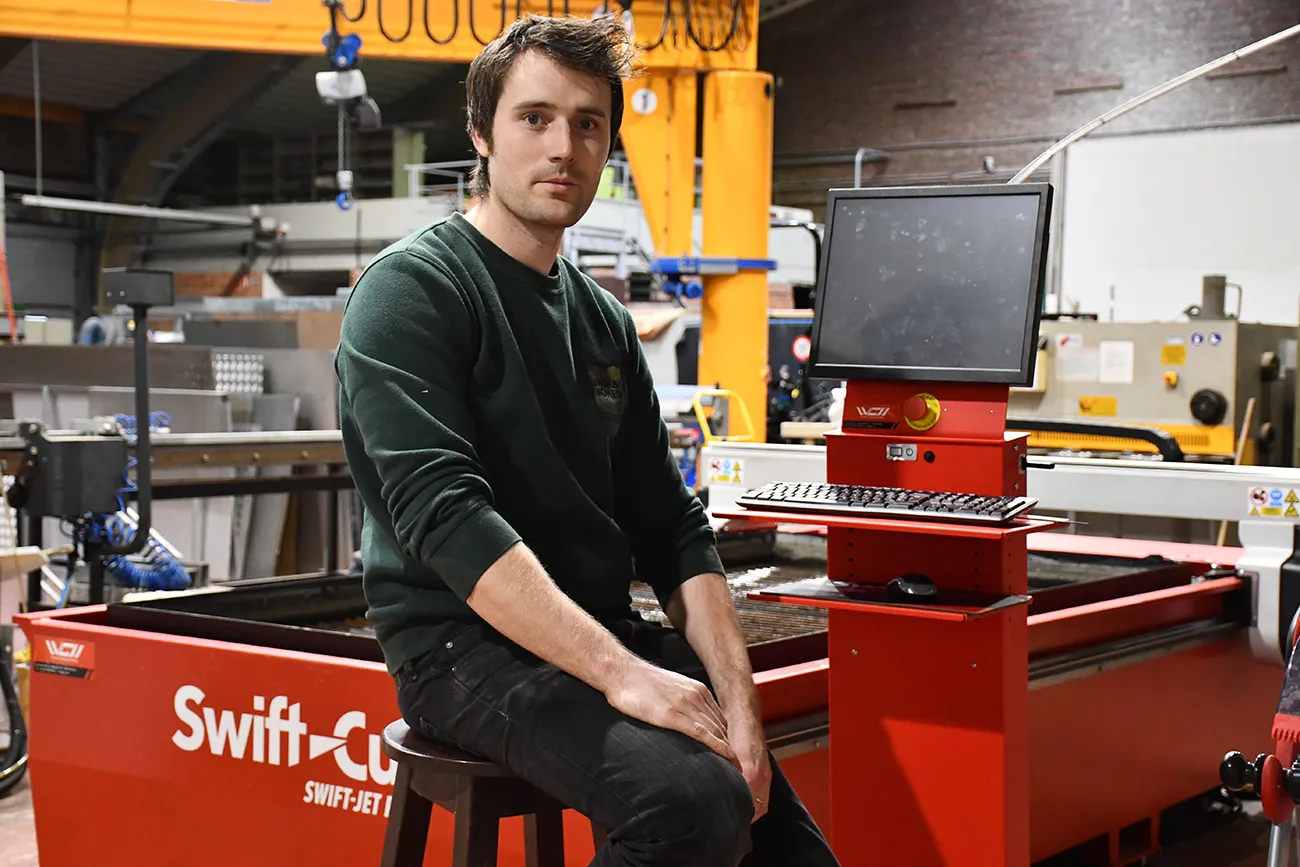
Flanders is a strong player in agricultural technology. A key part of this ecosystem is ILVO’s Living Lab Agrifood Technology, which helps companies develop new machinery technologies. To make its workshop more flexible, it recently invested in a waterjet cutting machine. Wouters Cutting & Welding supplied the perfect solution and support with its Swift-Jet.
ILVO is the Instituut voor Landbouw-, ¬Visserij- en Voedingsonderzoek (Institute for Agriculture, Fisheries and Food Research). Metalworking and mechanical engineering may not be the first things that come to mind, but they are very much part of the work carried out here. ILVO has its own Living Lab Agrifood ¬Technology.
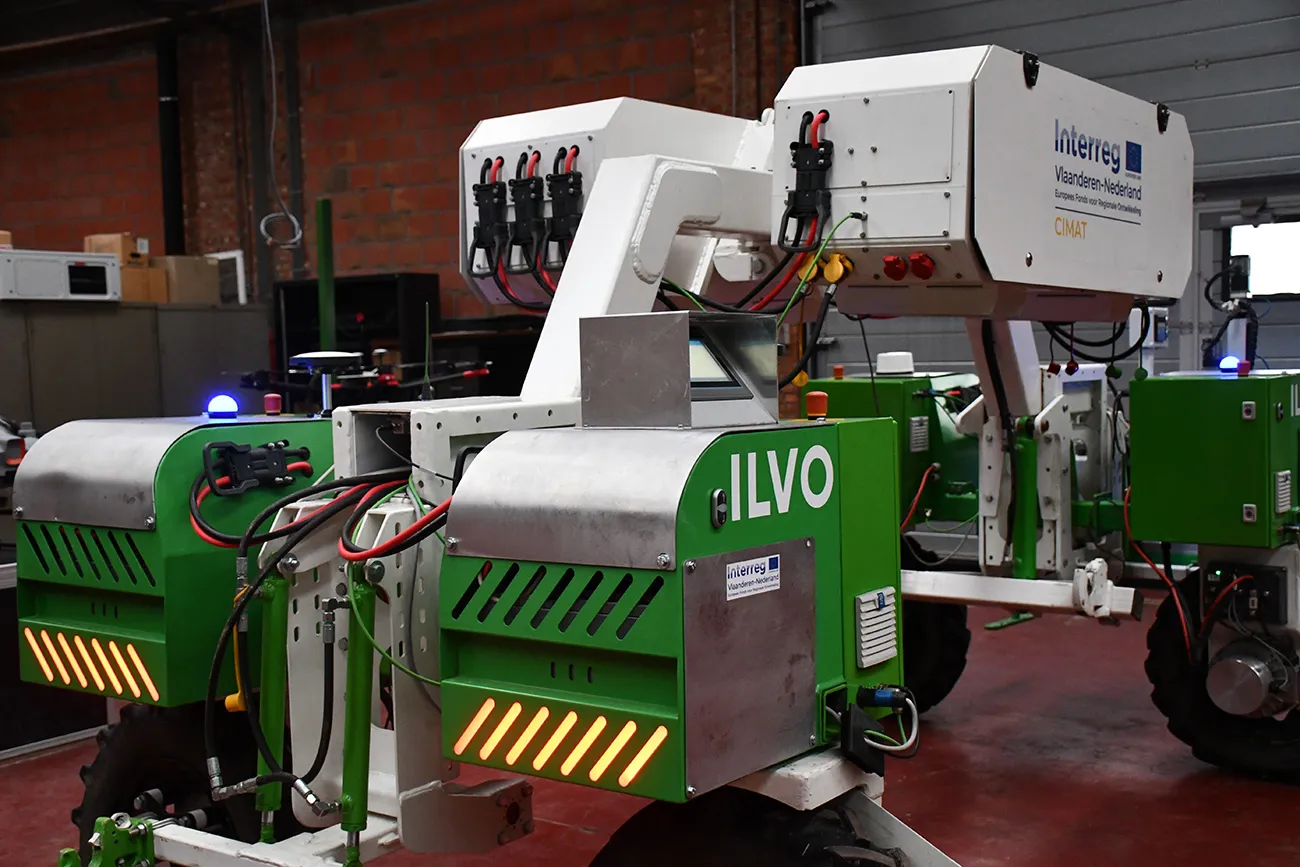
“Think of it as a kind of testing ground, where we develop new technologies for the agri-food sector in close collaboration with companies. Some of these projects involve precision agriculture. In other words, how can we get more out of our fields while reducing environmental pressure by applying innovative technologies?” explains project manager Simon Cool.
Testing in the field straight away
According to Simon Cool, the strength of the Living Lab lies in its synergy with the other research carried out at ILVO.
“This gives us access to the expertise of 750 employees and extensive infrastructure to make this co-creation a reality. The test fields in particular, where we can immediately test our prototypes and make adjustments if necessary, are a real asset.” The need for such an initiative is clear from the many applications and projects under way. “That is precisely because Flemish agriculture has its own distinctive character. We do not have the same scale here as in France or Germany, which means we need highly specific solutions. We see efficiency and sustainability as the key priorities in this area,” adds Simon Cool.
Waiting too long for parts
Agricultural machinery is exposed to specific, harsh conditions that cannot be replicated in a laboratory. “The sooner we can get out into the field to run tests, the sooner we can take the next steps in technological development.” In the past, the Living Lab outsourced its sheet metal cutting work. But this did not provide the flexibility it needed. “Neither in terms of cost nor delivery times. We always had to wait for our parts before we could continue working. We did have a milling machine that could serve as a plan B in an emergency, but it was by no means an efficient way of working.”
Seeking material flexibility
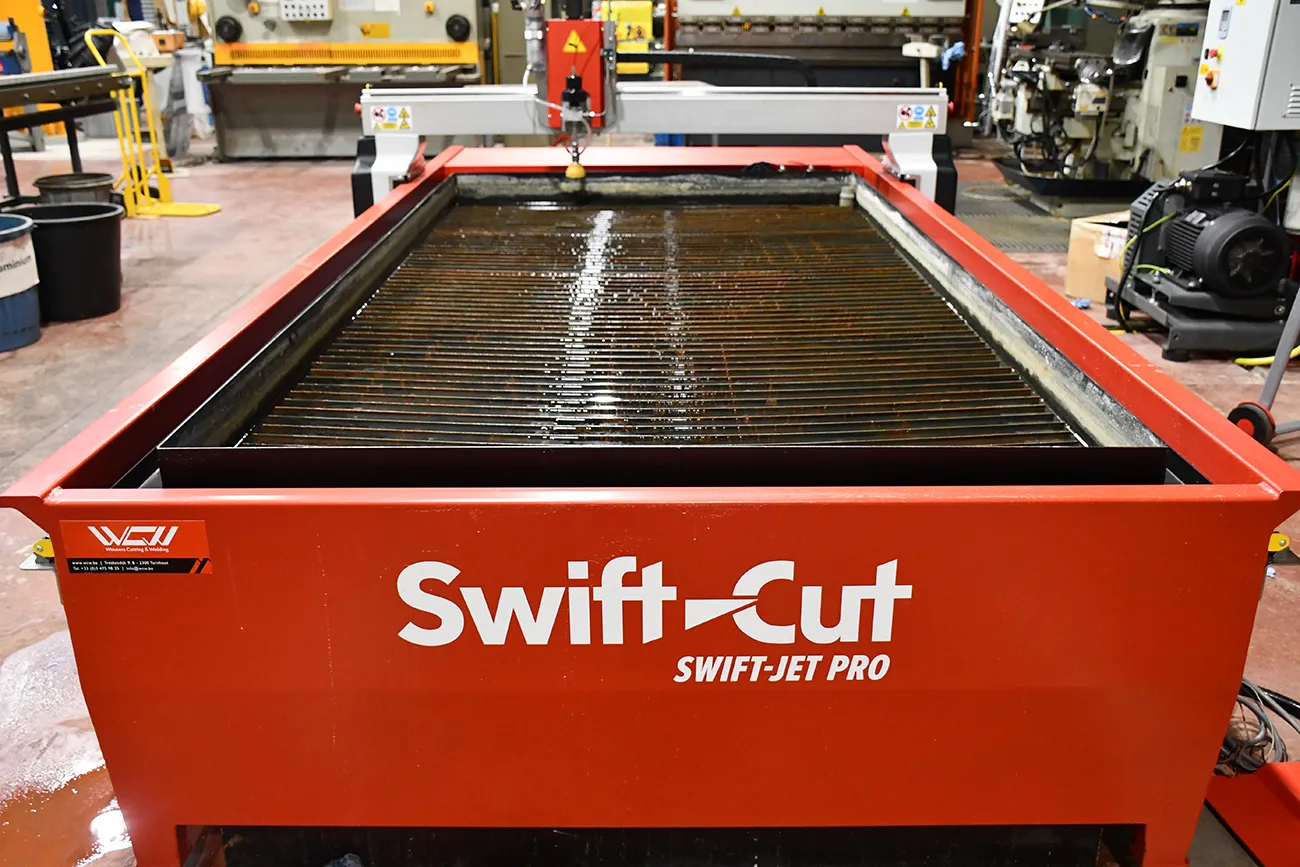
Cool and his team had been asking for their own machine for years, so they could cut parts to size under computer control. However, while the subcontractor’s parts were mainly laser-cut, another technology proved a little more attractive to the Living Lab.
“Our focus here is first and foremost on agricultural technology. When we began our search, we did not really know what was available on the market in terms of sheet metalworking machines. Material flexibility was our main requirement. Structural steel, aluminium, stainless steel, PVC… we work with it all,” says Simon Cool. “Ideally, we would be able to do all of this on a single machine.”
Waterjet cutting, the best choice
It soon became clear during the process that a waterjet cutting machine could offer even more possibilities in this respect. Rached Taheri, a representative at Wouters Cutting & Welding, pointed them in the right direction. “That immediately gave us confidence. A number of construction companies we work with also gave WCW positive reviews,” says Simon Cool.
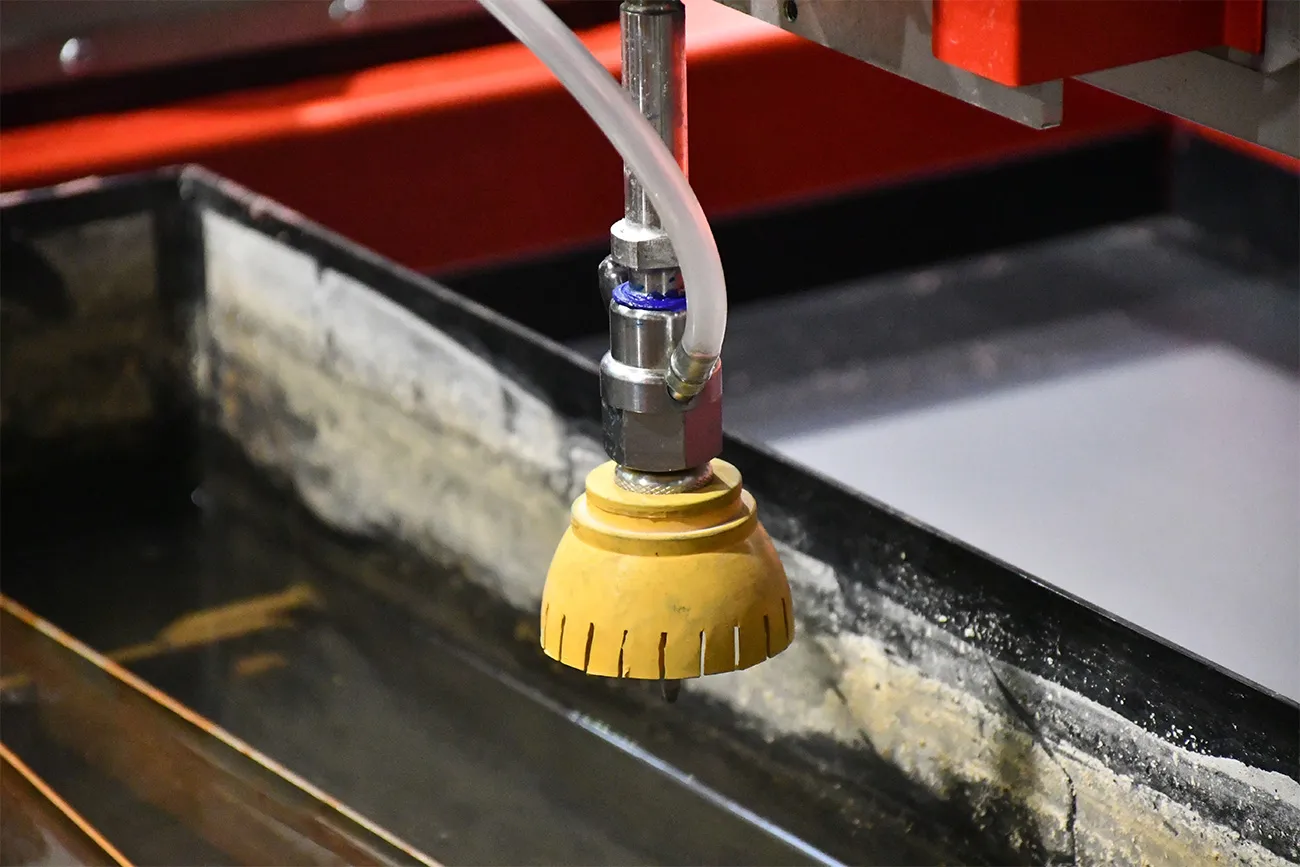
In December, the Swift-Jet waterjet cutting machine arrived at ILVO’s workshop. “We may have seen machines with more bells and whistles during our search, but this one turned out to offer the best value for money. Ultimately, we build prototypes. The 0.2 mm accuracy this machine offers is more than sufficient for that. The frame’s load capacity (400 kg/m) is sufficient too. Most of the sheet metal we use is less than 20 mm thick.”
No time to waste
Despite the Living Lab team’s lack of experience, the machine is now being used without any problems. “Parts go through it almost every day. As soon as the 3D drawing is ready, it is sent straight to the machine. This has made us much more efficient. The machine is actually very simple, intuitive and accessible to everyone. For anyone without experience in 3D drawing, there are templates in the control system where you just enter a few parameters. Brilliant. The two-day training course we received from WCW, attended by around seven colleagues, focused mainly on the key points to watch when operating it. After all, it has consumable parts. This means we can handle the most common error codes ourselves. We haven’t had to pick up the phone once,” says Simon Cool with a smile. “It has only been here a short time, and as we become more familiar with what it can do for our production, we will use it more and more.”
WOUTERS CUTTING & WELDING: Stand number 166
Een zakelijke vraag aan Wouters Cutting & Welding BV? Get in touch
Companies in this story

Keep following this
Get an email when a new story is published. No account needed.
- ThemeSheet metal and tube cutting
- SubjectNews
- CompanyWouters Cutting & Welding BV