Artificial intelligence for monitoring cutting tools

While data techniques from the world of artificial intelligence (AI) capture the imagination, they are also highly closed, opaque and difficult to access. The main challenge is that there is no single technique capable of solving every problem. AI is instead a set of techniques from which an expert must choose the best technique or combination of techniques for the problem at hand. Not all AI techniques are useful in manufacturing: the amount of data available to SMEs is generally quite limited. Knowledge, on the other hand, is available in principle, for example from operators, who can accelerate the convergence of AI techniques. The WEAR AI Tetra project aims to demonstrate the usefulness and importance of AI in Flemish industry and to implement it in a number of practical cases that can inspire others. We focus on techniques relevant to manufacturing. We are working on practical applications involving tool wear. The manufacturing industry is familiar with these techniques, they are of direct interest to it, and they featured prominently in a survey.
The use of advanced signal-processing methods to monitor critical processes is considered a highly promising area of interest. Monitoring anomalies reduces material costs, while adding calculated remaining useful life to maintenance schedules makes it possible to produce more. The result is greater efficiency.
Practical challenges
The aim of the case study is to design a data-driven algorithm capable of informing the machine operator about the condition of a machine’s components or of the system as a whole. As an example, we describe a case study developed as part of the TETRA WearAI project.
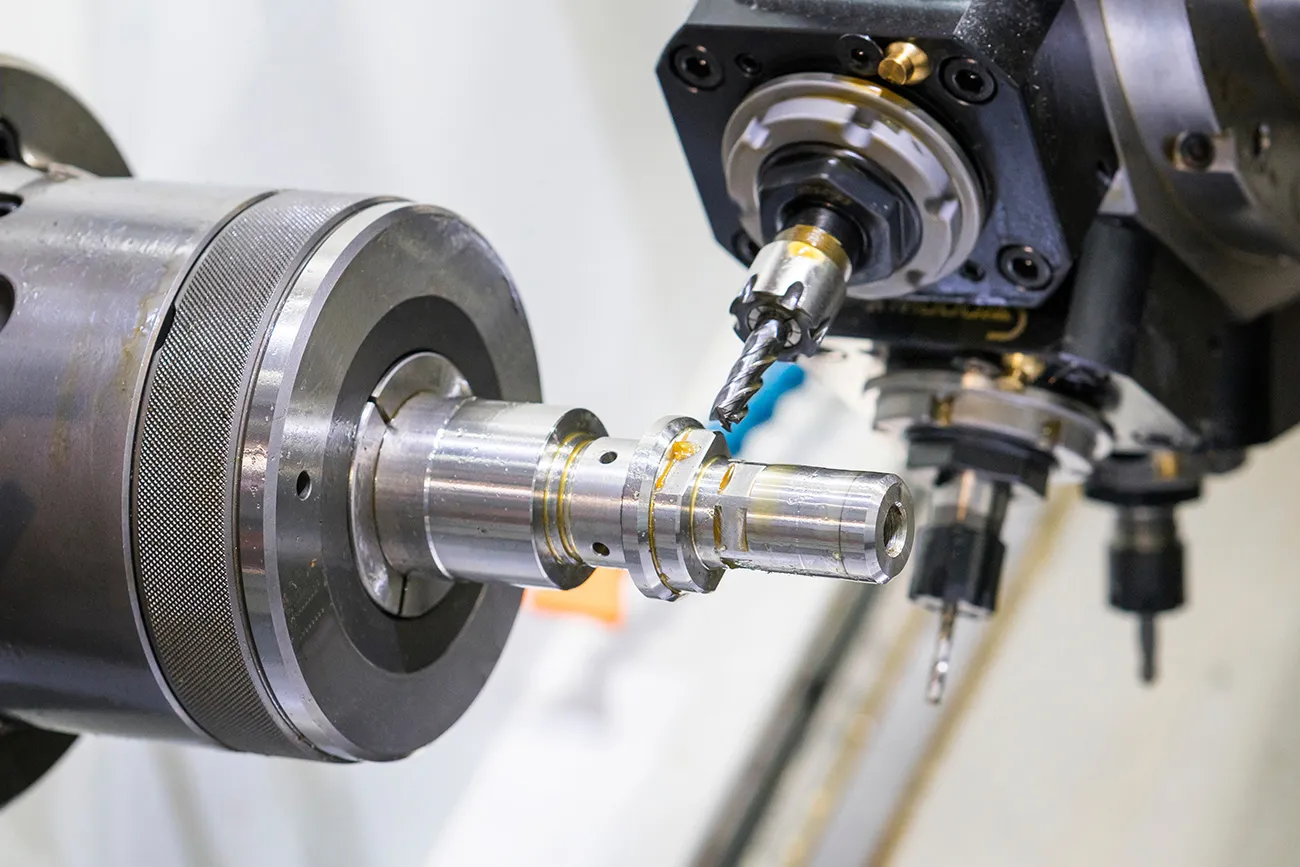
The case involves milling laminate at a partner company with more than 60 years of experience, which is one of the world’s largest flooring manufacturers. The laminate’s rigid plastic top layer is the main cause of wear on the cutting tools. High feed rates and spindle speeds ensure smooth production processes, but they also accelerate tool degradation, requiring regular downtime to rotate or replace the cutters. Planned maintenance minimises failures caused by poor cutting edges, but does not make full use of the cutting tools’ service life. Maintenance based on the tool’s current condition is the next logical step in this process. By placing an external system near the original machine, data streams such as vibration, acoustic emissions, currents and voltages were generated. These provide valuable information for further analysis and training machine-learning algorithms. In the absence of labels, it is appropriate to study unsupervised learning methods, in this case specifically the DBSCAN algorithm.
Classification
After extracting the desired features from the captured data streams, feature selection is an interesting intermediate step that is often underestimated. Various filters are needed to normalise outliers, noise, the data domain and so on. Of the many features generated, 1,360 in this case, only the most valuable are carried forward to the next stage and ultimately used as training data. Using the accuracy of the fully trained model as a benchmark, we systematically omit features from the training set and compare the result. The differences in accuracy provide an indication of the contribution made by each feature. Given its unsupervised nature and relatively small number of tuning parameters, DBSCAN (Density-Based Spatial Clustering of Applications with Noise) was a logical choice. The literature reports good results from similar implementations of this technique for tool wear.
The potential
The implications of implementing ML/DL in existing machines should not be underestimated. This detailed example does not include information on ML deployment, but clearly shows that run-in and accelerated-wear phases can be distinguished using unsupervised machine-learning algorithms. Systems inspired by this approach in an industrial context can prevent catastrophic failure. This directly helps minimise downtime, thereby increasing production. A better understanding of machine condition makes it possible to move to condition-based maintenance, further reducing downtime and extending the operating time of each tool. More production hours per tool mean lower stock levels and associated costs.

Conclusion
Data-driven techniques are not simply the latest technological bandwagon. They represent a change in vision and perspective. This fits perfectly with the philosophy of Industry 4.0, and any organisation wishing to follow this path must put a carefully considered structure in place. This is not a one-off project, but a transition to a data-centric approach. It will bring any company with a robust data-management system closer to predictive maintenance and intelligent data sharing. The influence and potential of this approach are clear from the fact that even relatively simple models can detect a failure, for example.
A better understanding of how wear progresses during cutting processes can reduce costs in several areas. With a very small initial investment, an operator can collect information, analyse data and draw conclusions. Once more experience has been gained in this area, it is possible to move on to online wear-measurement methods. Where circumstances permit, we recommend a direct measurement technique to achieve the highest possible level of automation and reliability. We are convinced of its potential and look forward to extending it to other applications.
Acknowledgements
We would like to thank Dr Tim Claeys and Prof. Jeroen Boydens for their support and dedication to this project. Project collaborators Hans Naert, Pieter Ideler, Peter Vanbiervliet and Robin Loicq were indispensable in collecting the data and communicating with the industrial partners.
Question about this story? Ask your question
Keep following this
Get an email when a new story is published. No account needed.
- SubjectNews