Attention to detail, ready for action
Texte : Valérie Couplez Photos : RoboJob
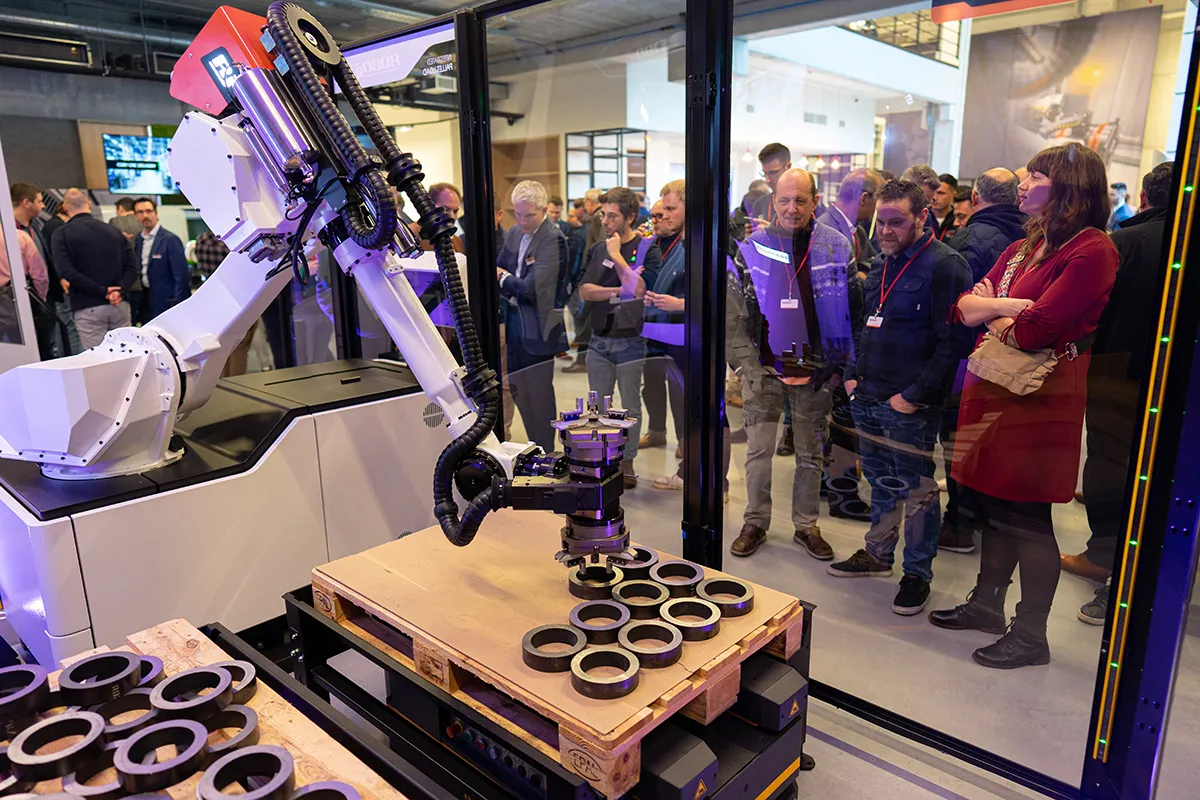
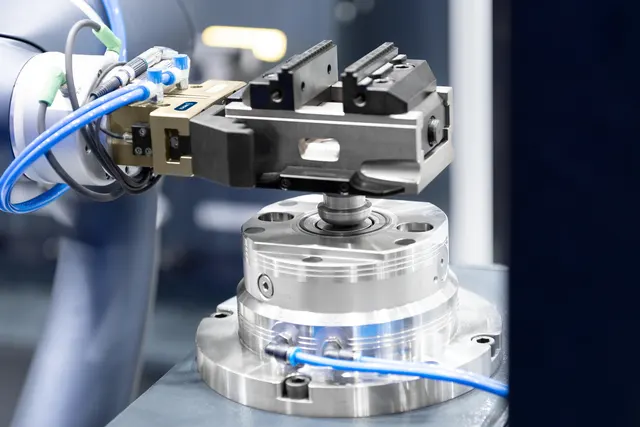
Since its foundation, RoboJob has been helping metalworking companies automate their processes. Its solutions make it easier to load and unload parts, eliminating repetitive work for operators. However, manual intervention was still needed to prepare the software and, above all, the hardware. With its Pallet-Load Integrated, the company is taking things a step further. By adding vision technology and artificial intelligence to the new Pallet-Load Integrated, RoboJob means operators now only need to focus on the programme. The robot sees with its “own eyes” how the parts are arranged and how best to pick them up. Because the simplest automation is generally the most effective.
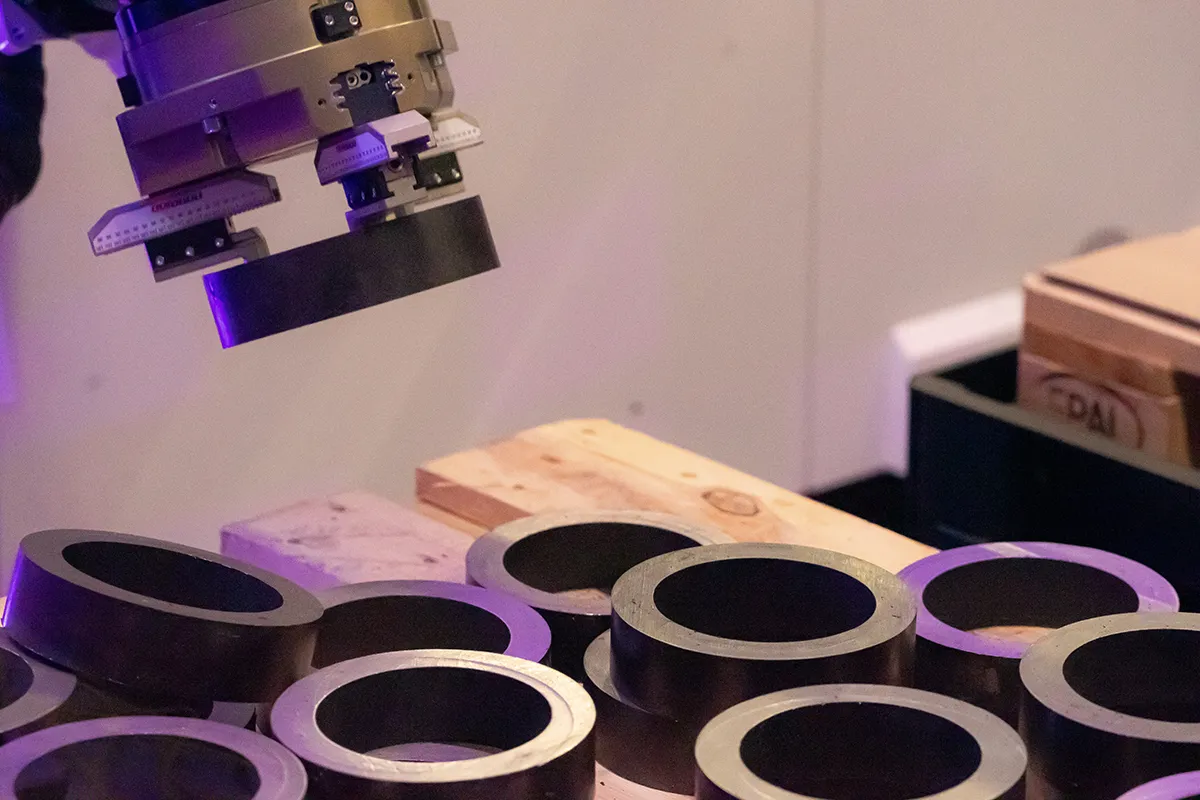
Solutions such as Pallet-Load have already proved their worth in the metalworking industry. But automation only works reliably if parts are positioned precisely on the pallet. “When they come off the saw, an operator usually needs to position them correctly. But given the shortage of skilled technical staff, it is better to keep these people close to the machines, where they can add the most value,” explains marketing director Steven Craenen.
Goodbye to costly 3D cameras
Welcome to the era of vision technology with the new Pallet-Load Integrated. Vision solutions are, of course, nothing new. But RoboJob is now making them accessible to all SMEs. “To pick up parts reliably, you need a 3D image. Traditionally, this is produced using an expensive 3D camera, but as well as the price, it also has certain technical limitations,” explains Maxim Bonnaerens, machine learning engineer at RoboJob. “For example, it struggles with light and reflective surfaces, both of which are common in the metalworking industry. You can get around this with additional hardware, such as lighting, but that only increases the cost.”
A revolutionary innovation
RoboJob therefore uses artificial intelligence to turn 2D images into 3D images. This revolutionary innovation stems in part from Maxim Bonnaerens’ PhD research. “The starting point is how people look at objects. We can do this with our eyes from different angles, and that is what we do for our robot too. Using a single camera, we create four different images from which artificial intelligence can extract the 3D information needed for reliable recognition. All the user has to do is specify which parts are involved and how they are arranged. The robot then has enough information to calculate its route to pick up the parts, take them to the machine, remove them after the cycle and stack them perfectly.”
Optimal performance, anywhere and at any time
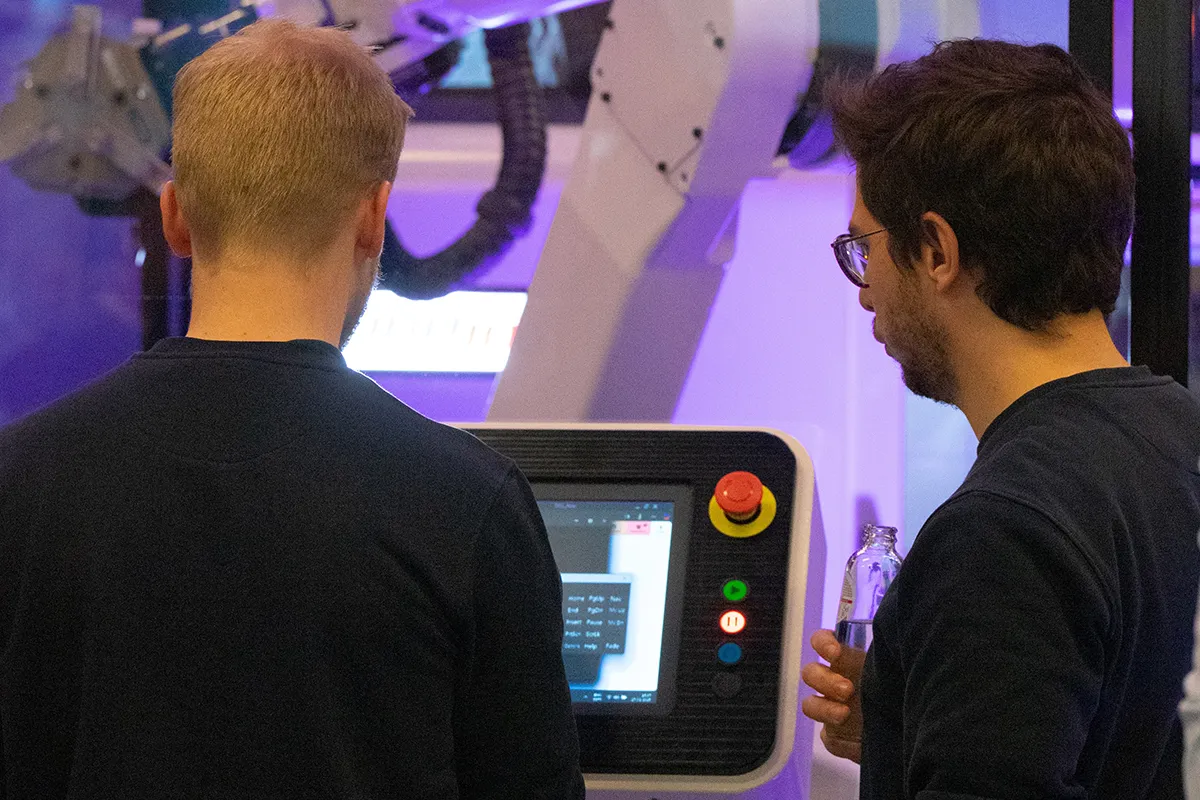
It goes without saying that customers had been asking for a solution like this for a long time. “But it took time to learn how to compensate for the challenging conditions in the metalworking industry, so that our Pallet-Load Integrated would perform optimally, everywhere and at all times. Reliability is essential. At the same time, you need to combine speed with precision to add value in modern production environments and minimise barriers for users.” RoboJob also achieves this by preparing the turnkey installation in its workshop in Heist-op-den-Berg. “This means the customer’s production only needs to be interrupted briefly. We have also designed an especially compact installation, and pallets can be supplied and removed by automated guided vehicles (AGVs).”
“Using machines more efficiently”
The theory sounds great, but what does it mean in practice? Even before its official launch at the head office in
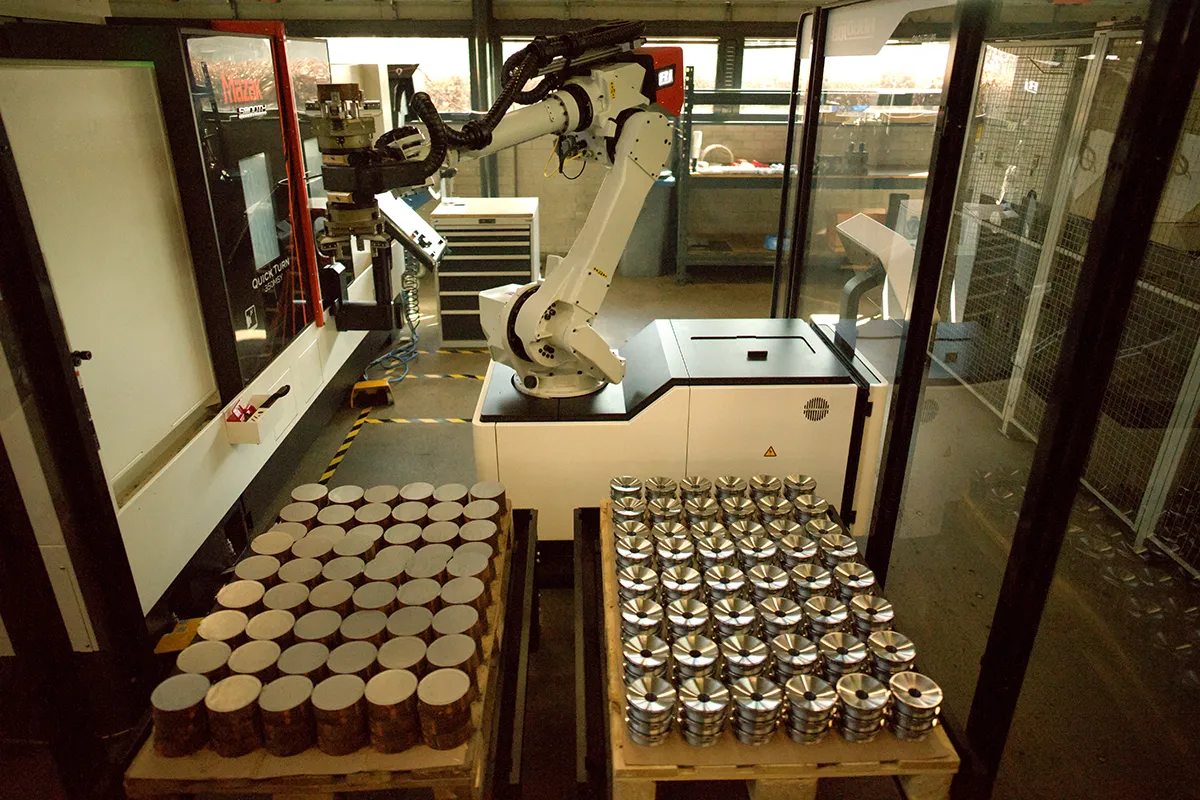
Heist-op-den-Berg and at Machineering, the first Pallet-Load Integrated had already been running for hours. The first installation went to Dutch company Biezepol Metaalbewerking, based in Heerjansdam, which manufactures vibration dampers for large marine engines. Production manager Sander Keesmaat explains why they were eager to install the Pallet-Load Integrated after seeing a preview at Mazak. “The variation in batch sizes, tight delivery deadlines and shortage of skilled workers are making it increasingly difficult to maintain optimum efficiency. That is why we turned to advanced automation. With vision and AI integrated, the robot can recognise and position parts autonomously, increasing production speed while also minimising the margin for error. We can now process large batches of our own products as well as small batches for our customers without any concerns. Our machines are used more efficiently, and our operators are assigned where they can add the most value. It is a major step towards the future and becoming more competitive, without compromising on quality.”
Question about this story? Ask your question
Keep following this
Get an email when a new story is published. No account needed.
- ThemeProduction flow automation
- SubjectNews