Cobots for loading and unloading machine tools
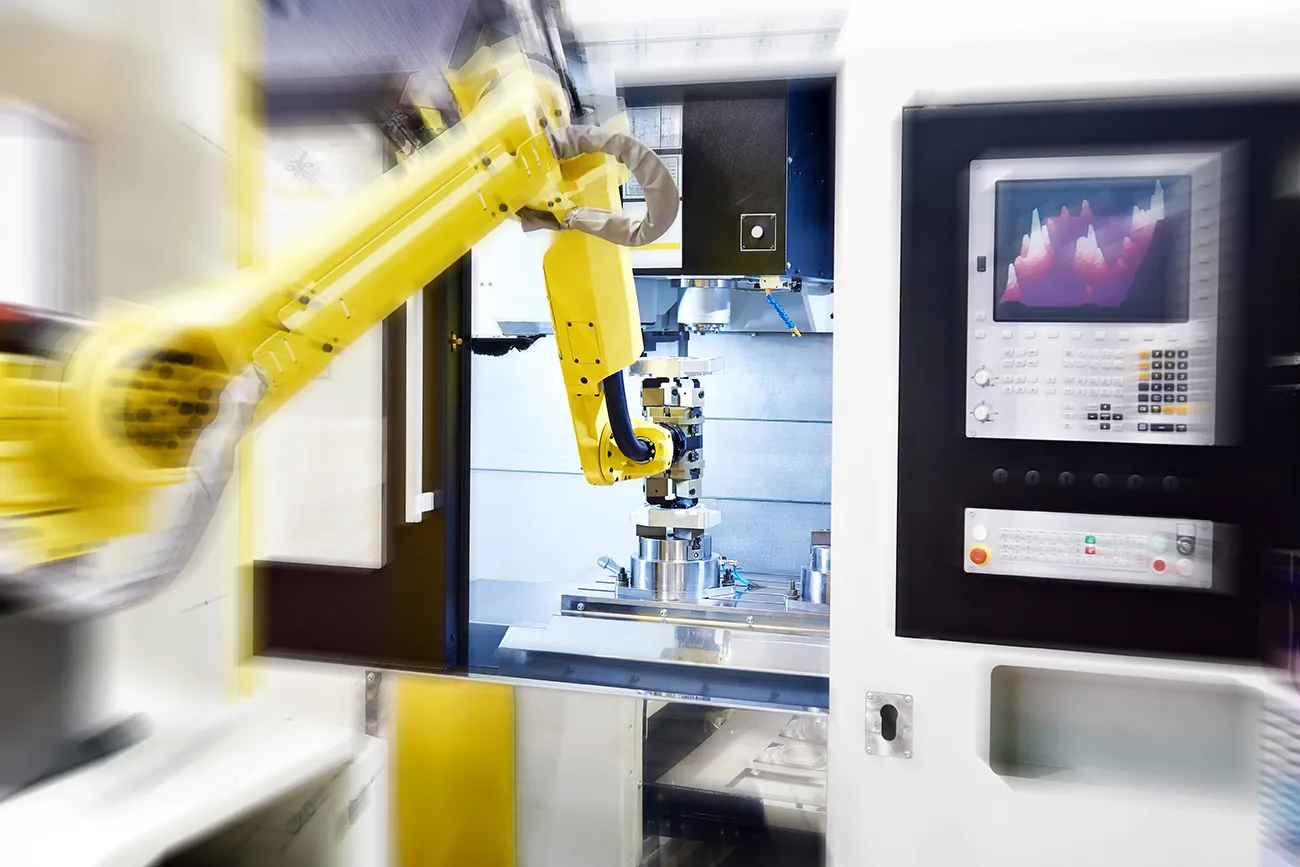
In modern production environments, flexibility is key. Supply and demand are constantly changing. The seemingly simple solution of hiring more people is not as straightforward as it sounds. Technically skilled staff are very hard to find. So it is time to turn to automation. Anyone opting for machine tools that can operate without human intervention will discover a wealth of opportunities. And by adding a cobot to load and unload the machines, you can even set up an extra shift at night or at weekends.
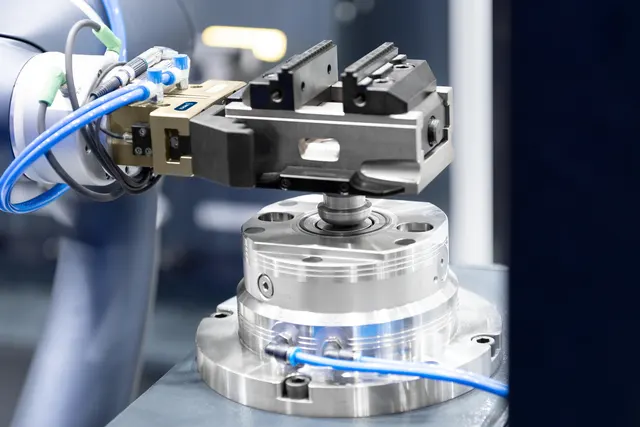
Industry experts estimate that 4.6 million manufacturing jobs will remain unfilled over the next decade. The shortage is not limited to specific tasks such as welding, but also affects assembly, packaging, and machine loading and unloading. The latter is one of the most repetitive tasks performed by operators. Machine loading is now a mature automation application. These tasks are ideally suited to automation and can often deliver an excellent return on investment. By having a robot or cobot handle them, you can put your employees’ skills to better use elsewhere, more efficiently and intelligently, while reducing the risk of injury, particularly when handling bulky and heavy parts. Robots and cobots do not lose focus, eliminating the risk of errors. For a CNC machine, this means more operating hours and therefore increased output, as the machine can also run undisturbed at night and at weekends, while your employees gain greater satisfaction from carrying out other tasks. In short, it is an investment that benefits everyone.
Why a cobot?
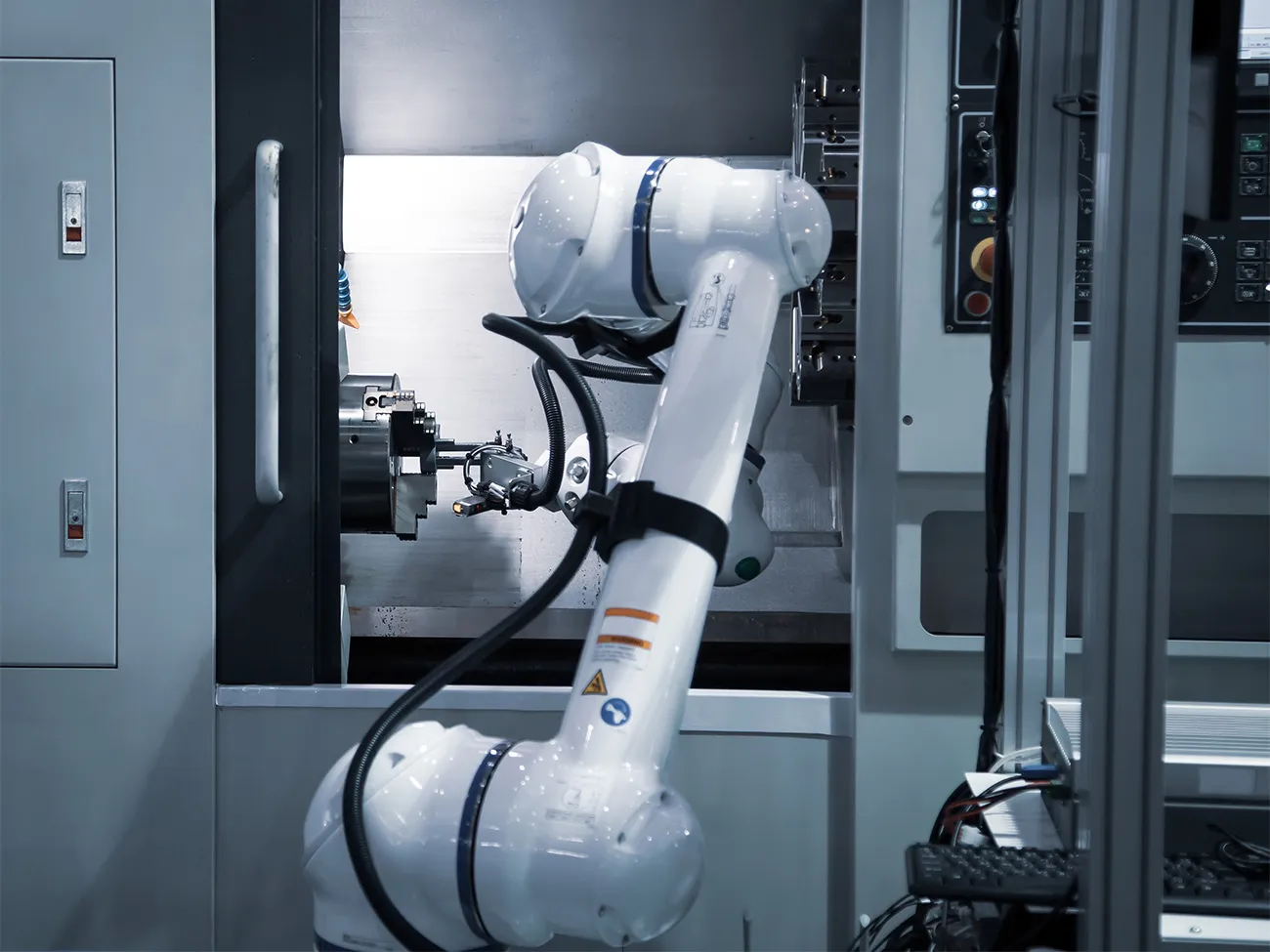
With traditional robots, however, metalworking companies can find themselves up against limitations in terms of cost and the space they take up on the shop floor. Cobots, by contrast, can be as flexible as people, adapting quickly to different situations and applications.
The cobot owes this flexibility primarily to its ease of programming, as well as its potential mobility, which allows it to be assigned to several machines. Its user-friendly programming language means employees do not have to learn a programming language to work with it. Anyone who can read and knows exactly what needs to be done with the robot can programme it after a short training course and get it running again if a problem occurs. Thanks to this quick and easy programming, the cobot is ideally suited to today’s high-mix, low-volume production. Its memory can store numerous programmes, and it can be deployed anywhere on the shop floor. This is especially useful when it is paired with an AMR (autonomous mobile robot), which allows it to move around and work autonomously. The cobot can also be mounted or fixed in a variety of ways to give it the reach it needs.
What about safety?
One of the main differences between a robot and a cobot is that the safety fence required for a robot is no longer needed for a cobot. Cobot manufacturers must ensure that their devices are inherently safe. In other words, if people approach the machine tool, the cobot must slow down or even stop completely to prevent any risk of injury. However, remember to carry out a risk assessment of the situation on the shop floor, so that theory is matched by safe working practices. Adding a few scanners in the right places is generally enough to create a safe working environment for the cobot and your employees without compromising productivity.
Question about this story? Ask your question
Keep following this
Get an email when a new story is published. No account needed.
- ThemeProduction flow automation
- SubjectNews