Cubic boron nitride for challenging applications
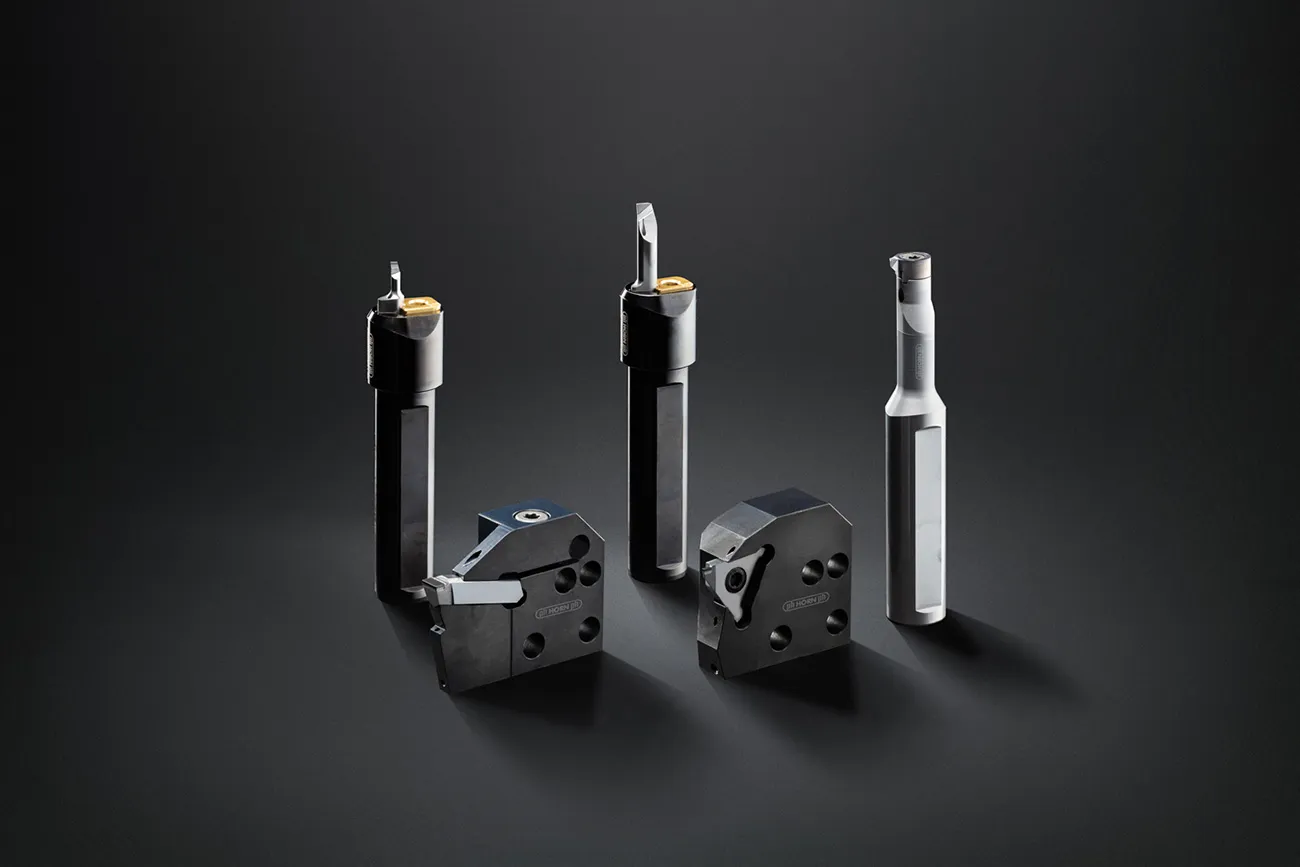
Paul Horn GmbH is expanding its tool portfolio for machining hard materials and other steels. Tools equipped with cubic boron nitride (CBN) optimise the machining of nickel-based alloys and other superalloys, as well as powder-metallurgy and hardened steels. CBN, a very hard cutting material, offers advantages in high-performance full cuts and interrupted cuts in hard turning and grooving operations. By adding these extensions to its standard range for the Supermini 105, Mini 11P, 229 and 315 systems, Horn can supply users with the tool systems they need quickly from stock.
The Supermini system is available in left- and right-hand versions with different cutting-edge radii. CBN-equipped variants are suitable for internal machining from a diameter of 2 mm. Different lengths of solid-carbide shanks are also available. Tools in the Mini family are used from an internal diameter of 6.8 mm and are also available in left- and right-hand versions. The single-edged type 315 tool is suitable for external parting-off operations from a width of 0.5 mm. For the 229 system insert, the previous CB 50 CBN substrate has been replaced by the higher-performance CB 35 substrate. Cutting inserts with two different cutting-edge radii and cutting widths from 3 mm to 6 mm are available from stock.
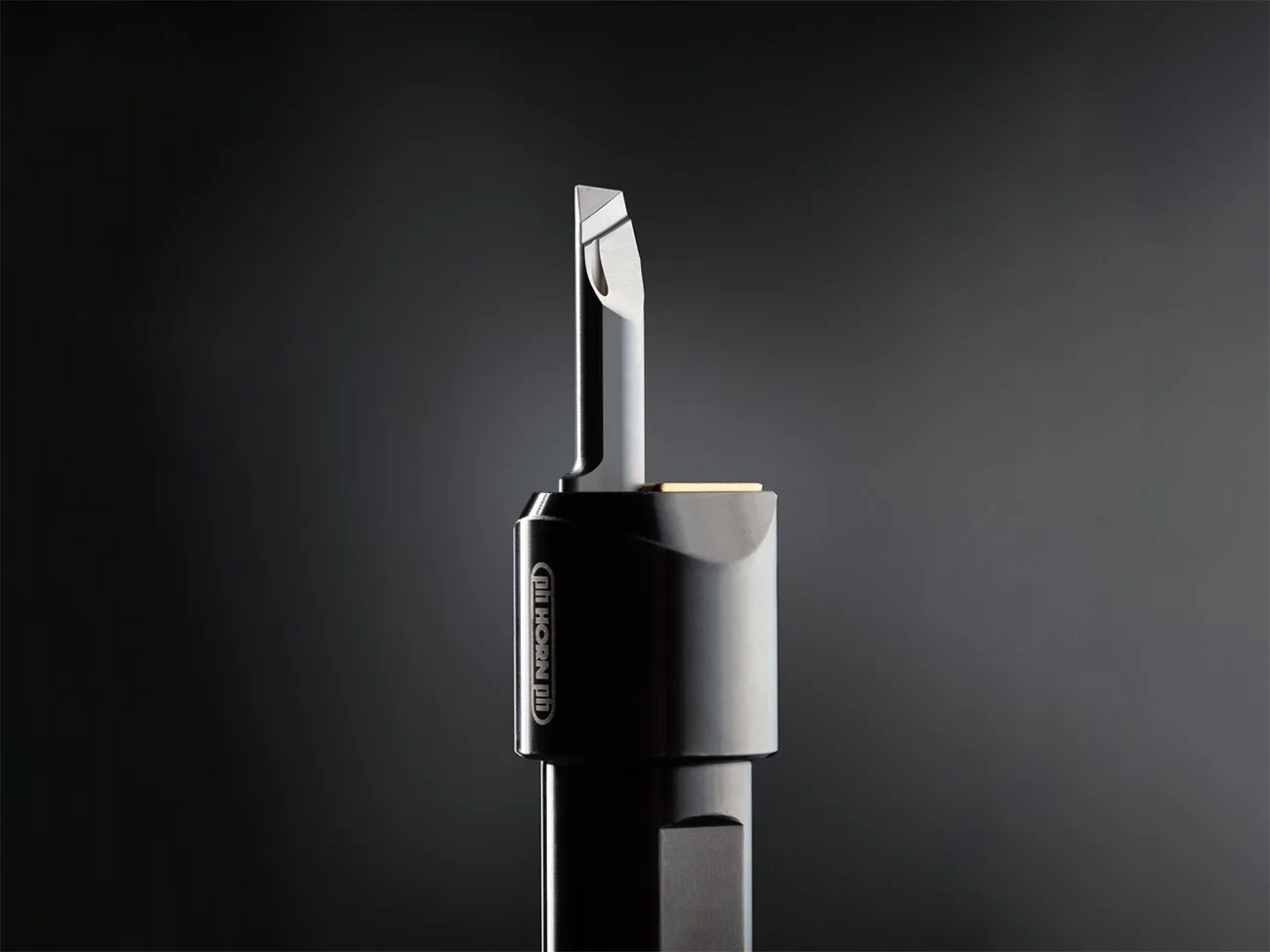
CBN is the second-hardest known material after diamond. When used appropriately, CBN tools wear much more slowly than tools made from other cutting materials. This makes it possible to achieve greater dimensional and form accuracy, and to machine hard materials, including steel up to 70 HRC, safely. There are no different grades of CBN. They are differentiated by the volume percentage of CBN, the fillers, the grain size and the ceramic/metallic bonding phase (cobalt/nickel). This results in different CBN substrates. Hard machining with CBN cutting materials is generally carried out dry, because the cutting material has high heat resistance and the high temperature inside the chip-forming zone has a positive effect. An insufficient supply of coolant or interruptions to the cut cause high thermally induced stresses in the insert structure, resulting in cracks and, in some circumstances, destroying the insert. During hard machining, most of the heat generated in the shear zone is carried away by the chip. While carbide suffers a significant loss of hardness at around 800 degrees Celsius, CBN hardness remains virtually unchanged up to 1,200 degrees Celsius. Chemical resistance, particularly at the temperatures encountered, is a key advantage.
Question about this story? Ask your question
Keep following this
Get an email when a new story is published. No account needed.
- ThemePrecision and productive machining
- SubjectNews