New products unveiled at EuroBLECH
Texte : Valérie Couplez Photos : Amada, BLM, CNC-Europe, Euromac, Hypertherm, Kjellberg, LVD, Mazak, Nukon Laser, Penta Laser, Q-Fin, Remmert, TRUMPF et VG Machines
EuroBLECH remains the biennial flagship event for sheet metal working. Once again this year, exhibitors pulled out all the stops to inspire visitors with new products that will help them take their production to the next level. Metaltech was there and returned from Hanover with an overview of the major trends, including China’s impact on the sheet metal market and the move towards unmanned machining.
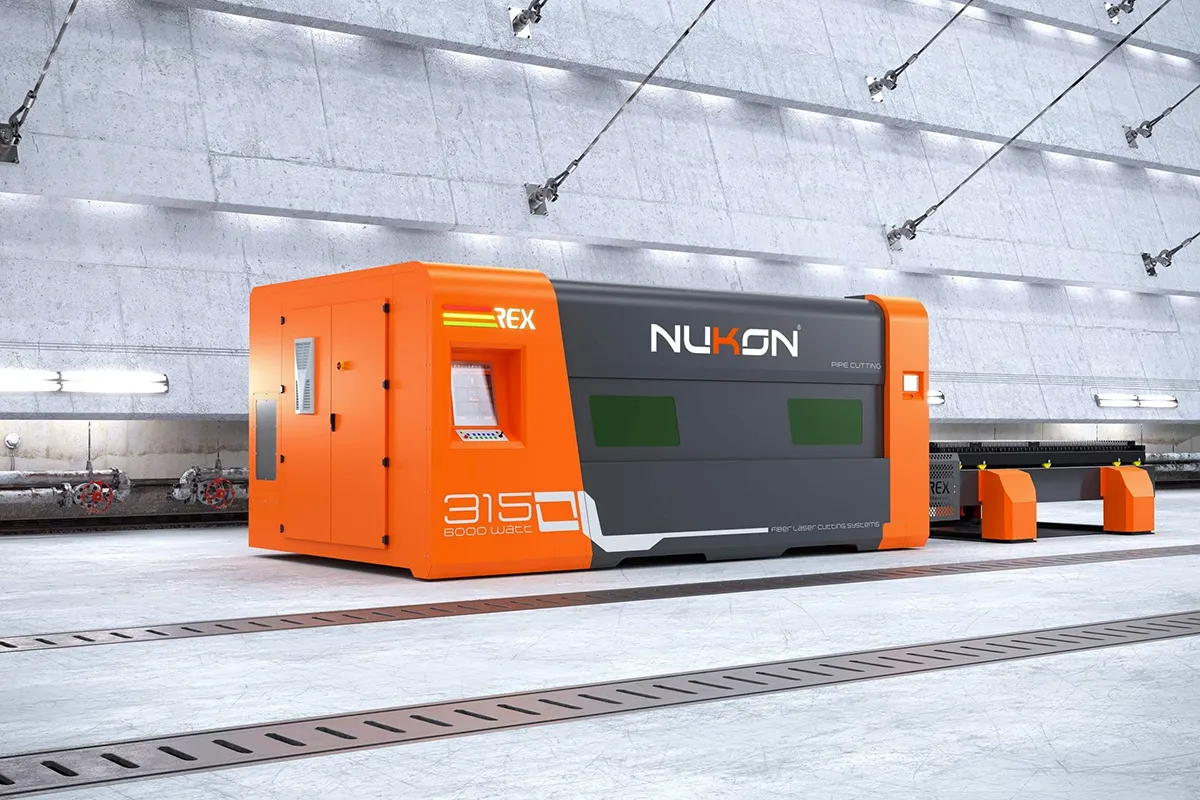
Sheet metal working technology is used in many markets. While Germany seems to be the birthplace of everything related to automation, sheet metal working has a more international profile. The major names come from all over: Germany, of course, but also Belgium, Italy, Japan, Switzerland, and elsewhere. New names from Turkey are also emerging. Nukon has established itself as a reliable player in sheet metal working. “European components are assembled in Turkey. This combination allows us to offer excellent value for money, but our real differentiator is our flexibility,” says Steven Jacobs, Belgian market manager. “If a customer wants something a little different, they should come to us. In a recent project in Belgium, we built a more compact REX model to fit under a low ceiling.”
Not all in the same boat
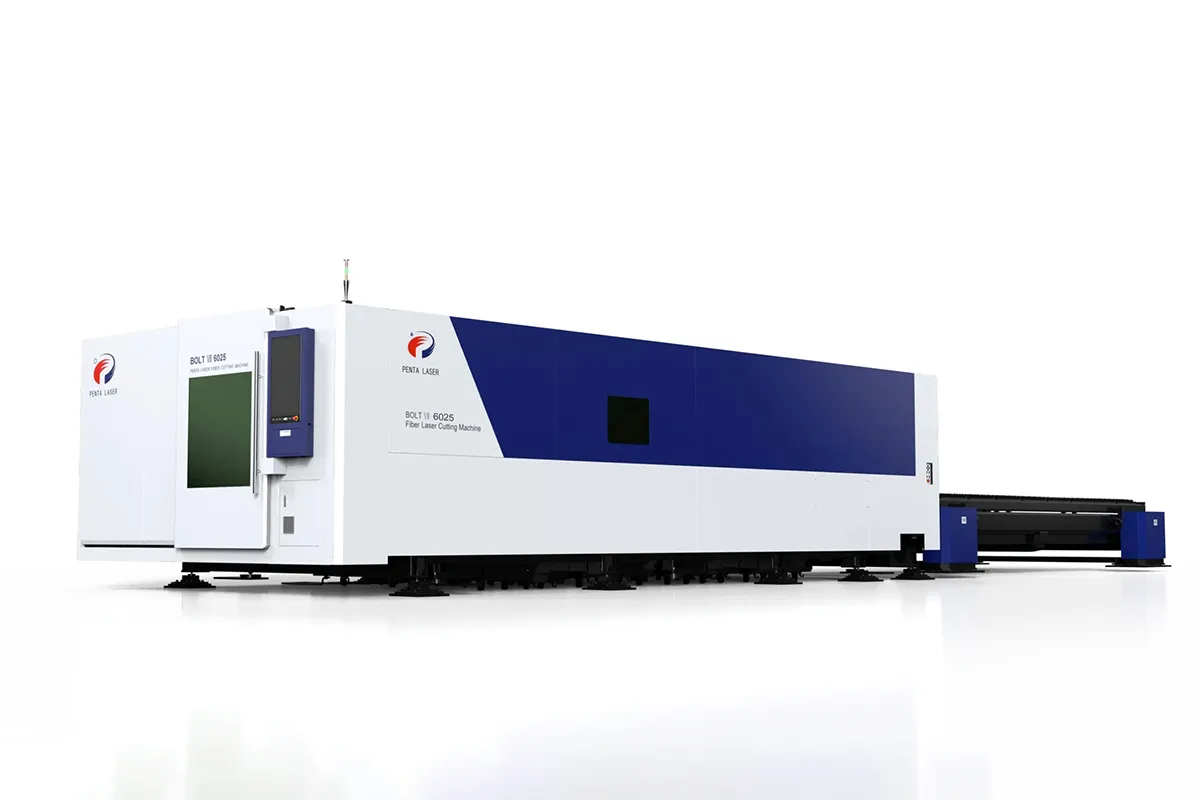
This edition confirmed that competition is coming mainly from China, particularly in the field of fibre lasers. Power ratings are high, already reaching 60 kW. Not bad for a source that, when it was introduced, was expected to be used only in the thin sheet segment. “Don’t lump us all together,” says Jeroen Carmiggelt of Penta Laser Benelux. “Name the reliable players, because it is easy to tar everyone with the same brush. There are differences between Chinese manufacturers. Penta Laser is no flash in the pan. We install around 1,000 machines worldwide every year, half of them with a power rating of at least 12 kW. Thanks to built-in intelligence, our technology makes cutting at higher power ratings cost-effective. Penta Laser holds its own patents in laser technology. We know what we are doing and provide the service customers have every right to expect from Penta Laser Benelux.”
Affordable and reliable
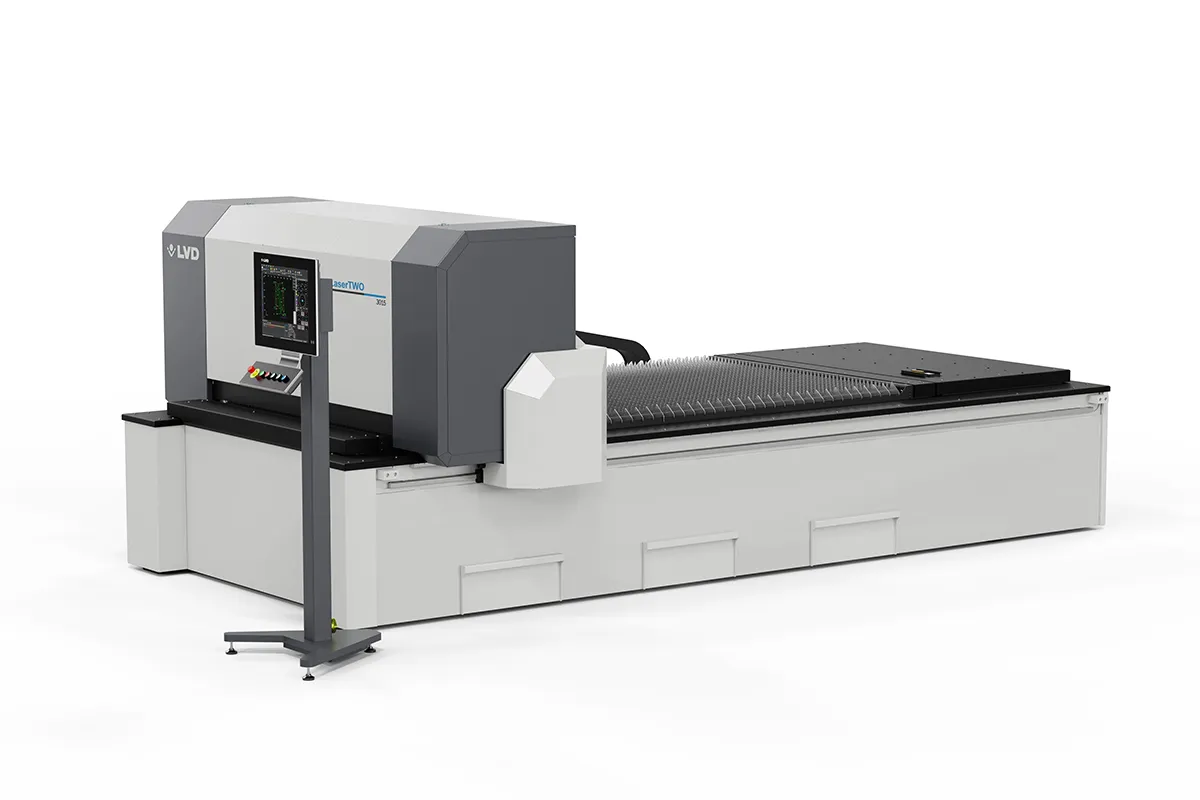
How are traditional manufacturers responding to this competition? Matthew Fowles, group marketing director at LVD, tells us: “Extremely low prices tempt sheet metal companies to take risks. But what about the safety of the laser cutting machine? Is it quick and easy to program? What about service and spare parts? With the launch of our LaserTWO, we are offering a simple machine that is competitive in terms of both price and reliability. Users can count on the quality and service they expect from LVD. The difference lies in the machine’s modular concept, which ranges from a basic table to partial or full enclosure and shuttle tables. Not every manufacturer needs every accessory. At LVD, we want to find the perfect balance between performance and price for every customer and every technology.”
The best choice
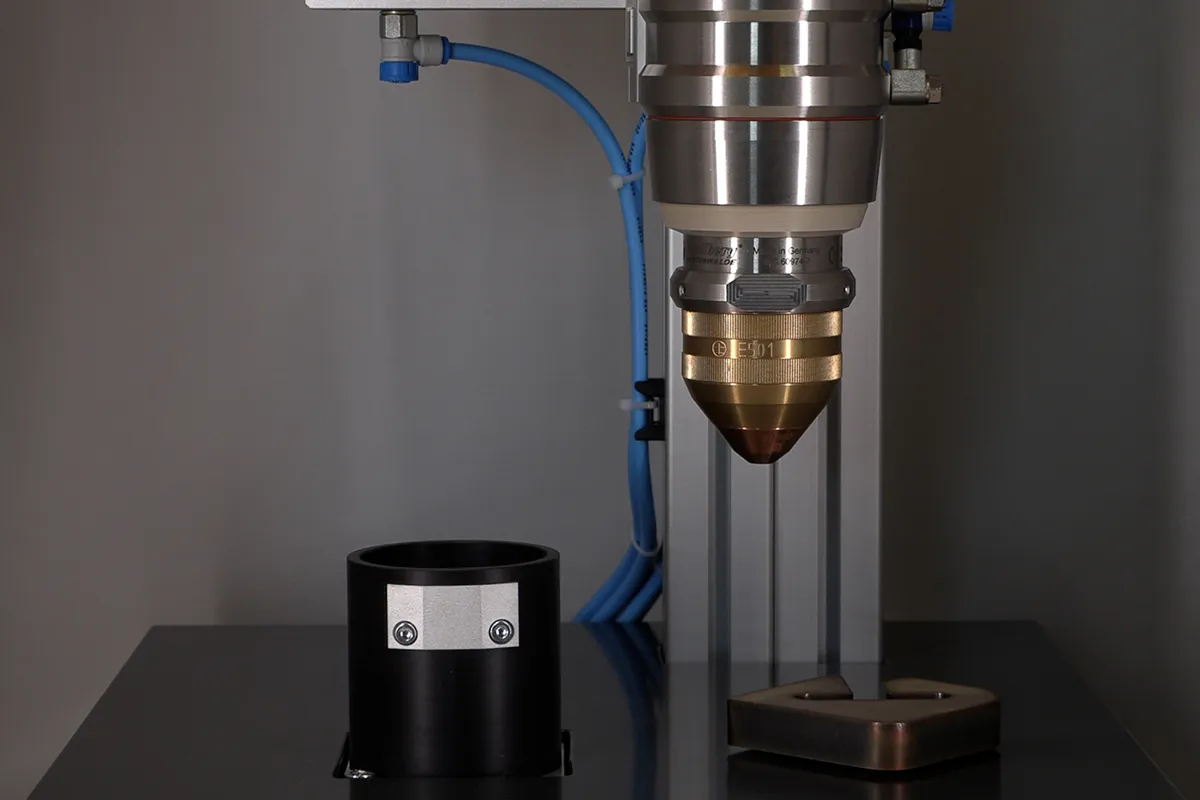
Traditional laser cutting machine manufacturers are not the only ones feeling the pressure from China. Jan Van Overbeeke of Plasma Solutions, a distributor for Kjellberg, is also seeing Chinese manufacturers take market share in plasma cutting tables. “This is not always justified. Laser cutting technology is enjoying a real boom. In the thicker material segment, we are often the best choice in terms of cut quality, ease of use, price and automation options. Our new plasma torch changing system, unveiled at EuroBLECH, meets demand for solutions that enable unmanned overnight cutting.”
No human intervention
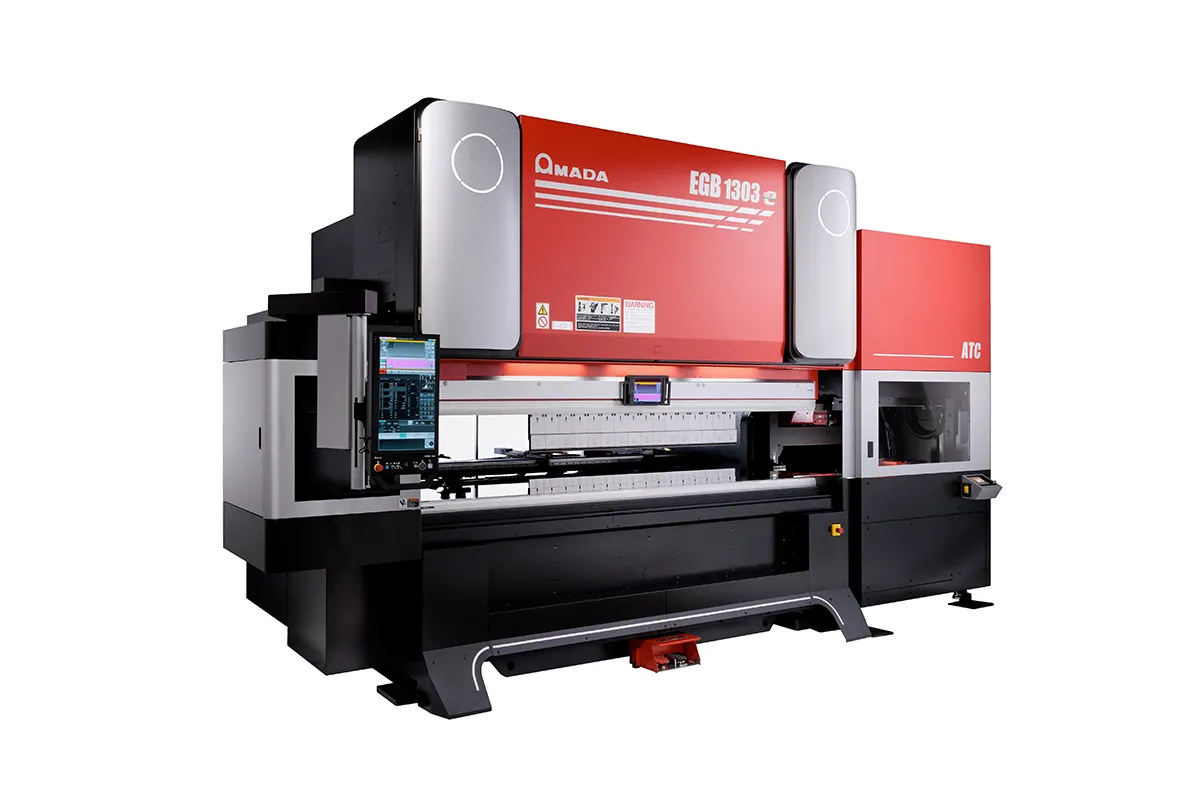
This brings us to a major theme of the show. The market is looking for ways to work as much as possible without human intervention. Automating sheet metal working processes is nothing new, but manufacturers continue to innovate to stay relevant in a market where batch sizes are getting smaller and smaller. A good example is this Amada EGB-1303ARse robotic press brake, which received a EuroBLECH Award in the “Metal forming and punching” category. “It is an electric solution,” says Laurent Depaepe, sales manager. “We can no longer ignore the electrification of our society.”
This ties in with the trend towards greater sustainability. Electric bending cells offer greater precision, fewer breakdowns and less maintenance. Another feature of these machines is the backgauge with three powered fingers, which makes it possible to bend practically anything. In the cell, the operator only has to load and unload the parts. The robot does the rest.
Automation starts with a drawing
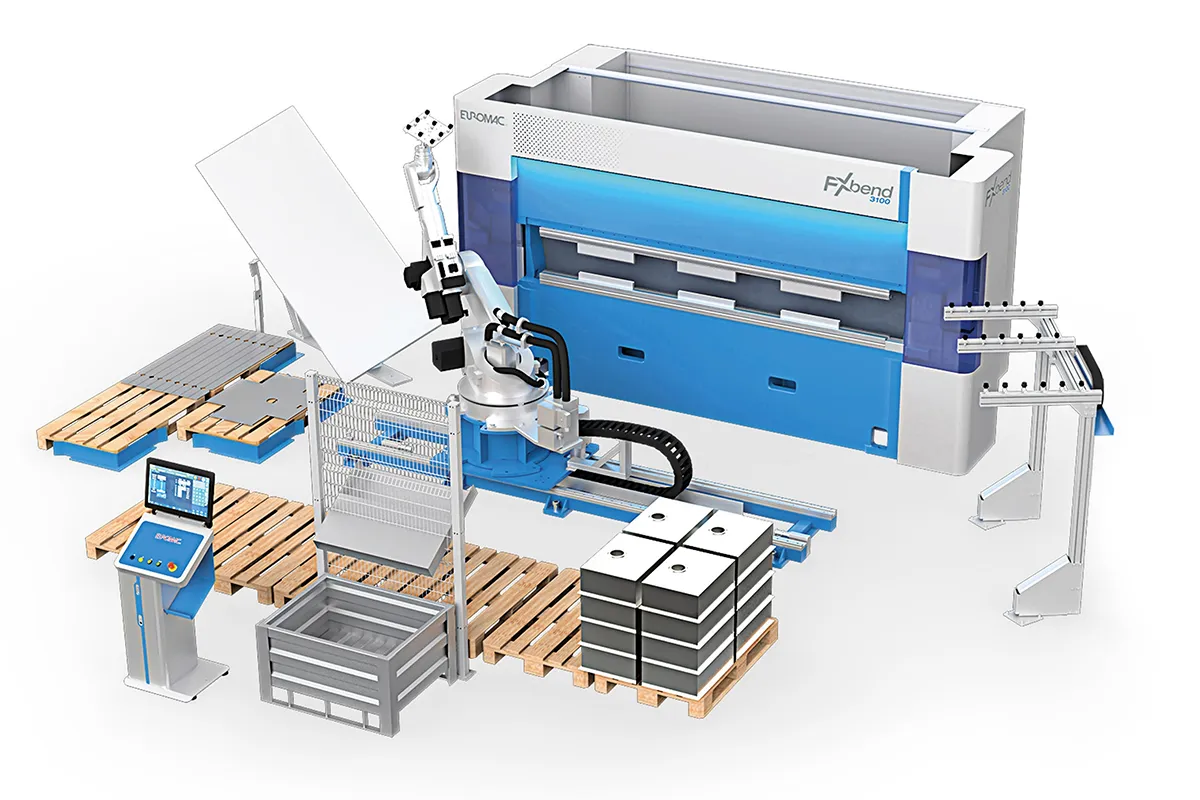
It was not the only stand where robots were at work. Euromac can sometimes give the impression that it only offers small machines for beginners. At EuroBLECH, the company challenged that perception with its FX-Cell and FX-Bend electric press brake. “This solution meets market needs because it can operate without human intervention. After all, we supply the operator: the robot,” jokes Frank Heyerick, sales manager Central Europe. “One important condition is that the drawings must be correct. Everything can be controlled from a STEP file, including the bending programme, the robot and tool changes, provided the drawing contains the relevant information. We stress this point before considering automation solutions.”
Automated sorting
Mazak showcased its robotic sorting system in a sleek orange and black enclosure, demonstrating how it tackles automation’s biggest bottleneck: sorting. Tim Depijpere, Key account manager, introduces the Mazak Smart Manufacturing Cell. “Sorting is even faster than cutting,” he says. “The trick is programming the robot from the nesting layout. Based on this information, the robot knows what type of gripper it needs, choosing between magnetic or vacuum grippers, where the parts are and which parts to sort onto which pallet.” The cell comes with a new product: the Optiplex 3015 Ez, which also combines ease of use with reliable performance. It is equipped with a new type of laser source: a 6 kW resonator.
Automate without programming
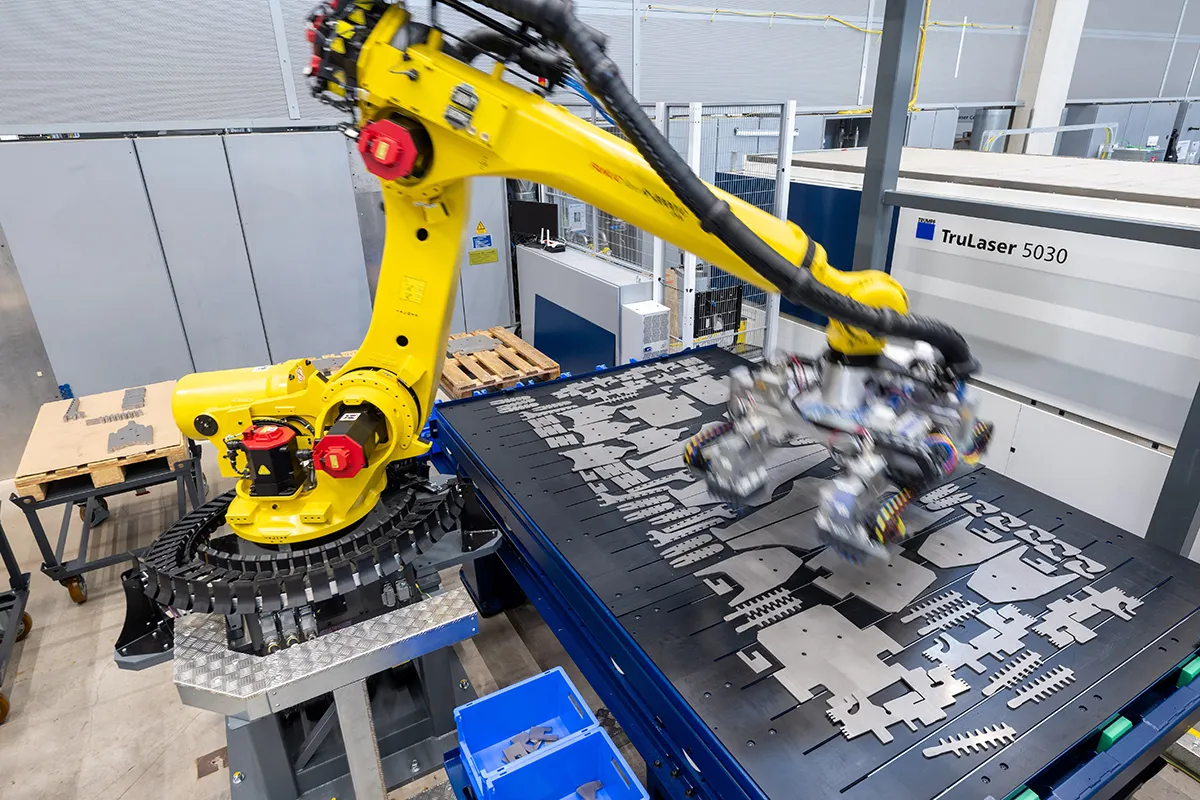
Have we run out of innovations in laser cutting? No, and TRUMPF even won a EuroBLECH Award for its separation technology, as well as third place in the automation and handling category for its robotic cell. Although it had similarities to Mazak’s cell, apart from its yellow colour, as a FANUC robot was at the heart of the solution, it is based on a completely different technology. “The robot does not need programming. It works like a Cartesian cell. Vision cameras with artificial intelligence look down on the cell and tell it where the parts are and where to place them,” explains Francis Sercu, product manager at distributor V.A.C. Machines.
He showed us another centrepiece: the TruLaser 3000 Bevel Cut Edition. “We could already make bevel cuts using a special cutting head, but this machine has been developed entirely for this application and can make bevel cuts of up to 50°.”
AGVs are on the way
Further processing of parts can also be automated. Known for its storage towers, Remmert presented two AGV solutions. Automated guided vehicles are still fairly “exotic” in sheet metal workshops, but Thomas HoltHöffer is convinced this will change. “AGVs are a way to use the available space more flexibly. At a customer’s site in the Netherlands, they are used to sort parts in another location. Our AGV is designed to transport sheet metal and can carry up to 3 tonnes at a time. It is also perfectly suited to our towers.”
The perfect finish
After cutting and bending, parts often go on to finishing. Growing interest in mechanical deburring points to two things: customers are setting higher standards for their parts, and workshops lack skilled labour to carry out this work. Q-Fin’s machines meet this demand. The Q-Fin F250, developed for small parts, won the EuroBLECH Award for its surface finishing capabilities. The jury was impressed by its software-controlled processing stations, ERP connectivity and automatic brush calibration. But the Robot Cel attracted the most attention. “At the previous edition of EuroBLECH, this still seemed a long way off for many companies. Today, you see it everywhere. If you do the sums and have the required volume, a robotic solution can often pay for itself in less than two years,” adds Joost Kouwenbergh, business officer.
The changing role of machine suppliers
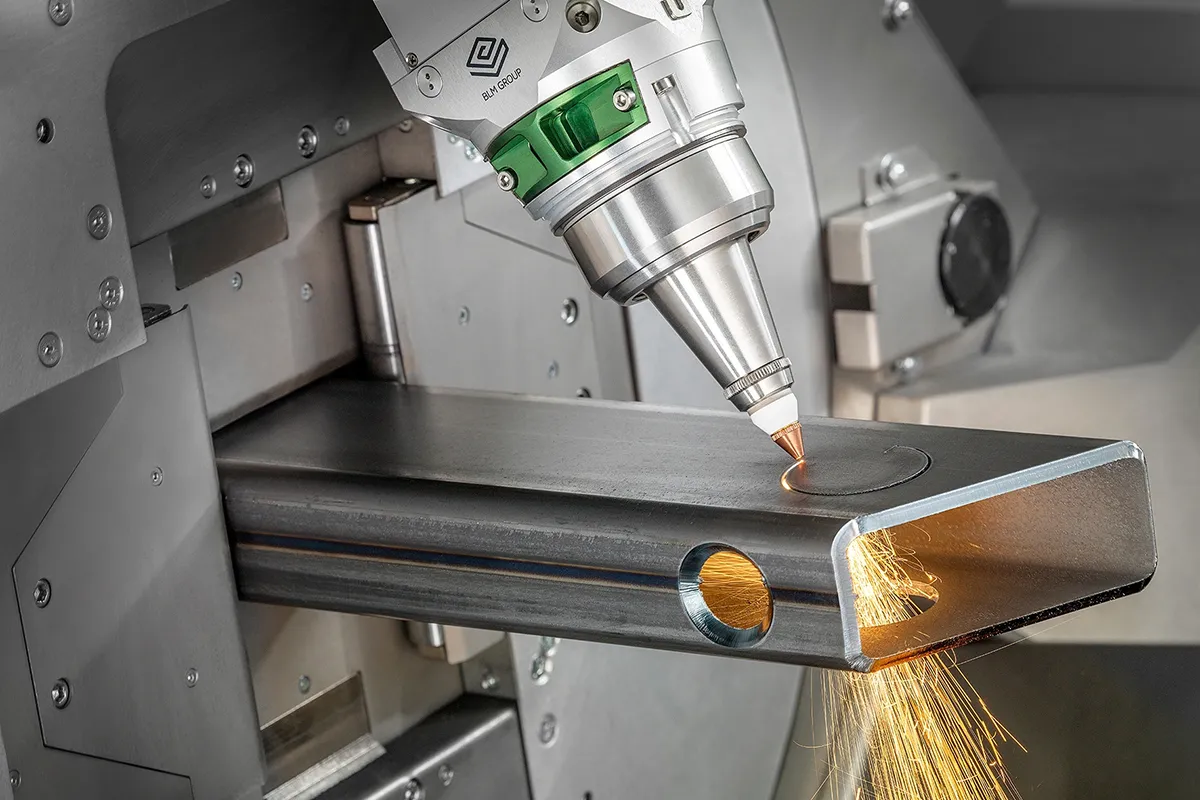
For BLM, which showcased a wide range of technologies, from laser tube cutting and bending to sheet metal laser cutting with an integrated storage system, the growing interest in automation and digitalisation has changed the role of machine manufacturers. René Hazenberg, managing director: “Previously, a customer simply wanted to buy a machine. Today, they come to us with a different request: I want to make this part, how can I do it as efficiently as possible, at the lowest possible product cost? We welcome these requests because they require us to look beyond the machines. We need to put the software ecosystem in place, see what is available in production and then integrate new machines into it.”
A dynamic digital experience
Digitalisation was certainly a key issue at the exhibition, and we saw that at Hypertherm Associates. There were no machines on the stand, although visitors could see them at partner companies, but there was a dynamic digital experience. “We want to inform visitors about our technologies, products and solutions in a spectacular way that leaves a lasting impression. Sustainability is an important theme, and this is reflected in our machines. Whether for waterjet or plasma cutting, we aim to deliver maximum performance with minimum waste. Together with our partners, we help our customers find the ideal industrial cutting solution and optimise their operations. This year’s highlight is our new XPR460 plasma cutting power source, which delivers more power than ever,” explains Yvette van der Linden-Leeflang, regional demand generation channel manager.
Laser welding on the rise
Automation and lasers were the two keywords in welding at EuroBLECH. Handheld laser welding is booming and, as you might expect, Chinese suppliers were out in force. CNC Europe, by contrast, is Belgian. It took third place in the joining technology category with its PhotoWeld, which can weld up to 12 mm. The company demonstrated how laser welding can be automated by flexibly connecting the system to a cobot. The stand was never empty, with everyone trying out the micrometre-precise positioning. Office manager Peter Vermeersch and administrator Patrick Favoreel welcomed us and promised further innovations. “We learn most from our customers. When they come to our demonstration centre to test their products, we can see where the technology reaches its limits and know which direction our next developments will take.”
Unique features in deburring
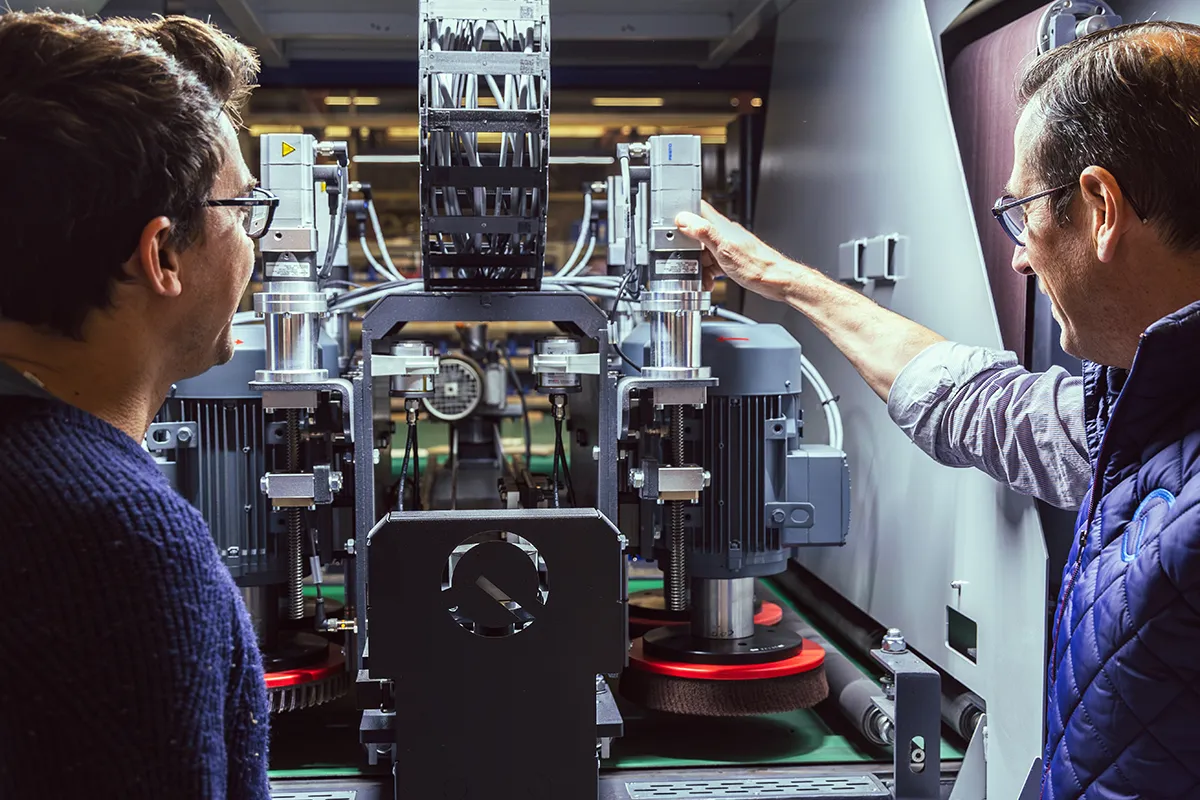
Let’s finish with another Belgian success story at the exhibition: VG Machines from Kuurne. The company may not have competed for the EuroBLECH Awards, but it demonstrated something no other deburring machine at the exhibition could do. “Adding sensors allows us to measure our brushes on the fly during the process. We can therefore adjust the pressure to account for wear, without any operator intervention. It is another step towards automated operation,” says administrator Dieter Dendauw. Making a difference through innovation is also what EuroBLECH is all about.
Question about this story? Ask your question
Companies in this story
Keep following this
Get an email when a new story is published. No account needed.
- ThemePrecision and productive machining
- SubjectNews
- CompanyV.A.C. MACHINES