« Quality that saves lives »
Texte : Johan Debaere Photos : Horn
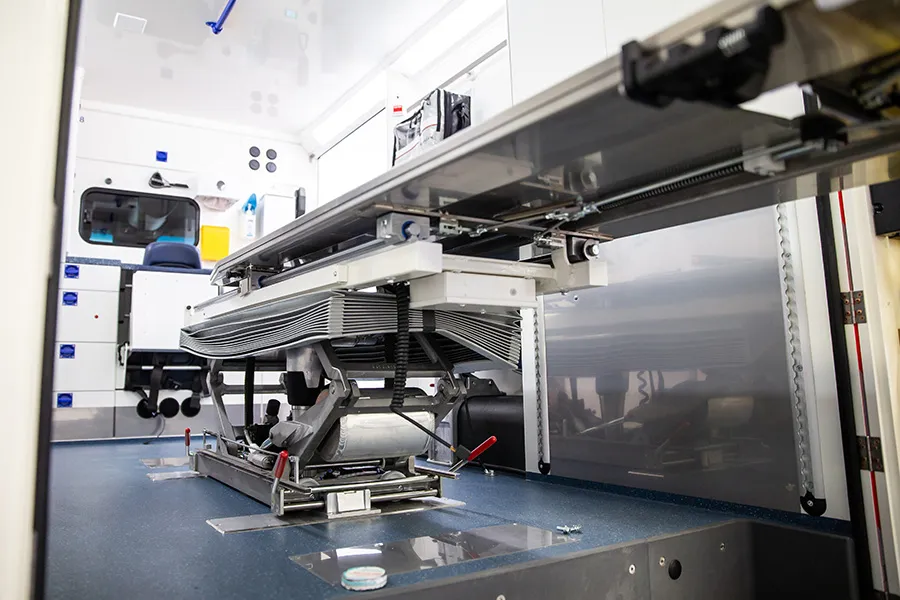
System Strobel GmbH & Co KG develops and manufactures ambulances, patient transport vehicles and fire service vehicles, all for emergency services and humanitarian organisations around the world. Wherever possible, everything is done in-house, which means that the company in Aalen-Wasseralfingen manufactures its own parts and carries out the assembly. Its motto is “Quality that saves lives”. The machines in the workshop are equipped with high-quality precision tools from specialist Horn. The DR boring system is used for parts of the centre-feed wrapping machine.
Vertical integration
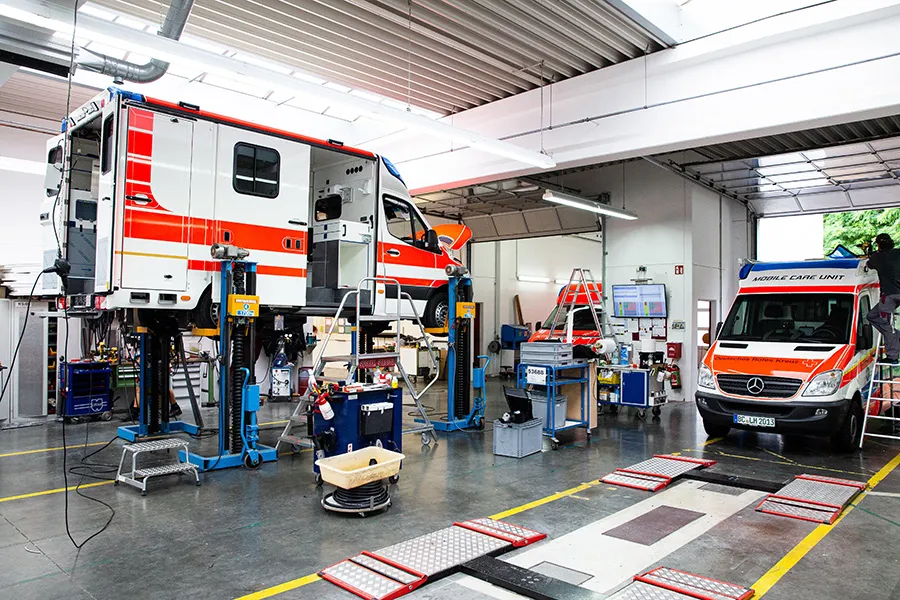
When Thomas Strobel helped an emergency service optimise the interior of an ambulance in the early 1980s, he immediately founded System Strobel. The first ambulance was built in 1985, followed a year later by the first stretcher table. Today, the company manufactures between 350 and 400 vehicles a year, making it one of Europe’s largest manufacturers.
“That first ambulance is still in use today. Functionality, ergonomics and quality are at the heart of everything we do. That is why we develop and build as much as possible ourselves,” explains Marcus Wittek, group leader in the machining department. “We buy the chassis from renowned manufacturers, but the bodies, made from aluminium sandwich panels, are built at our plant. We even develop and produce the extruded aluminium corner profiles that hold the sandwich panels together.”
The same applies to aerodynamic warning lights (blue lights), electric steps and many other components. “And our joinery handles the interior fit-out and furnishings.” System Strobel has also built up considerable expertise in stretcher tables. The air-suspended systems can be tilted and adjusted laterally.
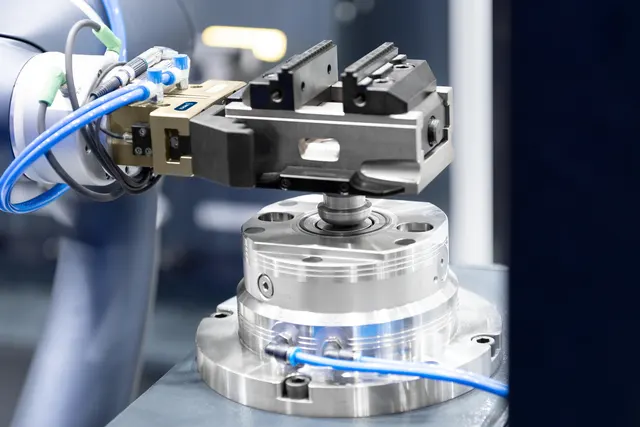
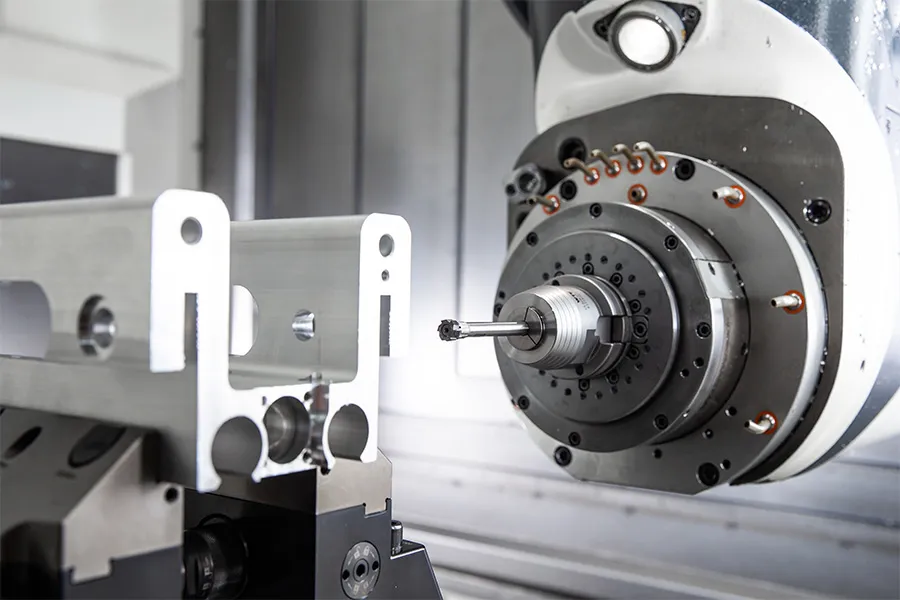
Machining is required to manufacture mechanical parts for the vehicles and stretcher tables. All metal parts are therefore produced using several CNC machining centres. Marcus Wittek and his team are constantly looking for ways to optimise machining operations. “One challenge was boring the holes,” explains Marcus Wittek. “We have parts, often larger ones, that are already cast or extruded. In such cases, it is important that the holes line up precisely with one another, so that the stretcher components do not jam against each other when they are moved later on.”
Horn’s boring system
To bore the holes, Wittek and his team switched from an HSS reamer to Horn’s DR-small boring system. “We were no longer satisfied with the performance, machining time and accuracy of the previous tools. New developments in stretcher systems, with even more compact mechanical and electrical components, meant we had to rethink the boring process,” explains Marcus Wittek. He therefore contacted the specialists at Horn. “We have already solved countless problems with our powerful boring system,” says Stephan Weiß, field service engineer at the precision tool manufacturer. “The DR-small boring system was an ideal solution for System Strobel’s machining operations.”
The diameter range across the tool’s four system sizes extends from 7 600 to 13 100 mm. The blades can be changed quickly and easily. The wide choice of cutting materials, cutting edges and shank systems makes the tool suitable for many applications. The DR-small boring system significantly reduces the cost per hole, increases productivity and makes the operator’s work easier thanks to its changeover system. The separation point between the shank and interchangeable head enables high power transmission, with changeover accuracy of less than 5 μm. The interchangeable shanks are secured using a central clamping screw. Steel and carbide shanks are available in through-hole and blind-hole versions. They differ mainly in their internal coolant supply, which is also important at System Strobel. “Good cooling is essential for achieving a perfect result when boring deep holes in aluminium. The holes are now bored at a feed rate of vf = 6 m/min. Machining time has been reduced by two thirds compared with the previous tools,” explains Marcus Wittek. “We save a great deal of time, and both tool performance and the quality of the bored holes are excellent. We do not yet have exact information on tool life, but it has machined 2 000 holes so far without any signs of wear. ■
Een zakelijke vraag aan Hartmetall-Werkzeugfabrik Paul Horn GmbH? Get in touch
Companies in this story
Keep following this
Get an email when a new story is published. No account needed.
- SubjectNews
- CompanyHartmetall-Werkzeugfabrik Paul Horn GmbH