The new manual laser welding process is a winner
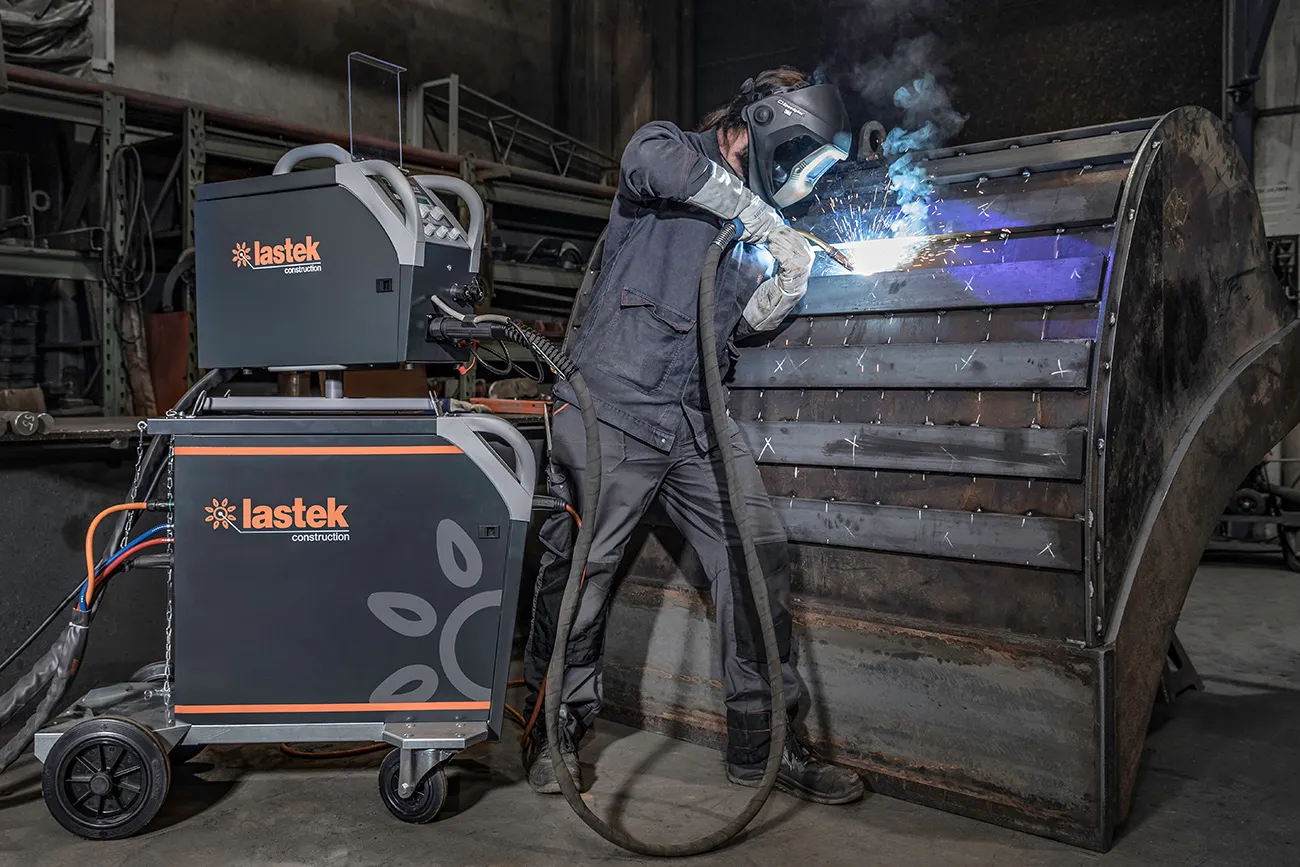
Time is money. This is certainly true in the world of welding, where good welders have become a rare commodity. Innovations that promise added value would therefore do well to capitalise on this. Lastek presents two: Fanuci’s portable laser welding unit and DEPO technology, which makes it possible to carry out simple repairs on complex parts.
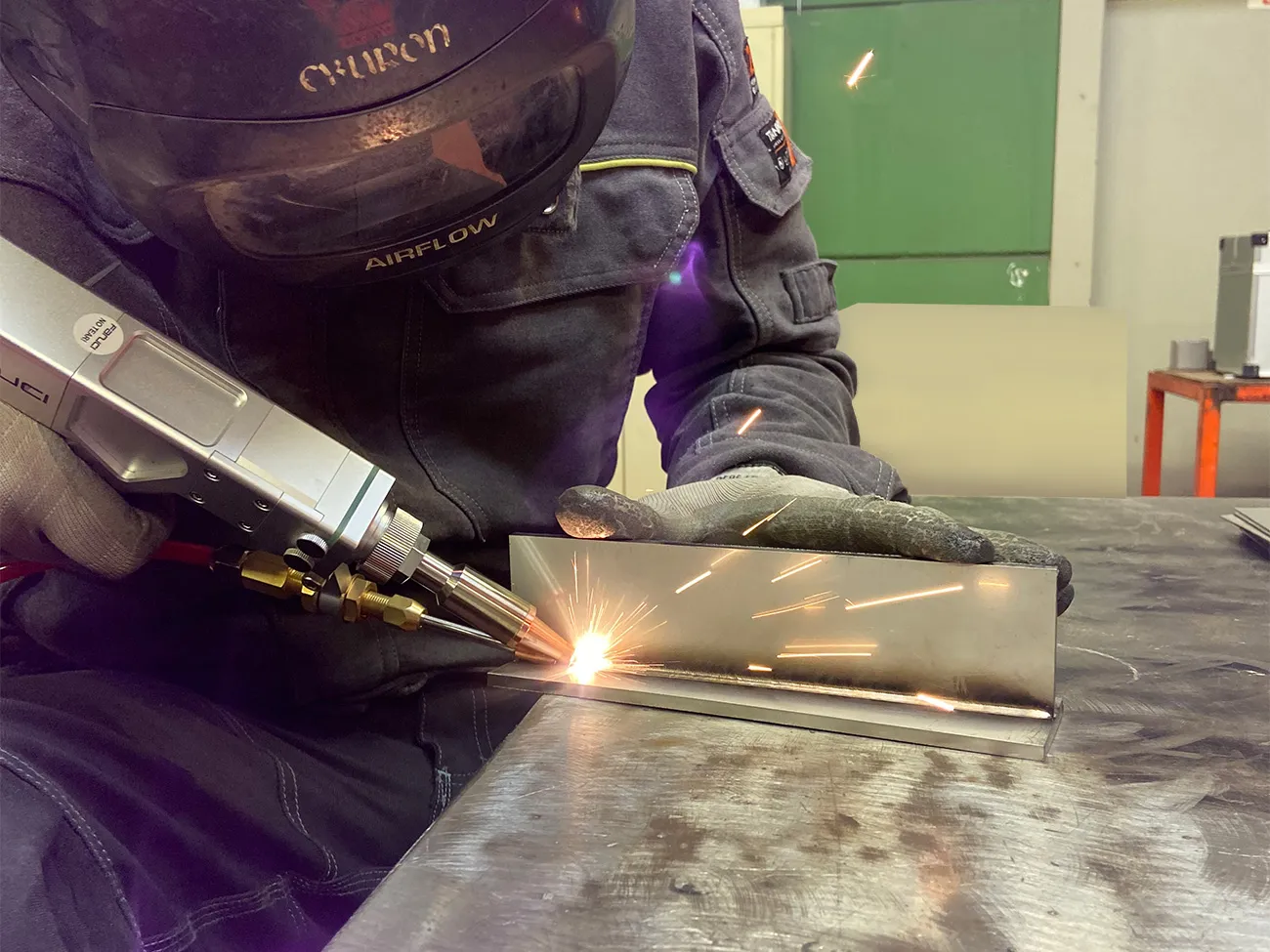
The advantages of laser welding are well known in the welding industry. High travel speeds are one benefit, but the main one is the low, highly targeted and controlled heat input, which avoids any structural changes to the parent material. This eliminates many laborious and therefore costly manual finishing operations. In practice, however, it was unfortunately not always easy to bring every part to be welded into a laser welding cell. “Fanuci has now managed to bring the power of laser welding into a portable device equipped with a fibre laser source and a comfortable-to-use torch. It is also user-friendly, as all the necessary welding knowledge can be programmed into the machine,” explains Luc Driesen, Technical Director at Lastek.
Considerable time savings without extensive welding know-how
Driesen is particularly impressed by how easy manual laser welding is to use. “It requires virtually no manual welding skills, and welders can master the technique in no time. The speed of the process is another striking feature.” The process is unmatched in speed compared with traditional arc welding processes. The time savings are considerable, especially when working with thin, conductive materials such as stainless steel, aluminium, brass and steel, where heat input can leave a dark discolouration that has to be removed by pickling. The weld quality is very high and filler metal consumption is reduced by 70%. “Safety has also been taken into account. Special welding glasses are all that is needed to prevent the harmful effects of light from the fibre laser. Welders have a clear view of the weld area and the molten material.”
Big gains from minor repairs
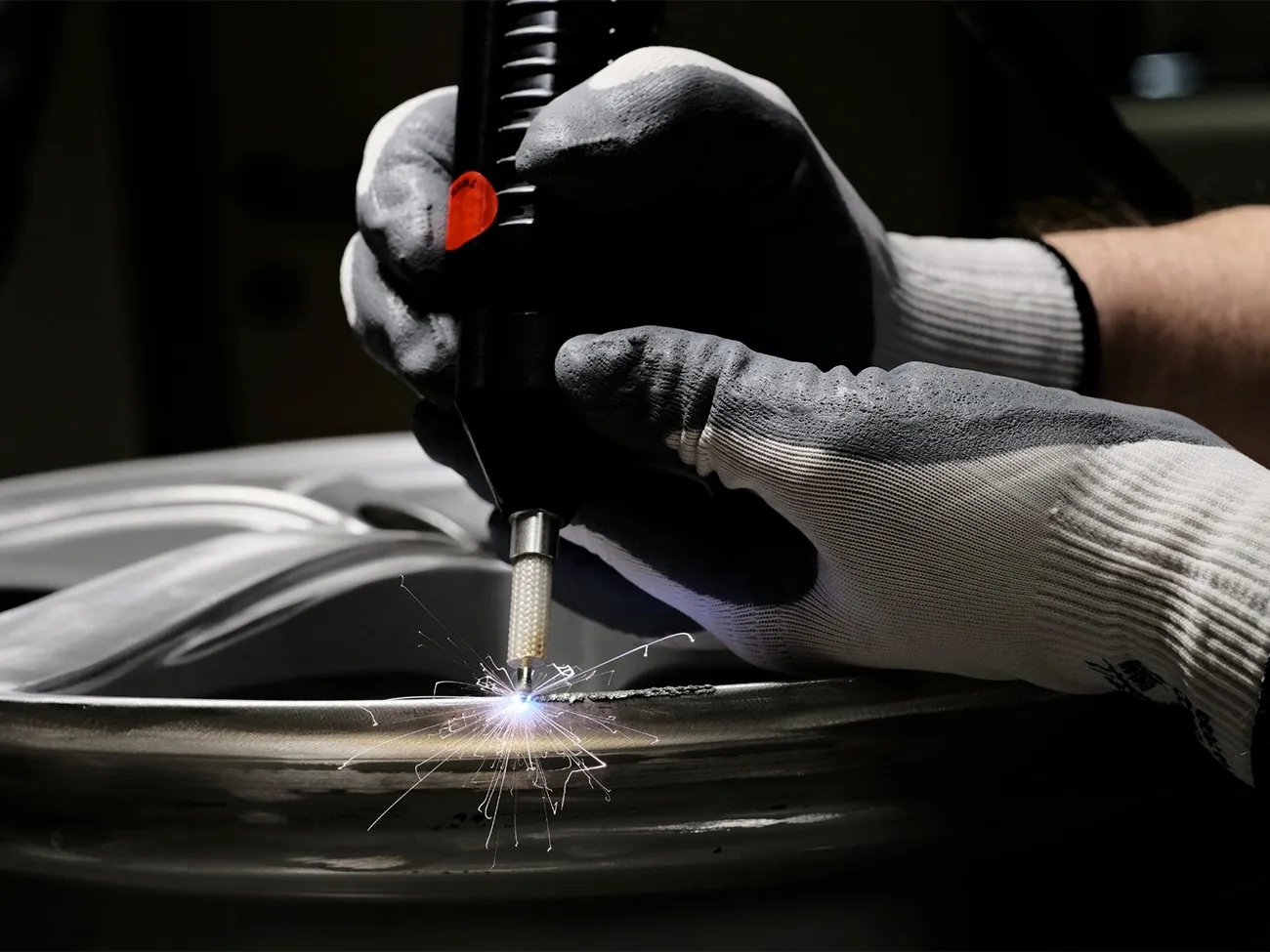
“The DEPO machine will also surprise many people,” predicts Driesen. These machines are based on EDM (Electrical Discharge Machining). “Traditionally, this process removes material with great precision. The engineers at Japanese company TechnoCoat have managed to reverse the process, allowing them to add material very quickly and with great precision.”
Driesen is thinking primarily of repairing complex parts such as moulds, dies and cylinders made from steel that is difficult to weld. “These materials currently require a great deal of preparation and post-processing. With the DEPO machine, this micro-welding can now be carried out on site, resulting in huge time savings.” A circular movement prevents the electrode from sticking to the part. The machine can be used to apply or repair a coating, repair machine parts, correct casting defects and more. “As the part remains at ambient temperature, pre- and post-treatment can be ruled out. What is more, no welding know-how is required to achieve a perfect result.”
Putting welding know-how first
These two innovations are further proof that Lastek takes its mission of supporting welders in the best possible way seriously. The company continues to look to the future, helping welders ensure quality. Driesen says: “Welding is a skilled trade focused on producing reliable joints. The task is becoming more complex as new materials and alloys are introduced. With our own Belgian products, we want to give welders the tools they need to do this as efficiently as possible. We also try to bridge the gap between theory and practice by sharing our knowledge with them. This has always been our strength, and it is only possible if we keep innovating.” This successful formula has made it possible to weld with Lastek on every continent.
Een zakelijke vraag aan Lastek? Get in touch
Companies in this story
Keep following this
Get an email when a new story is published. No account needed.
- ThemeSheet metal and tube cutting
- SubjectNews
- CompanyLastek