Trends in laser cutting
Texte : Valérie Couplez Photos : iStock, LVD et V.A.C. Machines
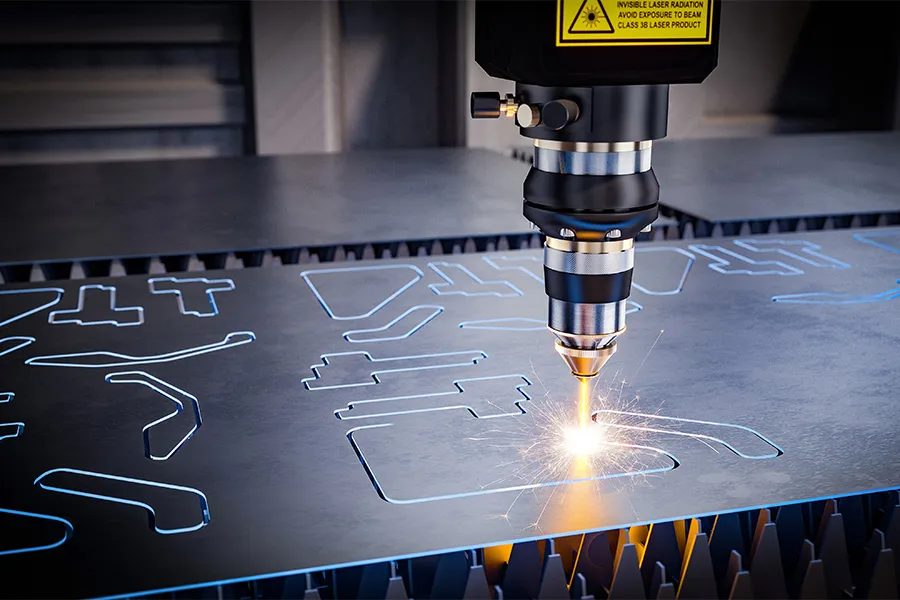
Bigger is better. That was often the message at sheet metal trade fairs in recent years. The focus, of course, was on the power of the fibre laser source that manufacturers were keen to show off. The race still seems to be on, with some Chinese brands already cutting at over 50 kW, while European brands appear content with less than 30 kW for now. Other developments in cutting technology are at least as important, both in continuing to expand the scope of fibre lasers by enabling them to handle more operations and in further improving cut quality, including in thick materials. Machine manufacturers are, of course, also responding to growing demand for automation and sustainability.
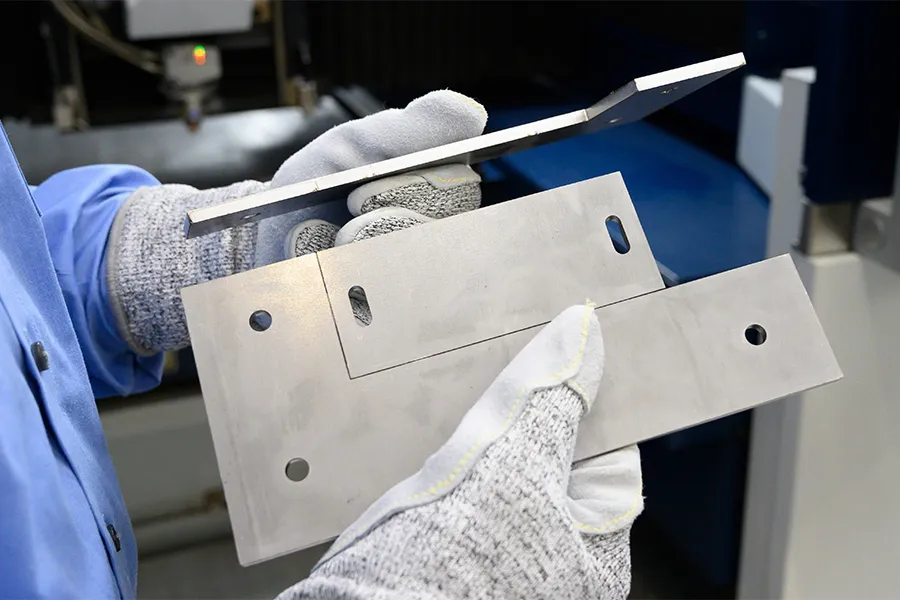
The CO2 laser has a long history. Since its introduction in 1963, it took until 1975 for it to be ready for real cutting work in the metalworking industry. The rise of the fibre laser ultimately did away with it. Since then, many manufacturers have consigned this laser source to the scrapheap, and only cutting machines equipped with a fibre laser source are still being built. This is still a young technology, incidentally. When it was introduced in the late 2000s, it was only expected to have a future in thin sheet metal. Today, it cuts through 25 mm-thick steel as easily as a hot knife through butter, as standard. Compared with the CO2 laser, this development has been several times faster, thanks to advances in optical technology. Much like the difference in cutting speeds between the two.
Are you joining the race for more power?
Today, every manufacturer worth its salt has at least one model rated at 20 kW. This delivers speed and precision when cutting steel up to 45 mm thick. It can therefore already compete with plasma cutting, just as the CO2 laser once did. For those who mostly process materials less than 10 mm thick, investing in this level of power would be excessive. Its higher price also affects the cost of processing thinner sheet, pushing up the unit cost further. But these machines have proved their worth as highly complementary second or third laser cutters, or as an ideal choice for those looking to tackle more challenging or thicker materials. That is where the extra power really comes into its own. But does it need to be much higher? What is the point of an ultra-powerful laser beam if it also shreds the cutting table beneath the workpieces? The entire machine structure needs to be adapted to handle these power levels properly. This is another major investment for builders, and it remains to be seen when it will pay off.
New cutting techniques take shape
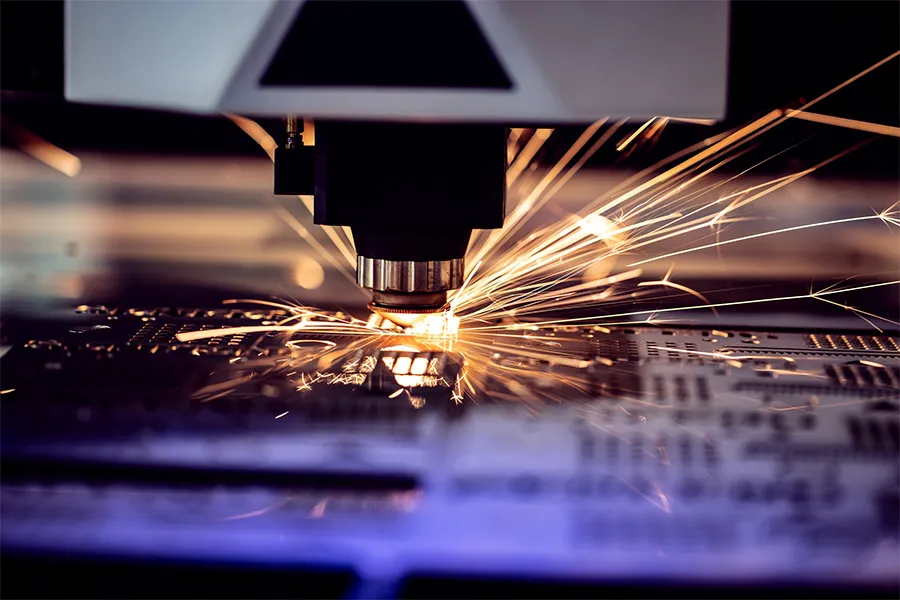
A plateau in power does not mean that efficiency or quality must also stagnate. Recent months have seen the introduction of striking new cutting techniques, which each machine manufacturer has named or presented differently. The starting point is clear: adjust the laser light parameters to better suit the application. This should close the remaining gap in cut quality. This is achieved not only in the laser head, but above all in the generator where the beam is created. The result is a beam tailored to the application. For example, a narrower diameter with high density for thin stainless steel, or a wide beam for thick, heavy materials. In addition, the beam intensity, the precise point at which it lands (the focal point), and the beam’s three-dimensional shape can also be controlled. This does, however, require suitable fibre-optic cables. And, of course, intelligent control. Operators should not have to work all this out for themselves.
The bevel cutting head, a weapon in the contest with plasma cutting
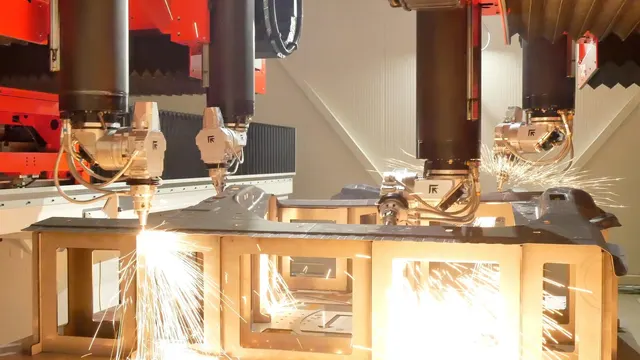
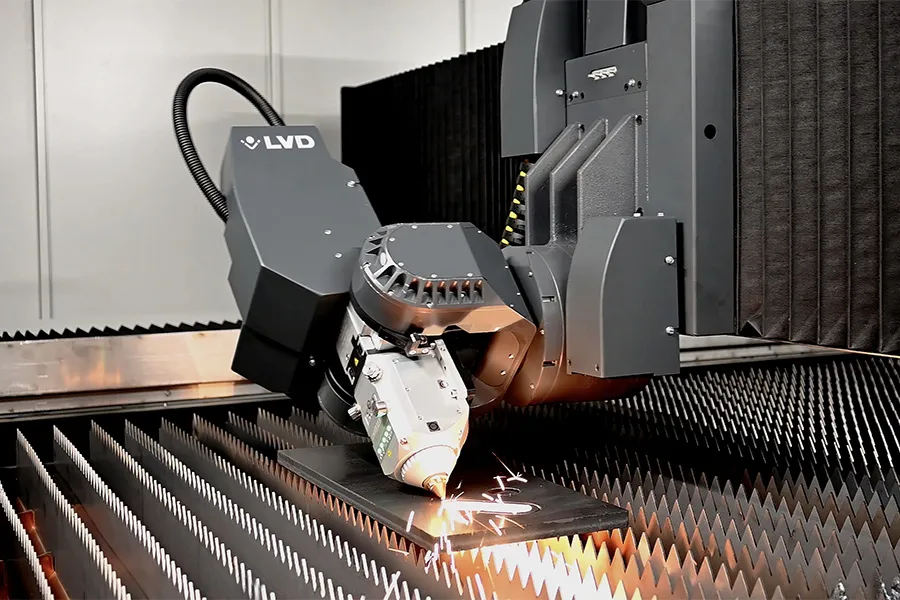
Another innovation introduced here and there is bevel cutting. It reflects the trend towards doing more with the same machine. Laser cutters, whatever their origin, are also expected to become Swiss Army knives. With a bevel cutting head, they can already give workpieces the perfect weld preparation. This is an essential feature for anyone looking to compete with plasma cutting machines in the thick-plate segment. This technology is already well established in that field. But laser cutting technology offers the same precision as a straight cut and is less affected by heat. It can therefore process more complex workpieces.
More stable cutting for unattended operation
Other innovations are linked to two broader economic trends: automation and sustainability. When it comes to automation, cutting reliability is essential. Anyone looking to add an extra shift without staff to their production schedule in the evenings or at weekends needs to be able to rely on their machines. Parts must not get stuck in the skeleton. Reliability can be increased by adjusting nesting, the width of the laser beam or the microjoints, or even nanojoints at one manufacturer. An automatic nozzle changer with quality control would also be a useful addition. This not only allows cutting to continue for longer by replacing a worn nozzle, but also helps improve cut quality. It also makes it possible to create the right beam for each application.
Becoming more sustainable
But of course, making the most of every centimetre of sheet metal remains key for those looking to fulfil their sustainability ambitions. New features are also being introduced to reduce the energy consumption of fibre lasers, which are already the more sustainable choice compared with CO2 lasers, using up to 60% less energy, as well as the energy required for cooling. These include putting systems into standby, shortening cycle times and using smart LED lighting … Another option is to make machines more compact so that they require fewer materials. In any case, most manufacturers have a roadmap for achieving energy neutrality. ■
Question about this story? Ask your question
Keep following this
Get an email when a new story is published. No account needed.
- ThemeSheet metal and tube cutting
- SubjectNews