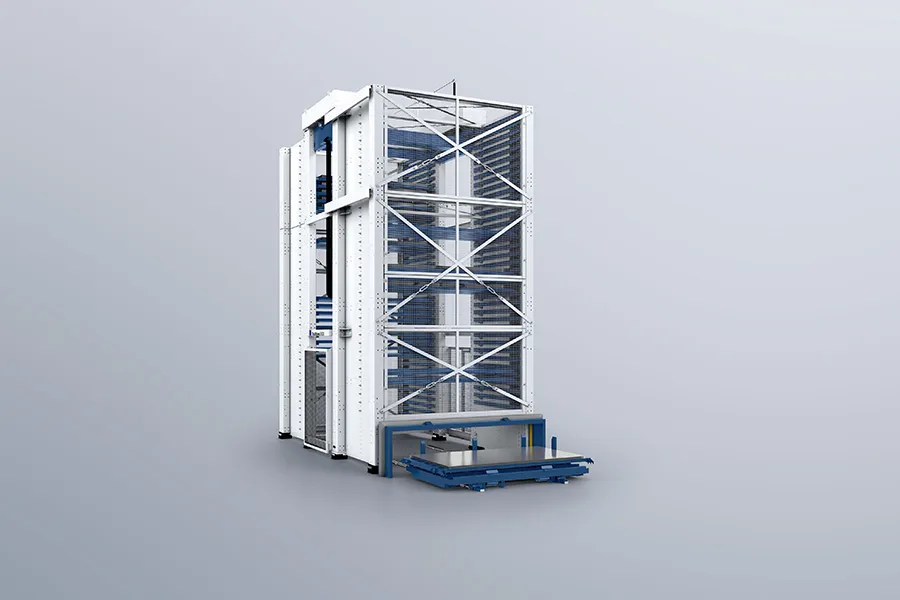
Automated storage towers to optimise your machines’ productivity.
Texte : Valérie Couplez Photos : LVD, Mazak et V.A.C. MACHINES
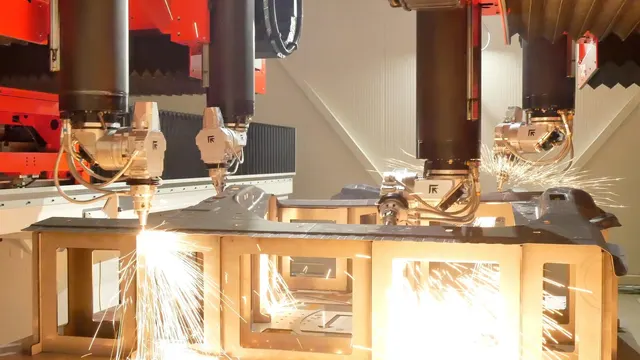
Laser cutting machines have become so fast that users need to find ways to keep up. Automated storage systems are therefore becoming increasingly popular. They are an ideal investment for improving the entire production flow in the workshop. This article summarises the key points.
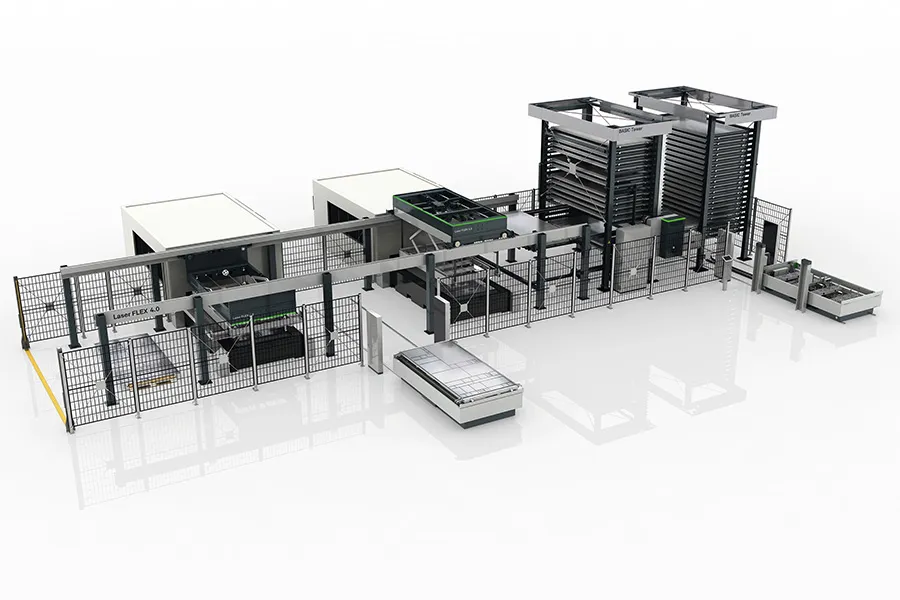
Laser cutting machines are often the first step in sheet metal companies’ production processes. They are therefore a good starting point for improving the flow of raw materials and finished parts. Your laser cutting machine’s productivity depends on how efficiently you can load and unload it. This all comes down to the characteristics of fibre lasers, which combine phenomenal cutting speeds with short changeover times. The time savings apply to an increasing number of applications as the range of uses expands. Greater cutting capacities also make it possible to process thicker materials. To make the most of this advantage, however, you also need to find a smart way to automate the loading and unloading of laser cutting machines.
Keep an overview of the situation
You can easily see how urgent the situation is by answering two questions: Does the flow of raw materials allow you to use your machine to its full potential, or does it often have to wait for sheets before production can continue? And what happens after cutting? Where are the bottlenecks, and what are their consequences? After all, the flow through your workshop is not just about the laser cutting machine at the start of the process. It can be useful to take stock of the operations and processes involved so you can choose the best automated storage system for your business, or find ways to improve your current process.
What should you consider when choosing the right solution?
What should you take into account? It all depends on the number of material specifications (material grade, sheet thickness and format) you process on the laser cutting machine. This will help you determine how many cassettes you need. Also consider how many steps are currently involved in moving sheets from the storage area to the machine. Is this done using a forklift or overhead cranes? And what impact do the different options have? What about your employees’ ergonomics and safety? Does loading often damage the material? Also note how long it takes to load sheets into the machine, and therefore how long it remains idle. The answers to these questions will help you determine how useful an automated storage system could be and what size it would need to be.
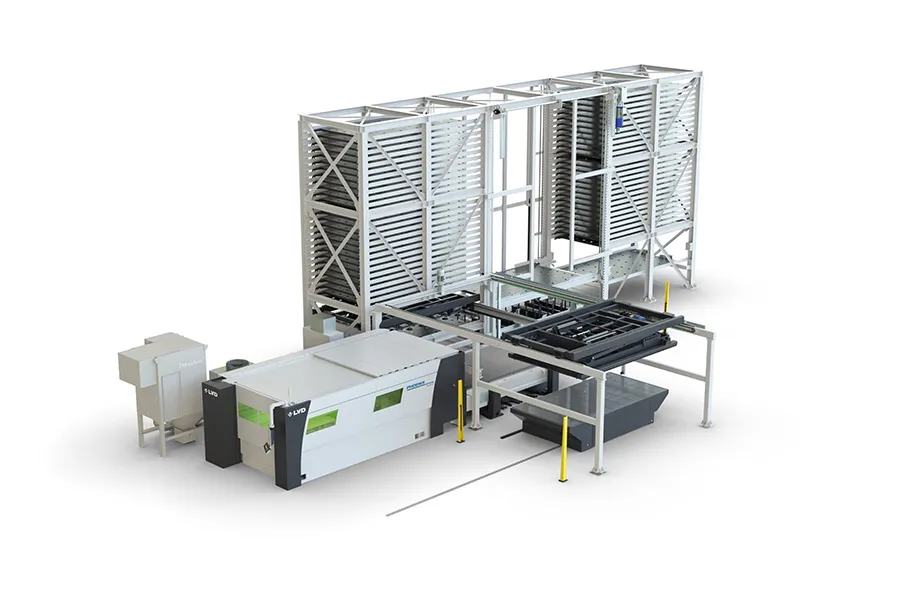
Today, the answer to the question “Do I need an automated storage system?” is often “yes”, as laser cutting machines have become significantly more productive. They are now so productive that a storage tower is essential to increase autonomy and keep up with the machine.
Don’t forget unloading
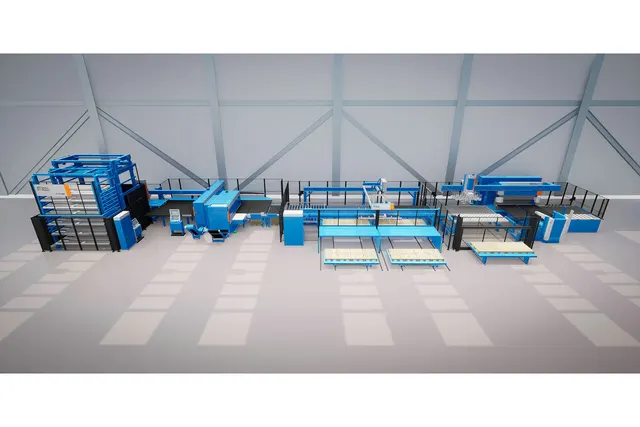
If you automate only the front end of the machine, you are simply moving the bottleneck elsewhere. The table must also be unloaded quickly to optimise the laser cutting machine’s productivity. There are various solutions available. For example, a system can store entire skeletons in storage towers for sorting later, or a robot can take care of this as soon as the skeleton has been moved to an unloading table, sorting all the cut parts onto pallets.
The advantage of an automated solution is that it allows you to keep track of all these batches. Every item is identified and its status updated digitally, so you always know where the parts you need are at any given point in the production process. This data can help you optimise production even further, as you know exactly how many parts are produced each day on each machine and can identify potential problems and production losses along the line. ■
Question about this story? Ask your question
Keep following this
Get an email when a new story is published. No account needed.
- ThemeSheet metal and tube cutting
- SubjectNews