Stainless steel requires a consistent surface finish
Texte : Valérie Couplez Photos : Straaltechniek
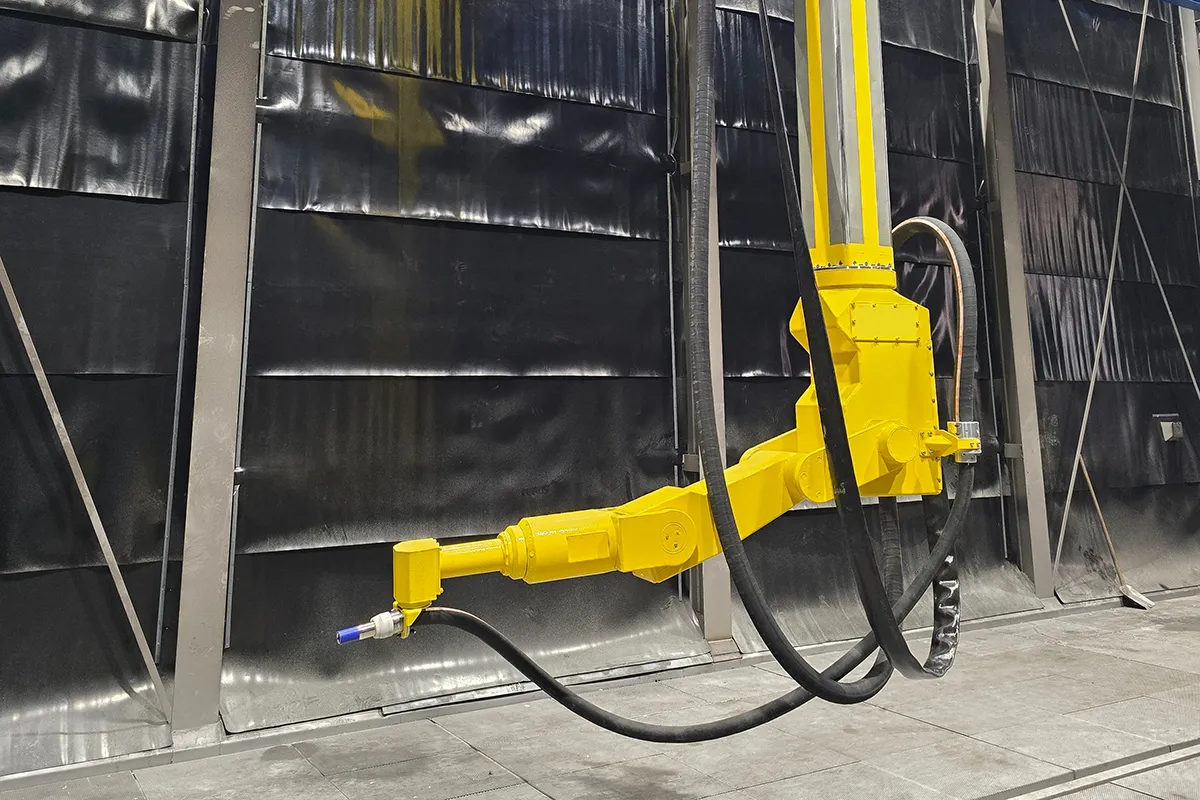
The importance of a consistent surface finish should not be underestimated when it comes to stainless steel. This material is often used in the food industry, where a flawless finish is required for food safety reasons. That is why automated and even robotic solutions for glass bead blasting are attracting growing interest. They also make the work more ergonomic and safer. Straaltechniek has the knowledge and experience needed to ensure that these projects also deliver a good return on investment.
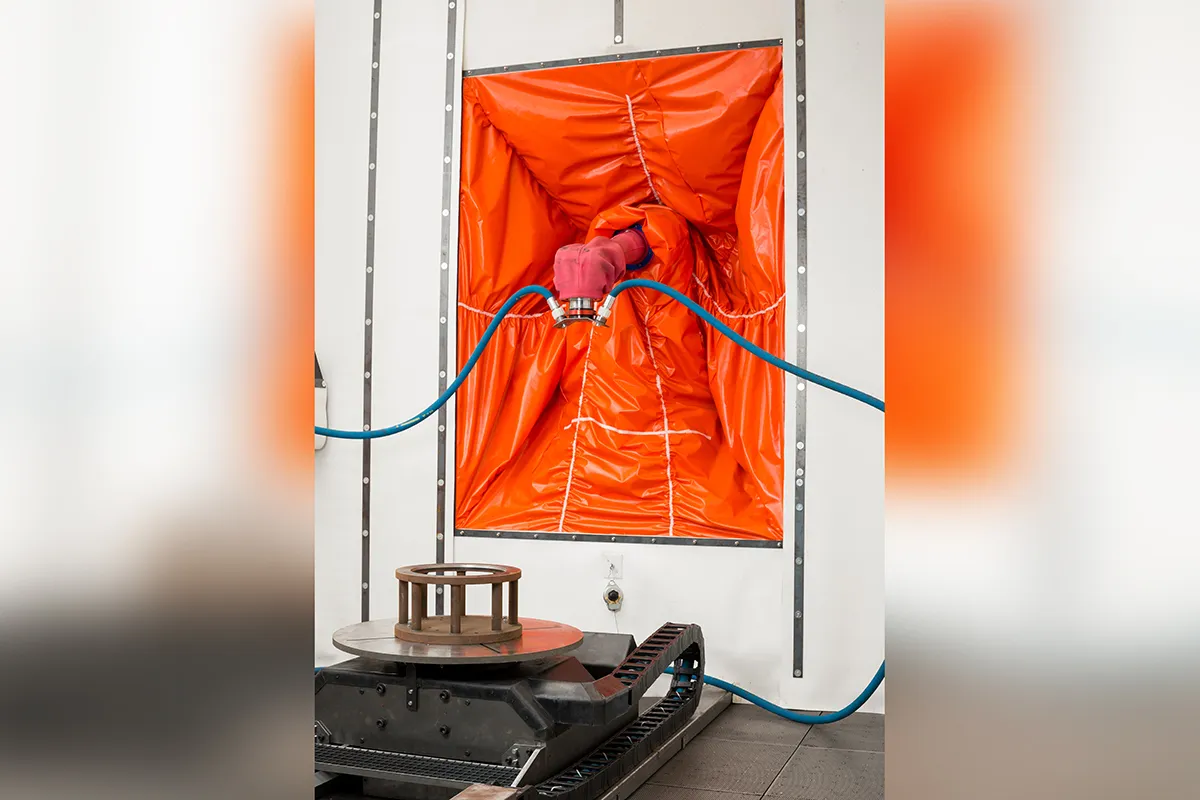
“Blasting is quite demanding work,” begins Edwin Houweling, managing director of Straaltechniek. “You are standing there with a blast hose operating at, for example, 6 bar, and you have to carry out a very repetitive task, keeping as consistent a distance and angle as possible across the entire surface. To achieve a good result on stainless steel, you need a consistent flow. That is the only way to obtain the roughness required for applications in the food industry. In 2025, this can be done much more efficiently by letting machines or robots take over.” Edwin Houweling expects a “boom” in robotic blasting in the coming years. “We are seeing a real increase in demand for these kinds of solutions, partly because robots have become much more affordable. This makes them accessible to SMEs. But particular attention must be paid to protecting the robot. Abrasives are aggressive. That is why only the robot arm enters the booth, and we cover it with a bespoke ‘heavy-duty cover’.”
Good return on investment
To meet all the customer’s expectations, Straaltechniek always starts with the product. “We design the booth around it. The principle is to use standard components wherever possible to keep the price down. But we also bring in our engineers’ creativity and technical expertise to develop excellent solutions. By automating this part of your production, you can deploy your employees more intelligently and in less demanding roles, and thus achieve a good return on investment.”
Removing barriers to programming
Straaltechniek supplies the complete package: the booth, the robot with its protective cover, automatic abrasive recovery, the filtration system and all the automation behind it. “The operator simply selects the right product and blasting starts. If something changes later, they can easily teach the robot by demonstration, detection or entering coordinates. The barrier that used to come with operating the system has disappeared completely,” explains Edwin Houweling. “The batch size does of course need to be sufficient. Or rather, you need enough products that fall within the robot’s working range.”
Fully automated booths
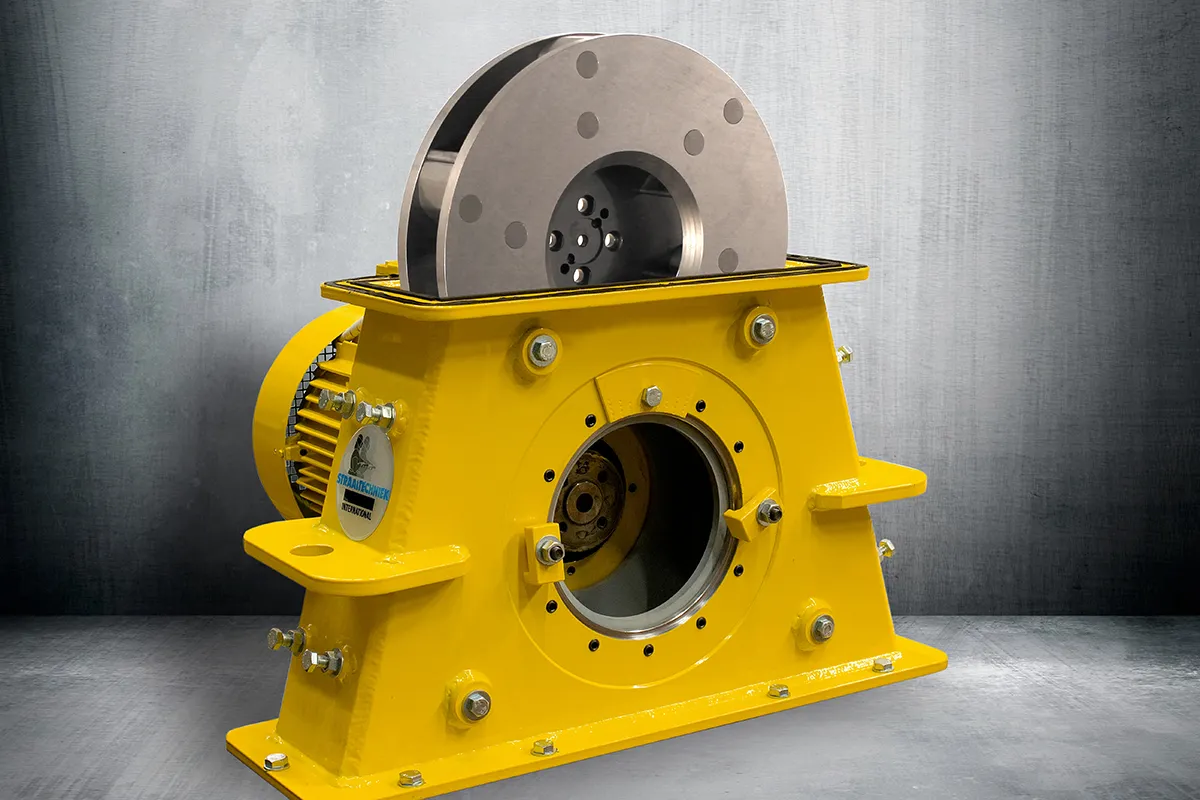
If you cannot make the investment in a robot pay off, don’t worry. Even with a more conventional blasting booth, there are many ways to further automate the blasting of steel and stainless steel products. “Automatic blasting is even more popular than robotic blasting. The most suitable solution depends on your product. With wheel blasting, for example, you cannot use glass beads. That is why we always discuss with the customer what products they have and how we can achieve the desired result,” says Edwin Houweling. Greater automation also provides more information. “You get all the data relating to blasting: the amount of abrasive you have used, the amount of compressed air consumed, the paths followed and the time taken. This data allows you to carry out a thorough post-calculation.”
A different role for the operator
The operator’s role is also changing, both with robotic blasting booths and fully automatic blasting machines: it is shifting from hands-on work to monitoring. “They have to make sure the system is operating properly and check the quality of the parts coming out of it. This is robust technology, but it is subject to wear. This can be observed and monitored. We can already automate this part of the process by programming certain alerts in the PLC. The operator can then intervene before quality is affected.” Edwin Houweling also stresses the importance of good maintenance. “I recently visited a customer who had bought their machine in 1999. They use it for two shifts a day, and yet the system still looked as good as new. Careful maintenance can generate substantial savings over the long term.”
Question about this story? Ask your question
Keep following this
Get an email when a new story is published. No account needed.
- ThemeSurface quality control
- SubjectNews