The next steps in handheld laser welding technology
Texte: Valérie Couplez Photos : Lasermach
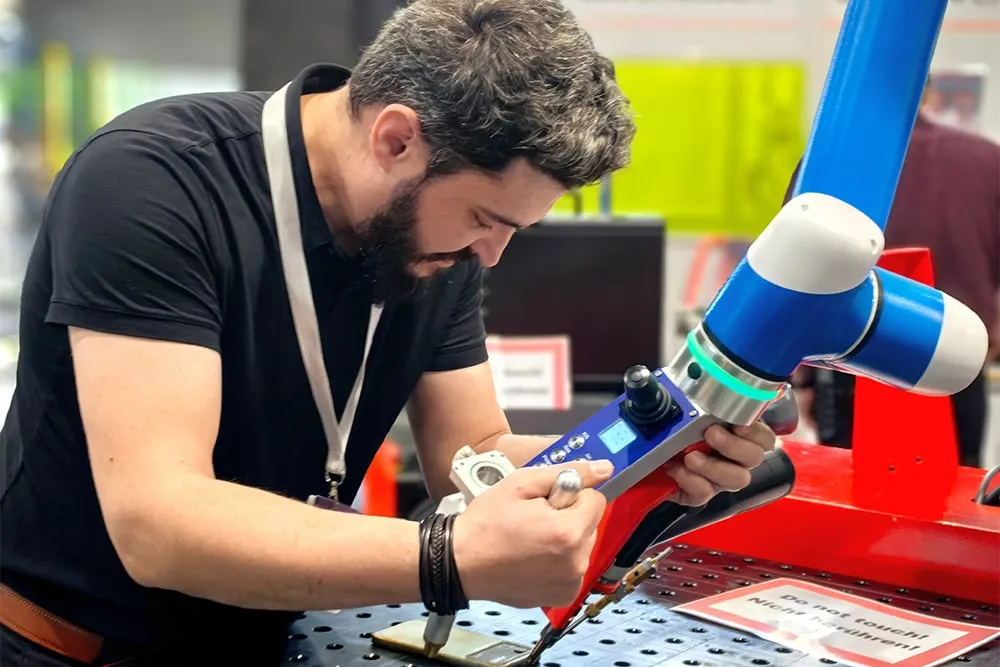
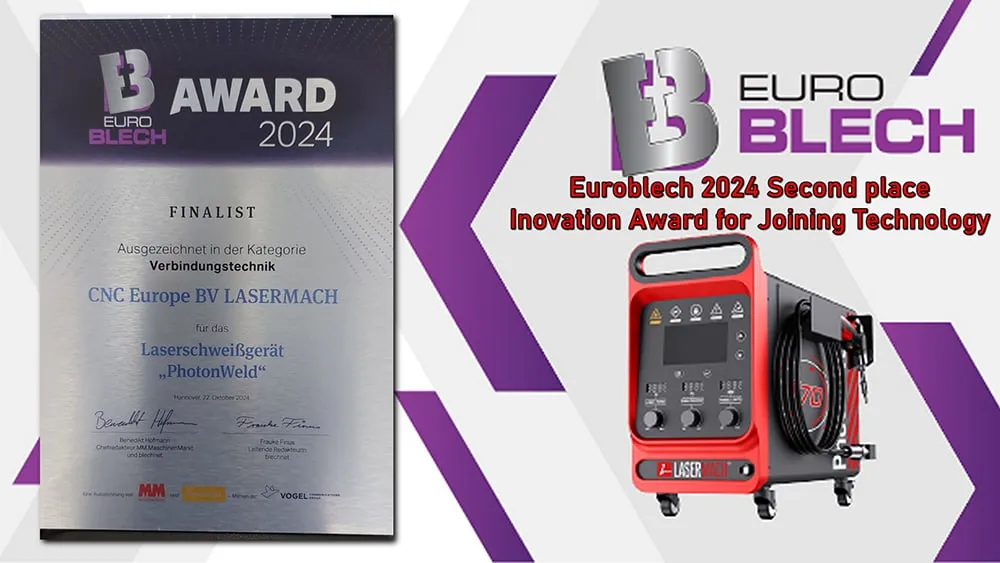
Because it is simply better. That is why, without a major campaign or vote-gathering drive, Lasermach’s handheld laser welding system made it onto the podium at the EuroBLECH Awards in the joining technology category. The company also showcased the latest development at the exhibition: integration with a cobot. But this is a cobot that can be positioned with micrometre-level precision and allows the operator to take over flexibly whenever needed.
If you walk through Lasermach’s demonstration area in Mouscron, you will see a host of PhotonWeld machines ready for dispatch. Liège, Roulers, as well as France, Denmark, Hungary… the labels specify. “They leave here for all corners of the world,” explains Patrick Favoreel, director of CNC Europe. “The biggest bottleneck is us. No machine leaves here until the customer has completed the mandatory laser welding training. That is partly to learn how to work with the equipment, but above all to learn the necessary safety measures. The beam is dangerous to the eyes. The welder will probably wear safety glasses, but anyone working nearby is also exposed, because the beam is invisible. That is why the training is mandatory. We don’t want any accidents.”
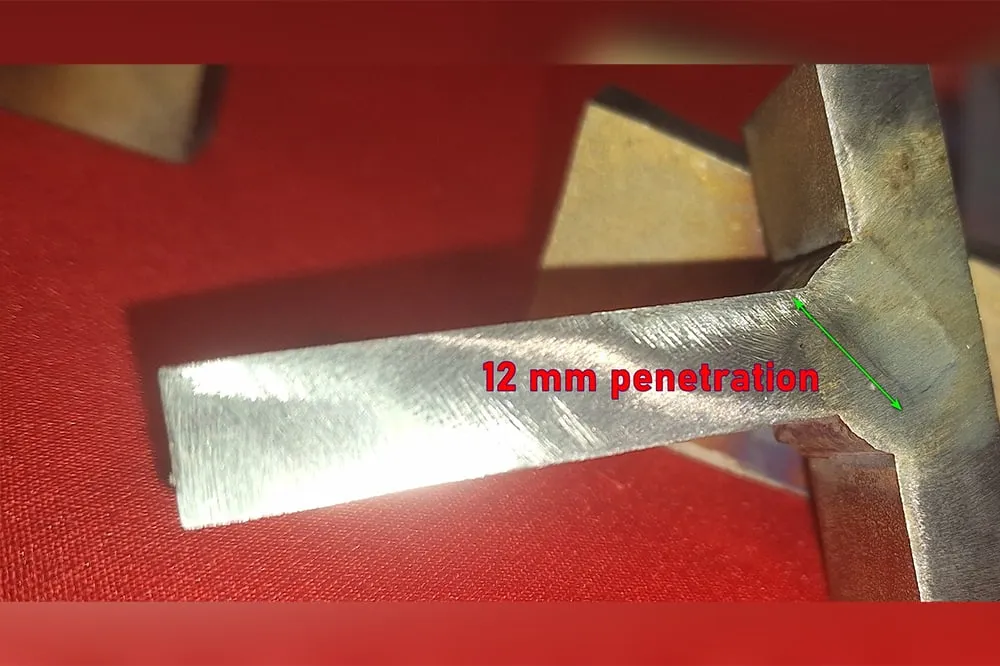
Penetration depth of up to 12 mm
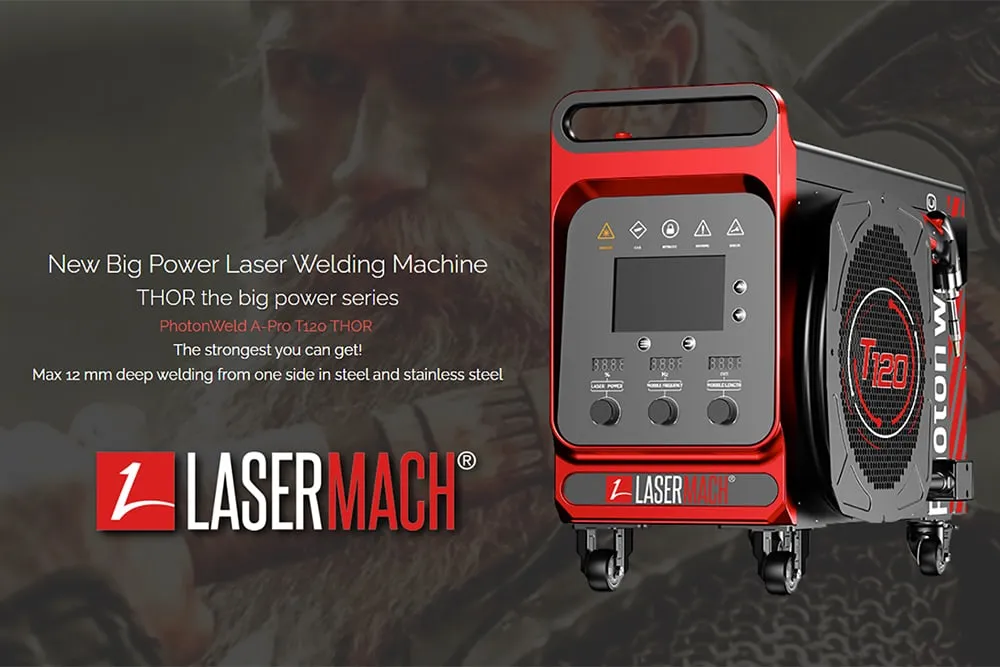
The latest model to make its debut at EuroBLECH is the Lasermach PhotonWeld T120, where 120 refers to the penetration depth. “We’re already at 12 mm today. This opens the door to applications in railways, shipbuilding, bridges…,” Favoreel continues proudly. “We’re increasingly focusing on the heavier-duty segment. That’s where our machines can make an even greater difference, thanks to their superior cooling and light intensity.
Gas inclusions normally occur when the metal evaporates under the heat of the laser beam, even more so than in conventional welding processes. We found a solution to this problem after a year and a half of development. The results now show fewer gas inclusions and therefore better weld quality. That’s a game changer,” predicts Favoreel.
Cobot with micro-positioning
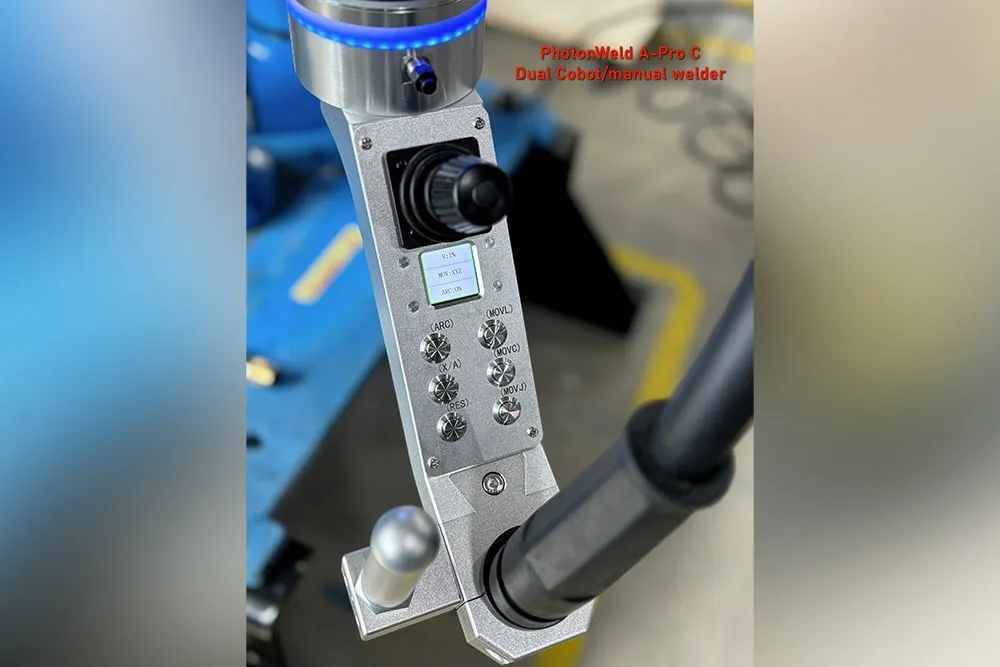
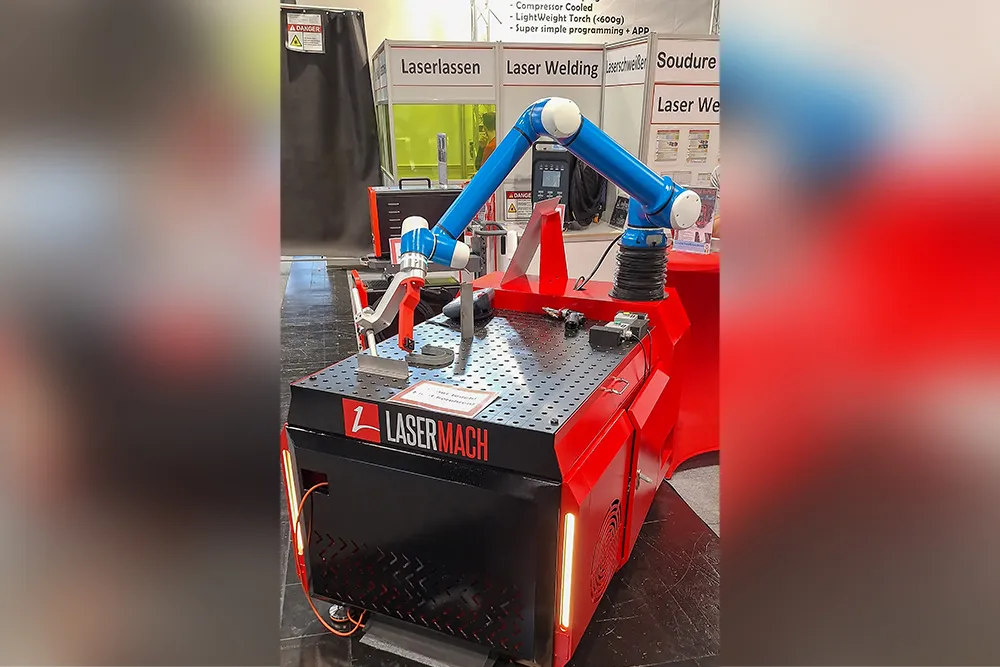
It is therefore hardly surprising that this machine attracted a great deal of attention at the latest edition of EuroBLECH. But another machine beside it was also drawing a crowd. “Automation is another obvious next step for handheld laser welding. But it requires greater attention to positioning. A conventional weld joint is a few millimetres wide. Ours is a fine weld, just a few tenths of a millimetre wide. So positioning has to be extremely precise.” By adding a joystick, along with a few features they are keeping under wraps, the team in Mouscron can achieve accuracy in the region of 1 µm. The joystick can move in the X, Y and Z directions and makes the work easier.
Flexibility as an advantage
A second focus was on creating flexibility. First, through rapid programming by teaching. In addition, the cobot was mounted on a servo lift on the welding table. “This gives it two positions, up and down. It can therefore laser-weld both small and large components. The cobot may not yet be able to handle every position. So a system is needed that allows the operator to take over easily. CNC Europe set to work with a 3D printer to build its own prototype. “The operator can now take over the welding torch at the touch of a button. The simpler, the better. And the solution works with all our PhotonWeld machines. At low cost, we can also fit our kit to existing robotic and cobot solutions,” adds Favoreel.
Question about this story? Ask your question
Keep following this
Get an email when a new story is published. No account needed.
- ThemeSheet metal and tube cutting
- SubjectNews