Laser welding is gaining ground
Texte : Valérie Couplez Photos : iStock
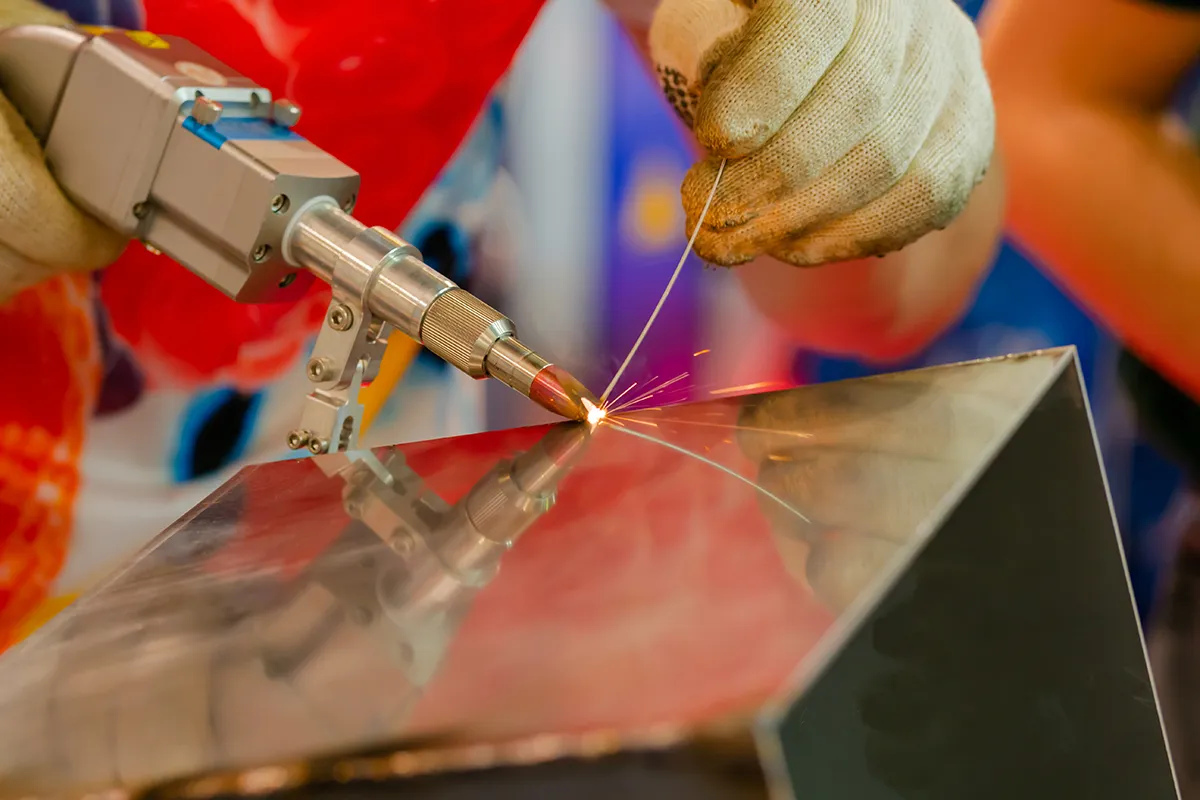
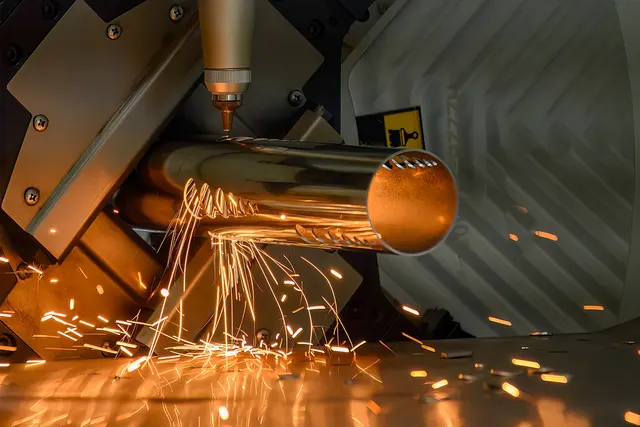
Laser welding is nothing new. Lasers have been used in industrial environments since the 1980s. However, the technology did not become widespread because it was expensive and therefore only suited to high-value, high-volume applications. In recent years, fibre laser technology has become one of the dominant technologies in metalworking. As a result, the cost of the laser source has fallen, paving the way for handheld laser welding. But that does not mean welding equipment for TIG should be set aside. Complementarity is the key.
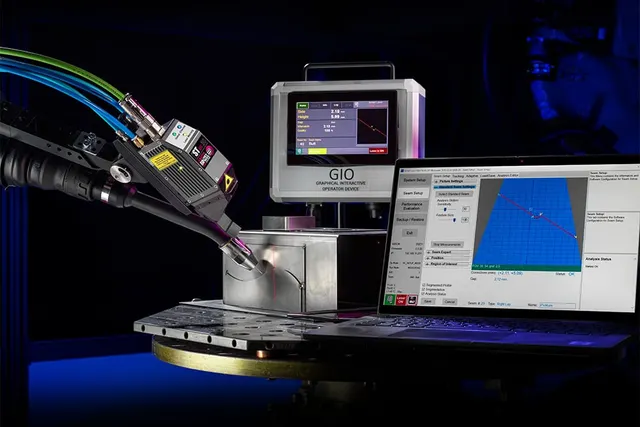
Metalworkers are interested in laser welding because the laser generates little heat when making a weld. This is due to the energy density of the laser beam, which is generally 10 kW/mm². The energy density of an arc in a traditional welding process is around 50 kW/mm², which means it takes much longer to transfer energy to the metal to make the weld. This is also one of the reasons why traditional arc welding often requires bevel preparation to achieve full penetration.
Little or no pre-treatment
Laser welding also does not require clean surfaces. Arc welding aluminium, for example, requires contaminants and oxides to be removed from the surface before welding can begin, whereas a laser beam simply passes through surface contaminants, even mill scale. Although the controls on a laser welder are similar to those on a conventional welder, the two processes are completely different. It is a bit like having to learn to weld all over again, with its own speeds and feed rates, and understanding watts instead of working in amps and volts. With TIG, for example, a welder can start and stop while monitoring the weld pool and making adjustments. But if you try this with handheld laser welding, you will end up with more craters.
Mastering the finer points
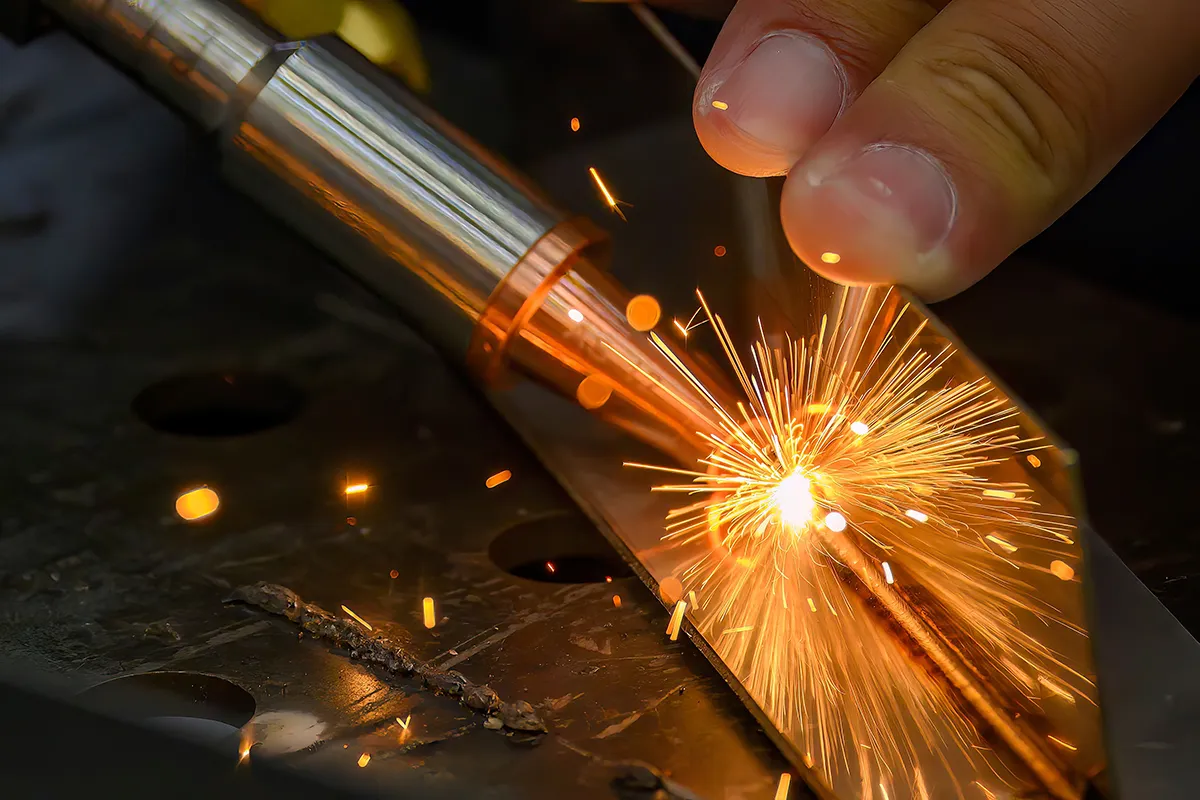
Laser welding is therefore a good choice for workshops working with thin, straight parts. More complex jobs are ideally suited to arc welding. You are not going to replace TIG or MIG welding. Take the example of a job where enclosures are tack-welded using TIG. All the joints can now be welded with handheld laser equipment, with the corners finished using TIG. Laser welding these corners can be laborious. With TIG, the welder can precisely position the torch and electrode to melt the corners just enough. With laser welding, the laser beam can burn a hole through the corners if the fit-up is not right. Fit-up is undoubtedly an important consideration in laser welding. If the fit-up is not right or the gaps are very large, you are sure to run into problems. So, as with all welding techniques, it takes time to master the finer points of laser welding. Operators with no welding experience may even feel more comfortable with it. It is a completely unique way of joining metal. But the learning curve is offset by productivity gains: laser welding is four to five times faster than TIG, which can be an advantage for any workshop struggling to find welders.
Adding a cobot to the laser welding process
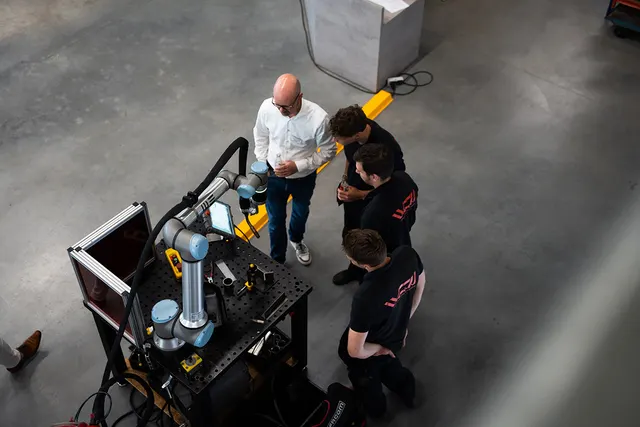
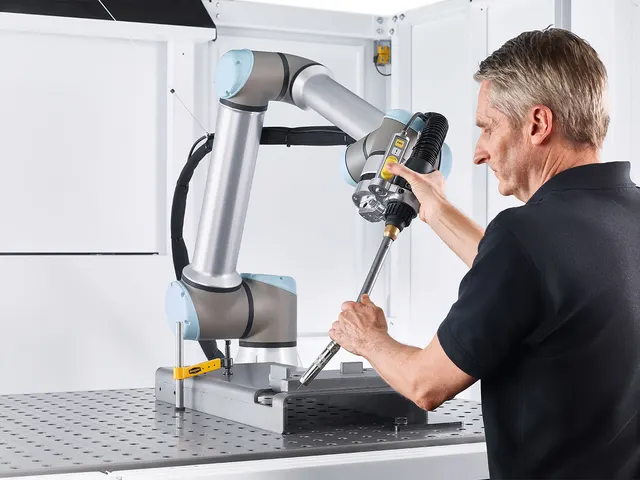
With a shortage of technically skilled workers in general and welders in particular, the metalworking industry is looking towards greater automation. Many workshops have already adopted welding automation, or had it installed, to increase their welding capacity. One of the main trends, particularly for smaller businesses, is the use of collaborative robots. These robots can also be combined with laser welding. Several models that use learning technology are already on the market. Once the welding programme has been activated, the user manually moves the cobot arm through different welding positions to “show” it how to weld.
The flexibility and accessibility of these programming methods are often more attractive to SMEs than conventional industrial robots. Especially as switching back to manual mode is also very simple and takes little time. If you have a suitable application, using a cobot makes sense. For example, the cobot can perform complex fillet welds and fusion welds that would be too demanding to do by hand. The results are also repeatable and consistent every time.

Safety first
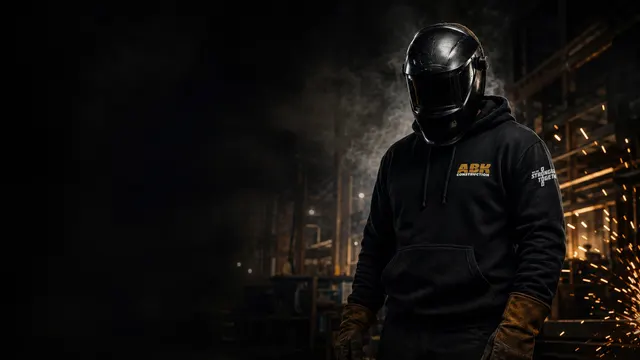
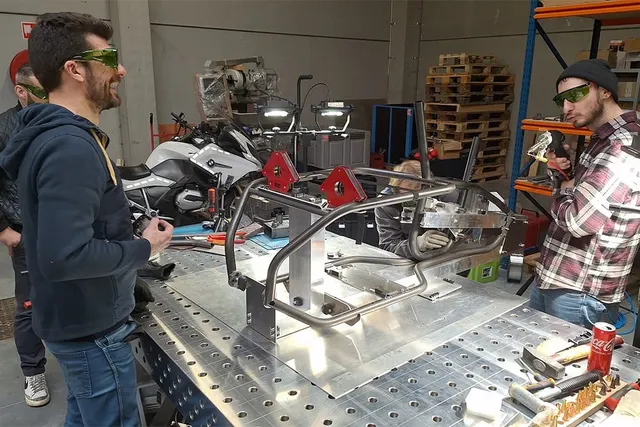
A discussion of laser welding is not complete without addressing safety. The laser beam poses a real danger, particularly to the eyes, so it is essential to work with care. As most welders have learnt, or may have experienced for themselves, exposure to arc welding can cause burns. UV light from conventional welding can cause damage, but in most cases the body can heal itself. Laser welding uses an infrared beam which, if it penetrates the unprotected lens of the eye, can cause irreparable damage to the retina. Most accidents result from an unexpected upward reflection. That is why eye protection is so important when using a handheld laser welding system. Specially designed laser welding glasses are sufficient. Laser welding helmets are also available to protect the rest of the face from possible exposure to laser radiation. The first versions of this type of helmet were simply conventional welding helmets with aluminium shields around the glass filters. Today, the latest helmets are made of carbon fibre and can withstand direct laser radiation for 10 seconds.
A bright future for laser welding
Despite the safety risks, limited familiarity with the technology and the cost of these systems, interest in laser welding appears to be growing among metalworkers. They see the potential benefits and are prepared to make the necessary investments. They may also be concerned about being left behind. With advances in vision systems and the application of artificial intelligence to these tools, laser welding systems are sure to become more user-friendly. In a few years, there will not be a single workshop that does not use laser welding. Without laser welding, they will no longer be competitive.
Question about this story? Ask your question
Keep following this
Get an email when a new story is published. No account needed.
- ThemeSheet metal and tube cutting
- SubjectWelding