Why aren’t tube lasers caught up in the race for power?
Texte : Valérie Couplez Photos : iStock
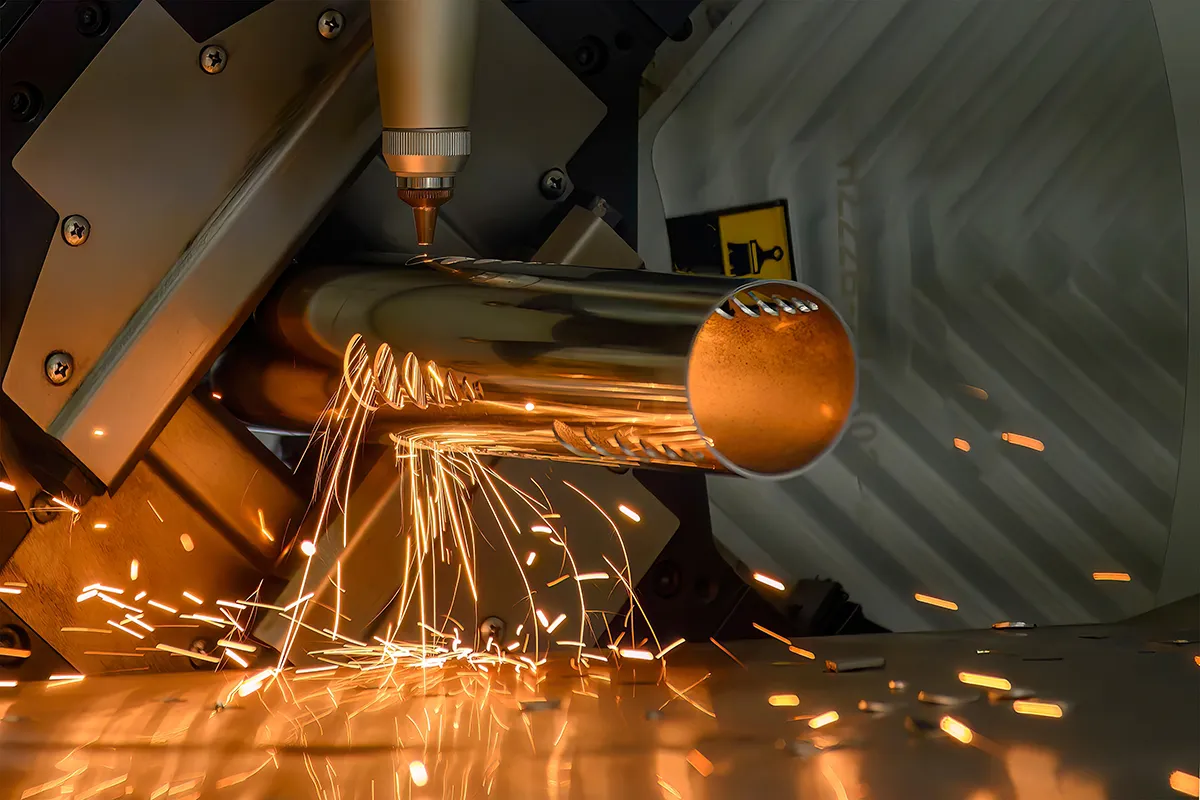
From creating complex designs in flat sheet metal to manufacturing intricate tubular structures, lasers have revolutionised cutting, welding and assembly. But while laser power has increased significantly for applications involving sheet metal cutting, the same is not true of tube lasers. Why are the power ratings of sources for these machines not increasing as quickly as those for sheet metal cutting? A closer look at the intricacies of laser tube cutting may reveal why increasing laser source power is not the ultimate answer to optimising productivity and quality.
When laser cutting tubes, it is important to consider several factors beyond the high power of the laser source. Unlike sheet metal, which generally has a flat, uniform surface, tubular workpieces present numerous inconsistencies, such as variations in thickness, bending, twisting, weld seams, corner radii… This complexity increases further when structural and open sections, such as beams and angles, are used. In addition, moving from 2D to 3D cutting by tilting the cutting head introduces another layer of complexity that must be taken into account.
The other side
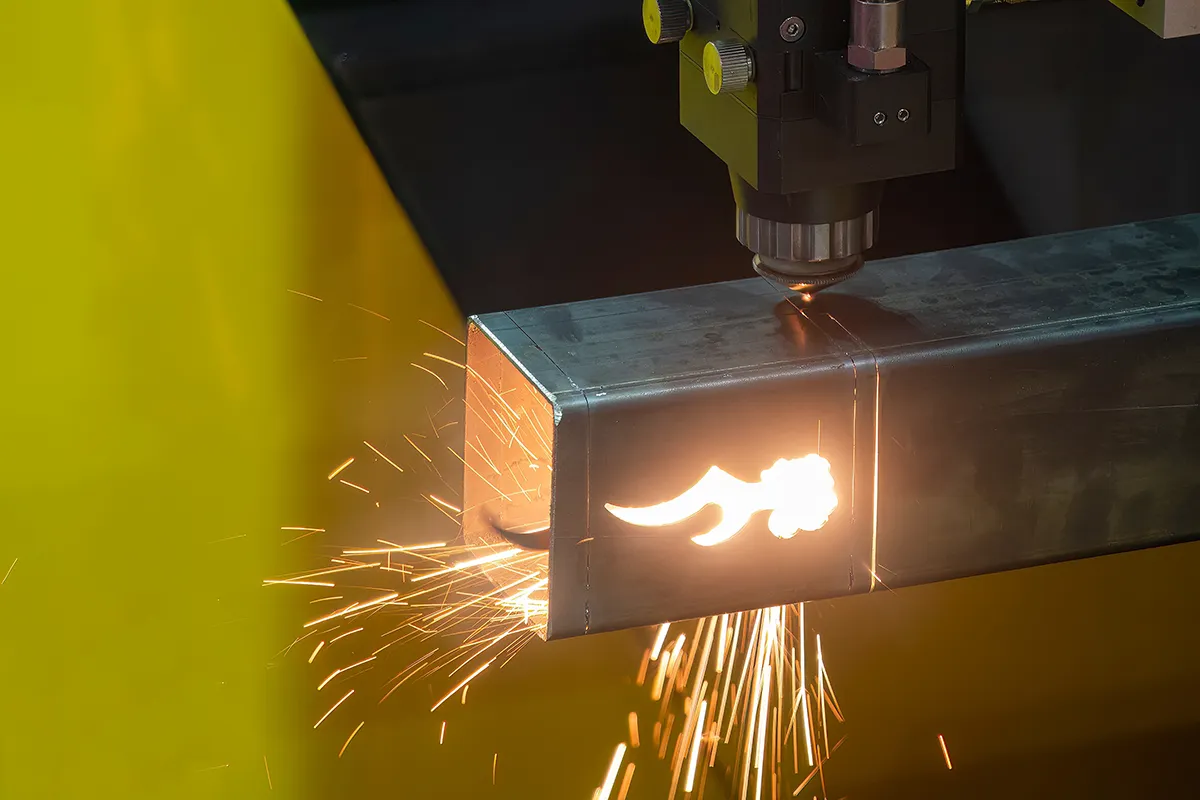
Although higher power allows a wider range of tube wall thicknesses to be processed, particularly when nitrogen or oxygen is used as the assist gas, it does not resolve the challenges inherent in laser tube cutting. Higher power, without taking other critical factors into account, such as machine dynamics and cutting parameters, can just as easily damage the opposite side of the tube wall or simply fail to produce the required cut quality. This becomes even more critical with complex geometries or changes in cutting angle from 90° to 45° or less, due to changes in focal position, gas flow and beam perpendicularity. To achieve efficient, high-quality cutting without operator intervention, the machine must autonomously manage and optimise the relationship between the laser power needed to penetrate the wall thickness and the other parameters, including focus, as conditions change during the cutting process.
The effect of heat
Laser cutting processes can generate temperatures of almost 1,000 °C. It is therefore essential to consider how this heat affects the cutting process and the structural integrity of the workpiece. When cutting sheet metal, heat is often distributed laterally, minimising most of the thermal energy in the kerf before significant thermal conduction occurs. Laser tube processing, on the other hand, involves cutting a narrower section of material, generally on both sides of the wall, increasing heat concentration in a specific area. This higher thermal concentration affects not only the accuracy of the cutting process, but also the ability to meet the required tolerances and the structural integrity of the tube itself. As with sheet metal, heat dissipation directly affects cut quality, since excessive heat can cause material distortion. The thermal tolerances of materials pose a challenge for machine operators, who must manually adjust cutting conditions to account for these differences. Indeed, predefined cutting parameters can prove ineffective in maintaining optimal cut quality and accuracy.
Greater autonomy
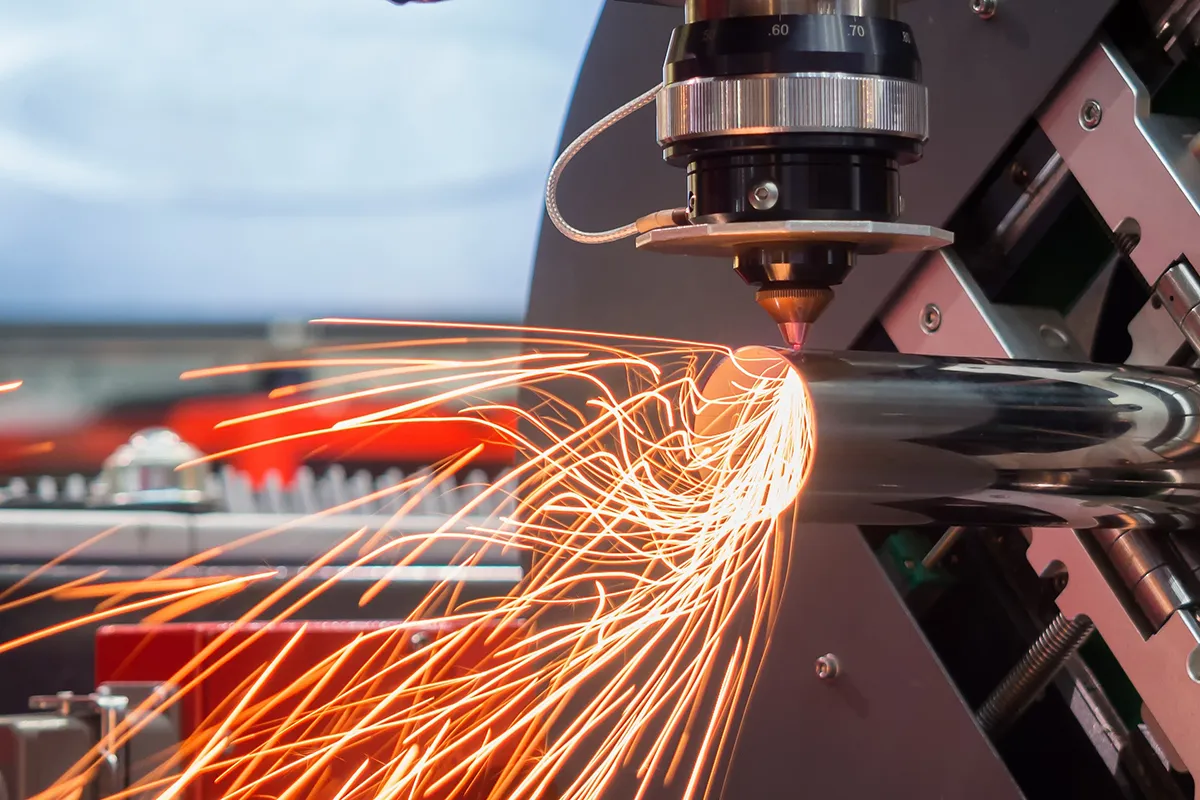
In addition to programming techniques for managing micro-joints or sorting cutting paths, the solution to this problem generally depends on the laser cutting machine’s ability to adapt autonomously to changes. The most advanced tube lasers effectively address this complexity by monitoring thermal output thresholds and dynamically modulating piercing, laser power, frequency, gas pressure and duty cycle. Consider a tube with varying thicknesses, such as at the weld seam, or thicker sections of an open profile. With conventional machines that cannot dynamically adjust cutting parameters, operators have to set a higher power level for the thickest section, inadvertently cutting through thinner sections of the tube or profile with the same power. The machine’s ability to automatically modulate laser power and related parameters is therefore particularly important for materials with different thicknesses, reflectivity, electrical conductivity and exothermic reactions, which are affected by specific assist gases. Through dynamic control and modulation of cutting parameters, the machine can keep both the material and the machine within safe thermal limits, effectively preventing damage or distortion.
Acceleration and dynamic machine control
Machine acceleration and deceleration are crucial factors in laser tube processing. Unlike sheet metal cutting lasers, tube lasers have limited axis movements, mainly in the X and Y directions, resulting in significant differences in how acceleration and changes in acceleration, also known as “jerk”, are managed. Sheet metal lasers benefit from rapid traverse speeds and longer beam-on times, allowing them to increase laser power and achieve maximum acceleration. In addition, the need for changes in acceleration in sheet metal lasers arises mainly from variations in geometric contours, whereas in tube lasers, many additional factors determine this need.
The main sources of acceleration and deceleration in tube lasers are the rotary axis and the horizontal movements of the spindles. Careful management of acceleration and deceleration is therefore required to keep the tube stable during cutting, particularly when tubes have weld seams, irregular thicknesses or complex geometries. It is also important to know how the tube is supported vertically and laterally during cutting to determine the overall efficiency and quality of the workpiece. Thus, even with sufficient power, a machine’s inability to accelerate or decelerate quickly will hamper productivity and quality. Simply increasing laser power does not always guarantee better results.
Beam shaping
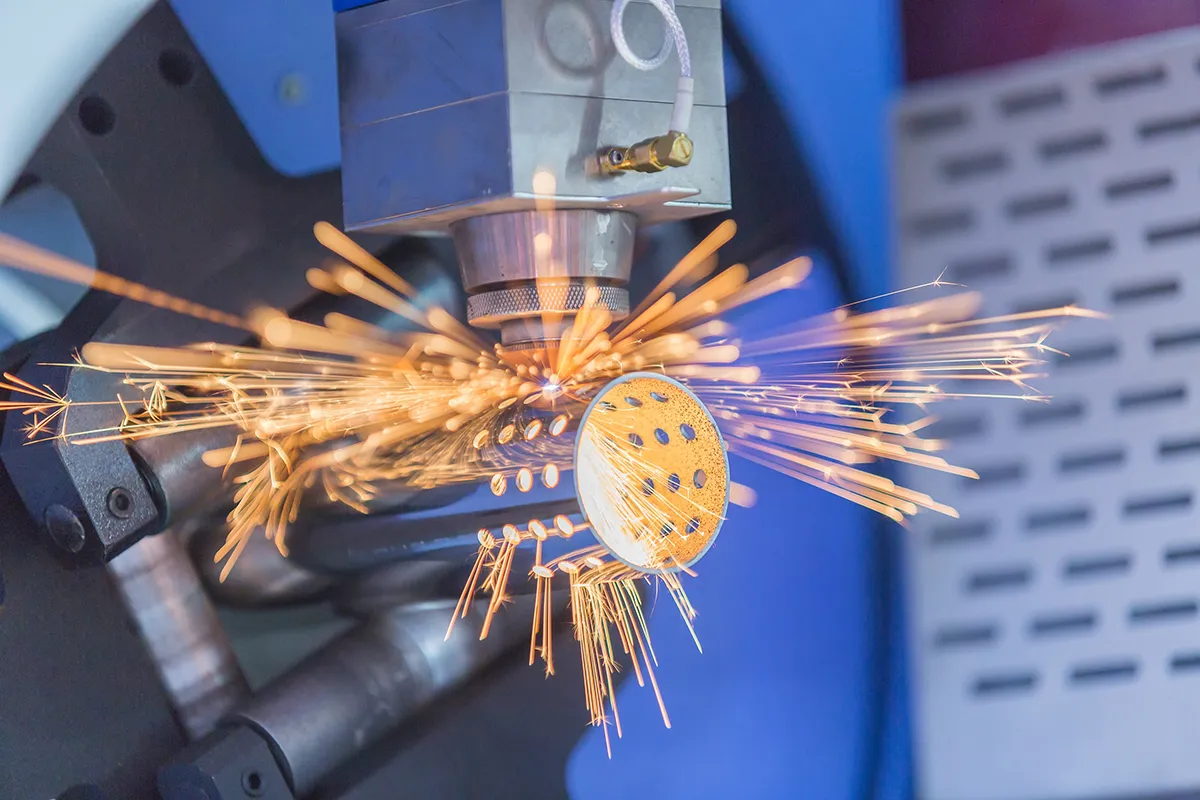
Advanced tube lasers use new developments in beam-shaping technology to improve cutting quality and efficiency. These systems face unique challenges because they have to process irregular thicknesses with varying cutting projections, that is, the perpendicularity of the cutting head to the tube surface. Smaller beam diameters favour the processing of thinner walls, resulting in higher speeds, greater precision and smaller heat-affected zones. Conversely, “doughnut-shaped” beams with wider kerfs are advantageous for thicker materials when using oxygen, as they allow more efficient material removal and reduce the risk of beam reflections and spatter. By adjusting the beam mode to each parameter, tube lasers can precisely control kerf width, ensuring accurate cuts, improved edge quality and minimal waste.
Meeting the challenges
Unlike sheet metal lasers, tube lasers face a multitude of challenges in the workpieces they process, including varying thicknesses, rusty surfaces, the opposite side of the wall, weld seams and complex profile shapes. The specific requirements of laser tube cutting highlight the need to incorporate developments in efficient machine dynamics, autonomous modulation of cutting parameters and beam-shaping technology, in addition to laser power. By embracing these innovations, the industry can realise the full potential of tube laser technology to improve productivity and cut quality in tube cutting processes.
Question about this story? Ask your question
Keep following this
Get an email when a new story is published. No account needed.
- ThemeSheet metal and tube cutting
- SubjectWelding